

If your home still smells clean after using these tools, credit the air freshener. Not the tools.
Some cleaning staples have been lying to us for decades.
They look helpful. They feel productive. They even sound satisfying when you use them.
But the science tells a very different story.
Germs are patient. They will wait.
1. Feather Dusters
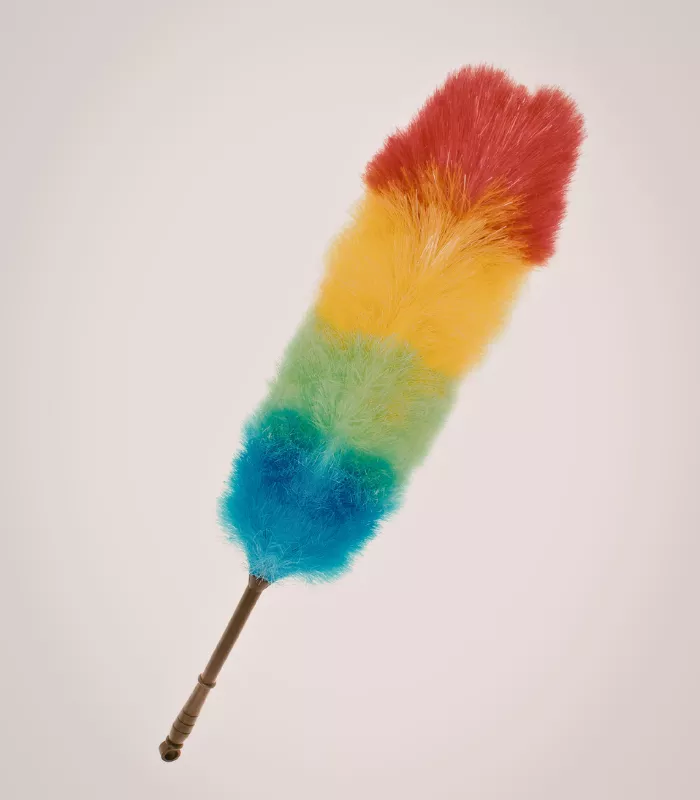
Feather dusters look elegant sitting in a cleaning caddy.
But here’s the catch: they do not actually remove dust.
They just move it around. The dust lands right back on your furniture minutes later.
Studies show that feather dusters can spread up to 80% of dust particles back into the air instead of capturing them.
That is a lot of wasted effort for zero real results.
Think about how many times you have dusted the same shelf in a single week.
There is a reason it never seems to stay clean.
The feathers trap almost nothing. They are essentially a fancy fan.
Your shelves look clean for about ten minutes after you use one.
Then the dust settles right back down where it started.
Allergists have long warned against feather dusters for households with allergy sufferers.
Stirring dust into the air means breathing it in.
That is especially hard on older lungs and sensitive sinuses.
Many people have used feather dusters their entire adult lives without questioning them.
It is one of those habits that feels productive but rarely delivers a genuinely clean surface.
The original feather duster was designed for quick touch-ups between deep cleaning sessions, not as a primary cleaning tool.
Somewhere along the way that distinction got lost and people started relying on them for everything.
Real dusting requires physical contact between a surface and an absorbent material that traps particles.
Feathers do not absorb anything. They deflect and scatter.
If you have ever watched dust float in a beam of sunlight right after using a feather duster, that is exactly what is going into your air.
That floating dust takes up to an hour to fully settle back onto surfaces again.
In a home with pets, the problem is even worse because pet dander mixes with the dust and circulates through the whole room.
Why It’s On This List: A microfiber cloth traps dust instead of scattering it. You’re better off tossing the feather duster and switching to a damp microfiber cloth for real results.
2. Sponges
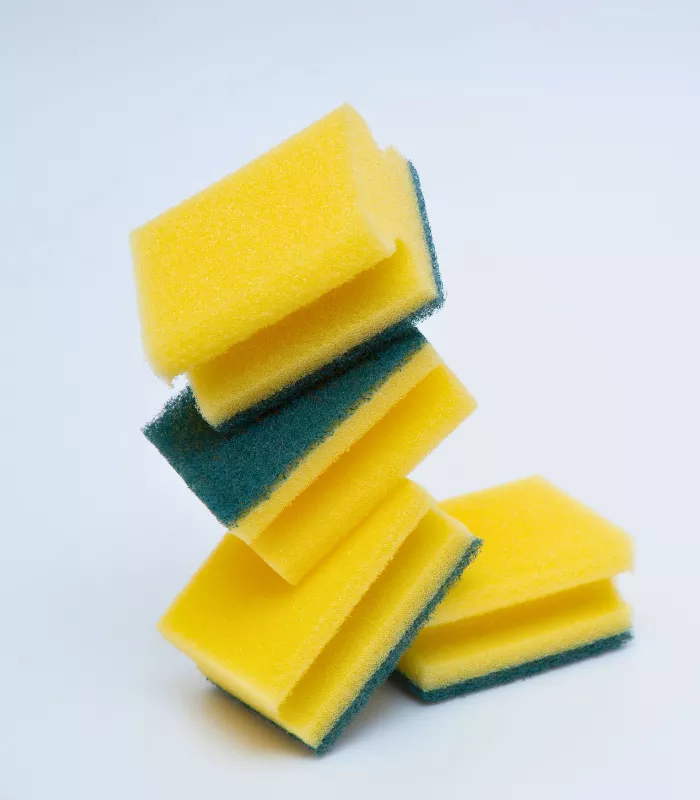
Sponges are in almost every kitchen in America.
They feel like a smart, all-purpose tool. But here’s the deal: sponges are one of the dirtiest objects in your home.
Research has found that a typical kitchen sponge can harbor billions of bacteria.
That warm, wet surface is a perfect breeding ground. You may actually be spreading germs instead of cleaning them up.
Every time you wipe down a counter with a sponge, you could be leaving a thin layer of bacteria behind.
That is the opposite of what cleaning is supposed to do.
Most people rinse their sponge after use and consider it clean. It is not.
Rinsing removes food particles but leaves the bacteria behind.
Microwaving a sponge to kill germs only works temporarily and can miss bacteria deep inside the material.
Within hours, the bacteria count climbs right back up.
Sponges also develop that sour smell quickly. That smell is bacteria.
If your sponge smells off, your dishes and counters smell the same way after you wipe them.
Most cleaning experts recommend replacing sponges every one to two weeks at most.
But even a brand new sponge can become heavily contaminated within just a few days of regular use.
The design itself is the problem. All those tiny holes hold moisture and create the perfect conditions for microbial growth.
Salmonella and E. coli are among the bacteria commonly found on kitchen sponges in household studies.
Those are not minor germs. They can cause serious illness, especially in older adults with sensitive immune systems.
Wiping raw meat juice off a cutting board with a sponge and then wiping the counter spreads contamination across your entire kitchen.
Many foodborne illnesses that people blame on restaurants actually originate in their own kitchens from sponge cross-contamination.
The sponge industry sells convenience. What it actually delivers is a warm, moist hotel for dangerous microorganisms.
No amount of squeezing or rinsing changes the fundamental problem with the material itself.
Even sponges marketed as antimicrobial lose that protection very quickly with regular use and exposure to food particles.
Why It’s On This List: Scrubbing your dishes and counters with a bacteria-loaded sponge defeats the purpose of cleaning. That’s why switching to a dish brush that dries out between uses is a much smarter choice.
3. Brooms on Hard Floors
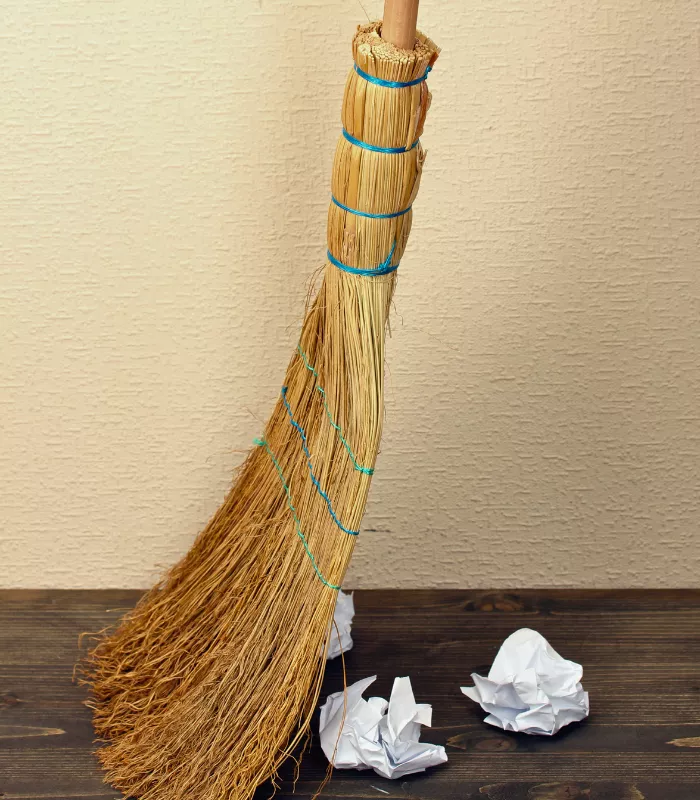
A broom feels like the obvious tool for sweeping a tile or hardwood floor.
But traditional brooms push fine dust and allergens right back into the air.
For people with allergies or asthma, this can actually make things worse.
A microfiber dust mop is far more effective. It grabs particles instead of kicking them up.
The bristles on a standard broom create a small wind current as they move across the floor.
That current lifts fine particles and sends them airborne before the broom can collect them.
You end up sweeping the same floor multiple times and still not getting it truly clean.
Pet dander is one of the worst offenders. Brooms scatter it everywhere.
People with pets often wonder why their allergy symptoms never improve even after a thorough cleaning session.
The broom is frequently the reason.
Fine dust also settles into the gaps between hardwood planks. A broom cannot reach those spaces.
Over time, that buildup becomes visible and very difficult to remove.
Tile grout lines have the same problem. Broom bristles simply push debris past them rather than lifting it out.
A vacuum with a hard floor attachment or a microfiber mop reaches into those spaces far more effectively.
Many people are surprised by how much debris a microfiber mop picks up on a floor they just swept with a broom.
Indoor air quality experts consistently rank broom use as one of the top causes of elevated dust particle levels inside homes.
Those elevated levels can linger for up to 30 minutes after sweeping before settling back down onto surfaces.
That means right after you sweep, your home actually has worse air quality than it did before you started.
Broom bristles also wear down over time and become less effective at gathering even large debris.
Most people keep a broom far longer than they should, not realizing that worn bristles splay outward and miss more than they catch.
Even a brand new broom with stiff bristles still cannot match the dust-trapping ability of a quality microfiber tool.
The broom has been around for thousands of years and has earned its reputation, but hard floors demand better tools than tradition.
Why It’s On This List: Brooms work fine for large debris, but for everyday floor cleaning, you’re better off using a microfiber mop or a vacuum with a hard floor setting.
4. Newspaper for Cleaning Windows
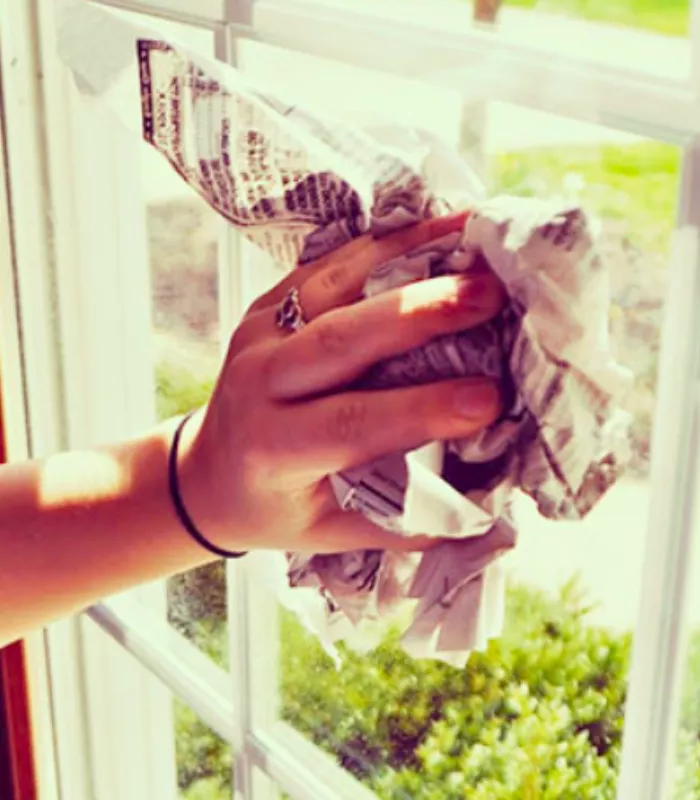
Many people swear by using old newspapers to clean windows to a streak-free shine.
It was a popular trick for decades. I made a classic mistake of trying this on a freshly painted window frame and ended up with ink smudges everywhere.
Modern newspaper ink can transfer to window frames and walls.
Plus, today’s paper is thinner and falls apart quickly when wet.
The newspaper trick actually worked better in previous generations when paper was thicker and ink formulas were different.
Today’s printing processes use different materials that do not behave the same way on glass.
Many people end up with gray smear marks on their white window trim after trying this method.
Those marks are harder to remove than the original window grime was.
The newspaper also shreds into small wet pieces when you apply any real pressure.
Those pieces stick to the window edges and corners and require extra cleanup afterward.
The streaks people think they are avoiding often appear anyway as the ink residue dries on the glass.
In bright sunlight, those streaks are very visible and make the window look worse than before.
Colored newspaper inserts and glossy advertisement pages are even worse for this job.
They leave behind more ink and create more residue than standard newsprint.
The world has simply moved on from this method, but the advice keeps getting passed down anyway.
Window tinting and UV-protective coatings found on many modern windows are particularly vulnerable to ink transfer from newspaper.
Cleaning a tinted window with newspaper can leave permanent smudges that cannot be buffed out.
Double-pane windows with low-emissivity coatings require especially gentle cleaning to avoid damaging the outer layer.
Newspaper is simply too unpredictable a material to use safely on windows that have any kind of special coating or treatment.
Even on plain glass, the results vary wildly depending on the type of newspaper, the cleaning solution used, and how wet the paper gets.
Consistent, streak-free results are nearly impossible to achieve with newspaper compared to a quality microfiber cloth.
The advice to use newspaper for windows is one of those cleaning myths that has outlived its usefulness by several decades.
Why It’s On This List: A clean microfiber cloth and a simple solution of water and a drop of dish soap will give you clearer, cleaner windows without the mess.
5. Magic Erasers on Delicate Surfaces
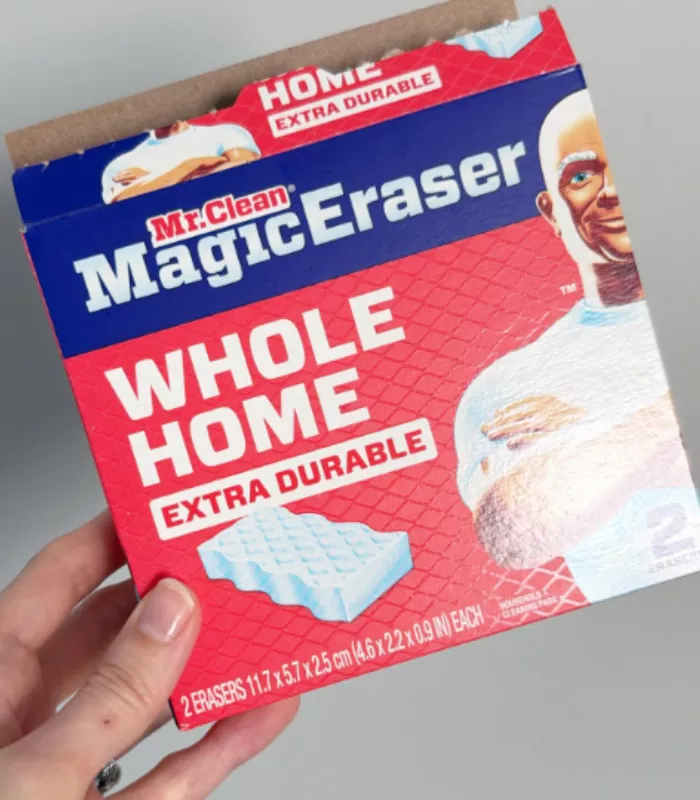
Magic erasers feel like a miracle. They remove scuffs and stains like nothing else.
But here’s the catch: they work like very fine sandpaper.
Using them on glossy paint, stainless steel, or sealed wood can leave dull scratches behind that are hard to fix.
Many homeowners have accidentally damaged kitchen cabinets and appliances this way.
The material in a magic eraser is called melamine foam. It is abrasive by nature.
On hard, non-porous surfaces it can cut right through the protective finish.
Once that finish is gone, the surface becomes more vulnerable to future staining and damage.
Stainless steel appliances are a common casualty. The eraser removes the fingerprints along with the brushed finish.
That leaves a dull, uneven patch that stands out badly under kitchen lighting.
Car interiors are another area where people make this mistake. The eraser can strip the coating right off plastic dashboard panels.
Bathtub surfaces made of acrylic or fiberglass are also at risk. The abrasion dulls the surface over time.
Leather furniture and car seats should never be cleaned with a magic eraser for the same reason.
Even some tile grout can be damaged if the eraser is used too aggressively or too frequently.
The packaging does include warnings, but they are easy to overlook when the product works so impressively on tougher jobs.
It is a genuinely useful tool when used in the right places, but the wrong surface can turn a quick clean into an expensive repair.
Flat paint on walls is one of the most commonly damaged surfaces. The eraser removes the paint along with the scuff mark.
Eggshell and satin finishes fare slightly better but still show damage under direct light after repeated use.
Non-stick cookware coatings are another casualty. The abrasion breaks down the coating and shortens the life of the pan significantly.
Eyeglasses with anti-reflective coatings have been permanently scratched by people who thought a magic eraser would clean the lenses gently.
The foam feels soft to the touch, which is exactly why so many people underestimate how abrasive it actually is.
That softness is misleading. The microscopic structure of melamine foam is hard and angular at a level you cannot feel with your fingers.
Understanding what a magic eraser actually is changes how you use it, and how often you reach for it without thinking.
Why It’s On This List: Magic erasers are great for specific jobs like scuffs on baseboards. But on delicate or shiny surfaces, you’re better off using a gentle cleaner and a soft cloth.
6. Toilet Brush Left Sitting in Its Holder
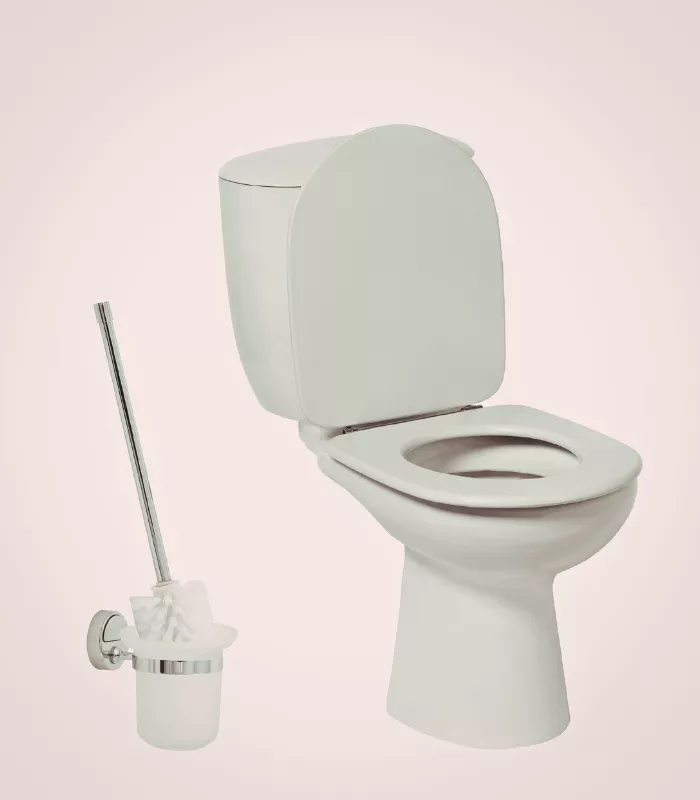
A toilet brush is a necessary cleaning tool.
But most people leave it sitting wet inside a closed plastic holder after every use.
That dark, damp holder becomes a breeding ground for mold and bacteria almost immediately.
That’s why you end up spreading germs every single time you clean the toilet.
The holder itself rarely gets cleaned. Most people clean the brush but ignore the container it sits in.
That container collects toilet water, bacteria, and residue every single time the brush is used.
Over weeks and months, the buildup inside the holder becomes significant.
The smell that sometimes comes from near the toilet is often the holder, not the toilet itself.
Closed holders with no ventilation are the worst offenders. They trap moisture with no way for it to escape.
Mold can begin growing inside a wet, closed container within 24 to 48 hours.
Every time you pull the brush out for the next cleaning, you are dragging it through that contaminated water.
Then you are using that brush to scrub your toilet bowl.
The toilet may actually be cleaner than the tool you are using to clean it.
Replacing the entire brush and holder set every few months is something most cleaning professionals recommend.
But even a new brush will develop the same problem quickly if it is stored wet in a sealed container.
Black mold in particular thrives in toilet brush holders because of the consistent moisture and organic material present.
That black mold is not just unpleasant to look at. It releases spores into the bathroom air every time the holder is disturbed.
Bathroom air quality is already a concern in small enclosed spaces, and a moldy brush holder makes it measurably worse.
Children and older adults with respiratory sensitivities are most affected by mold spore exposure in enclosed bathrooms.
Some people try to solve the problem by pouring bleach into the holder periodically, but that only works for a short time before contamination returns.
The only real solution is changing how the brush is stored after every single use, not just cleaning the holder occasionally.
A simple habit change of letting the brush air dry before returning it to storage can dramatically reduce bacteria and mold growth over time.
Why It’s On This List: After each use, let the brush drip-dry over the toilet bowl for a few minutes before returning it to its holder. Or consider a ventilated holder that allows airflow to dry the brush properly.