

Alaska is enormous. That part everyone knows.
What surprised us was how many of its towns refused to sprawl.
Front Street in Wrangell. The Spit in Homer. Creek Street in Ketchikan.
Each one built tight, on purpose, decades before anyone used the word walkability.
Twenty towns made the cut, and not one of them needed a parking lot to prove it.
1. Sand Point and King Cove, Fishing Village Pace
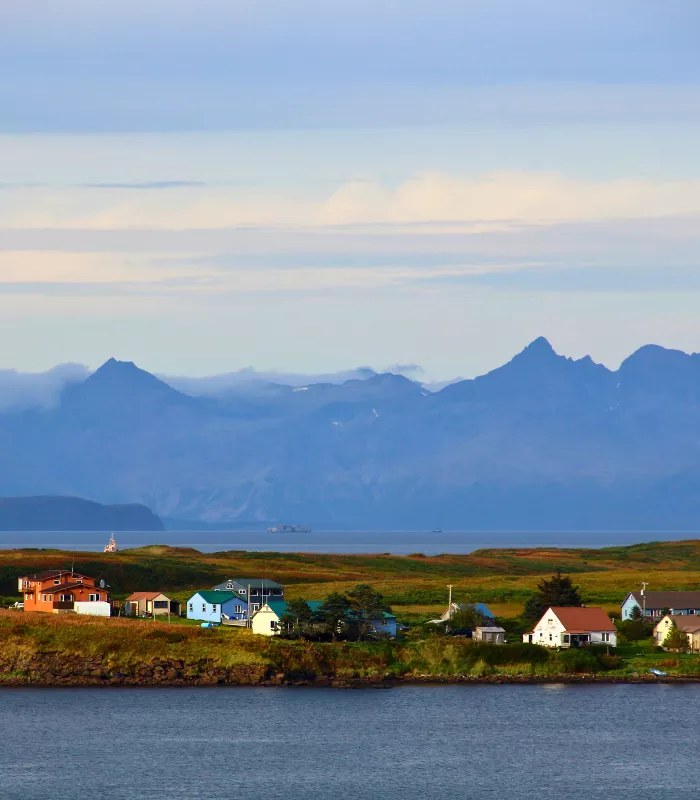
Picture this: two tiny Aleutian communities where the boat harbor is basically the town square, and everyone walks because there is nowhere else to go.
We are talking about places built around canneries and fishing boats, not sidewalks and shops. The wind out there does not care about your hairstyle, and neither did we back in the day.
What made these towns work was scale. Everything sat close together because it had to. Small footprints made walking the only sensible option, not a lifestyle choice.
2. Gustavus and Hoonah, Neighboring Tlingit Communities
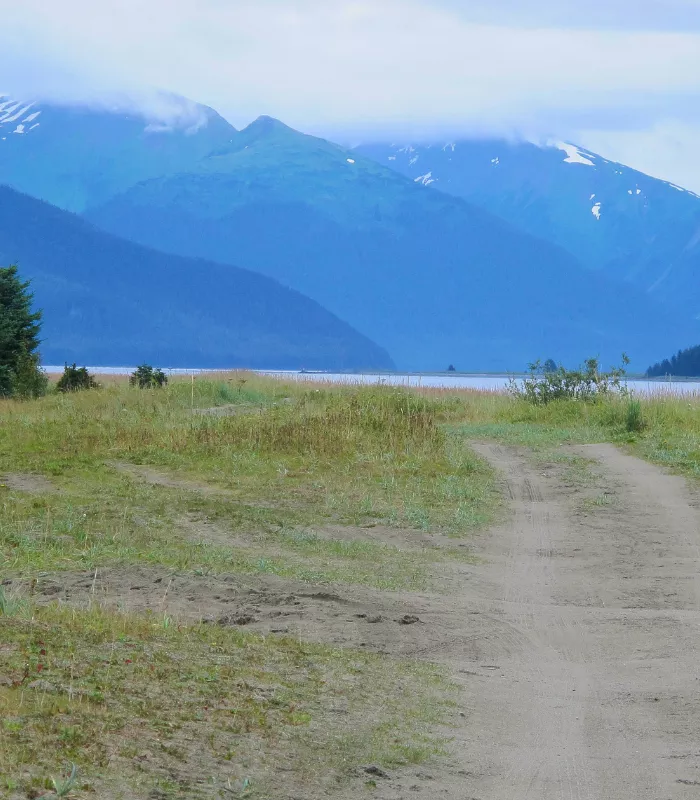
Most people assumed these two towns were basically the same place with different names. They were not, and anyone who lived nearby could tell you that in about ten seconds.
Gustavus grew up quiet, close to Glacier Bay, while Hoonah carried centuries of Tlingit history and a working waterfront. Both stayed small enough that walking never felt like a chore.
We valued that kind of quiet a lot more once we got older. Compact towns meant fewer excuses to skip a walk to the store.
3. Hyder, Alaska’s Easternmost Outpost
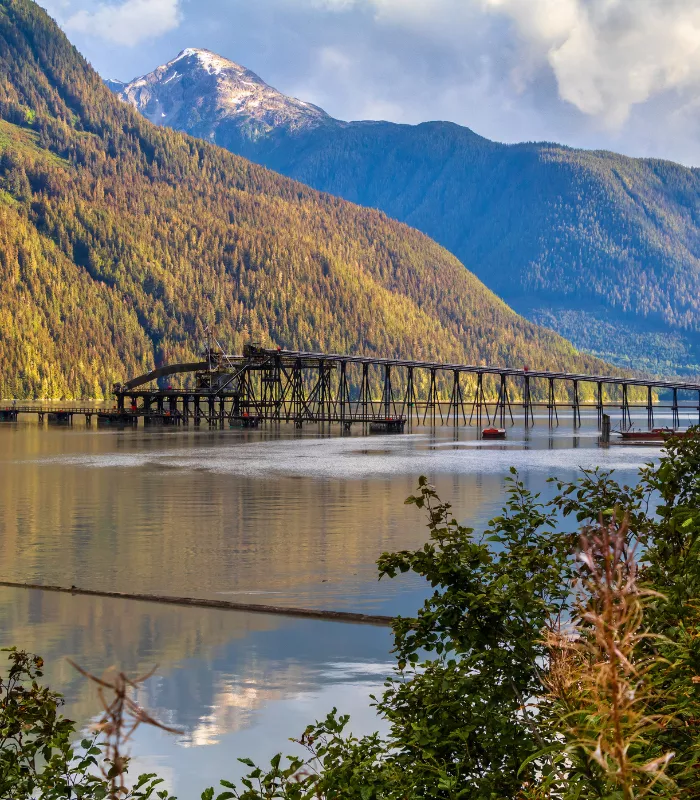
1980-something, and Hyder was already the kind of place where you could walk the whole town before your coffee got cold.
Tucked right against Canada, Hyder never grew past a handful of streets. That was sort of the whole point. Nobody moved there expecting bright lights or big crowds.
The size kept things simple. You did not drive three blocks when your legs worked fine.
4. Homer, The Spit and the Bay
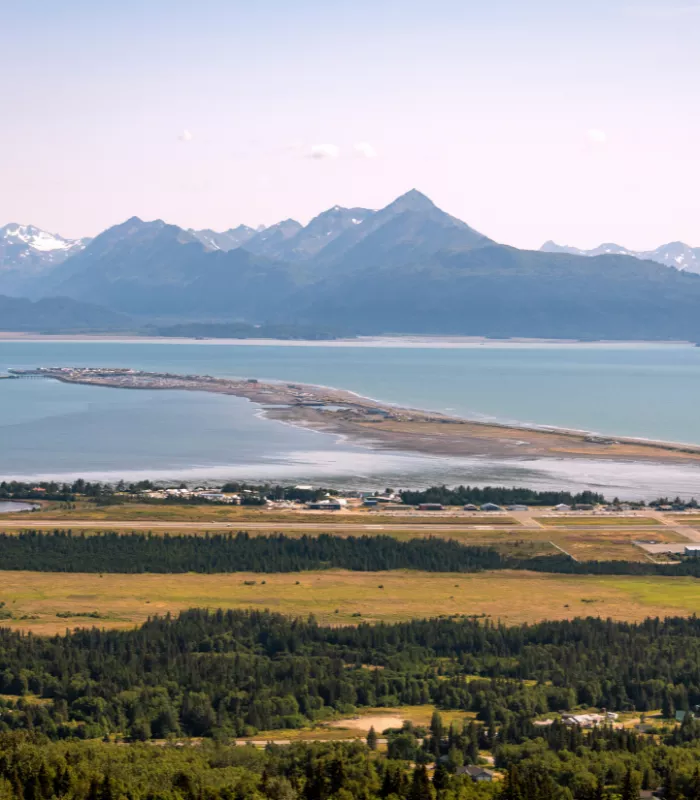
We loved Homer even while grumbling about the wind off Kachemak Bay that never seemed to quit.
The Homer Spit stretched out into the water like a long wooden finger, packed with little shops and stands you could walk end to end in an afternoon. Artists set up there for decades, and the halibut fishing crowd gave the place its working character.
The Spit runs roughly four and a half miles into Kachemak Bay, making it one of the longest road-accessible spits in the world.
It was never fancy. It did not need to be. A walkable spit full of local character beat a strip mall every single time.
5. Seward, Gateway to the Fjords

Seward’s harbor sat right at the edge of town, close enough that you smelled the salt air before you saw the water.
We used to walk from the harbor into the small downtown without ever needing a car, past shops that had been there since we were young. The mountains framed everything, which made the whole thing feel bigger than it actually was.
A scenic harbor does a lot of heavy lifting for a small town.
6. Wasilla, Suburban Growth on the Parks Highway
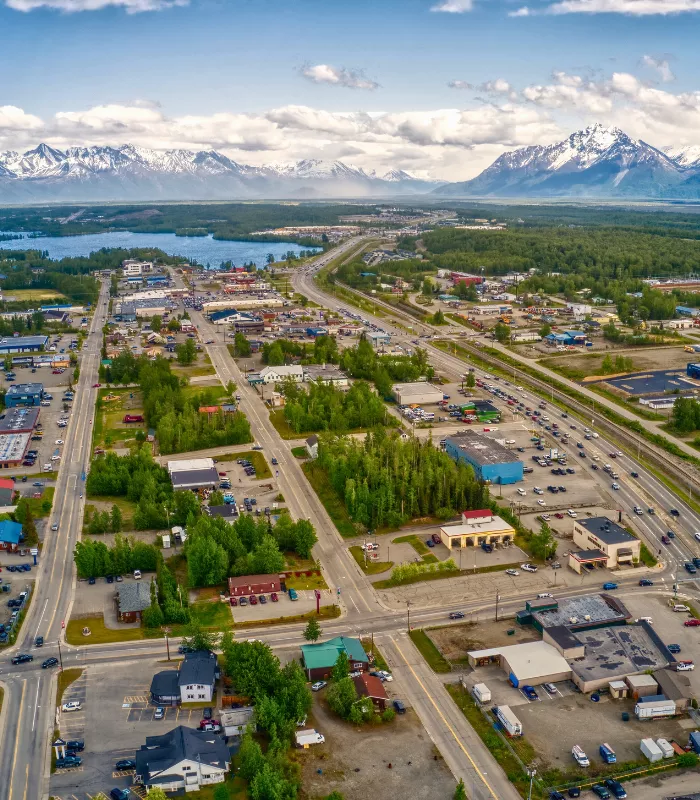
Here is what most folks got wrong about Wasilla: they figured it was rural through and through. By the time we noticed, it had turned into something closer to a growing suburb.
The town expanded fast along the Parks Highway, adding shopping centers and neighborhoods that did not always connect the way older Alaska towns did. Walking there felt different than walking through Wrangell or Seward.
Growth changed the character more than anyone expected.
7. Wrangell, One of Alaska’s Oldest Communities
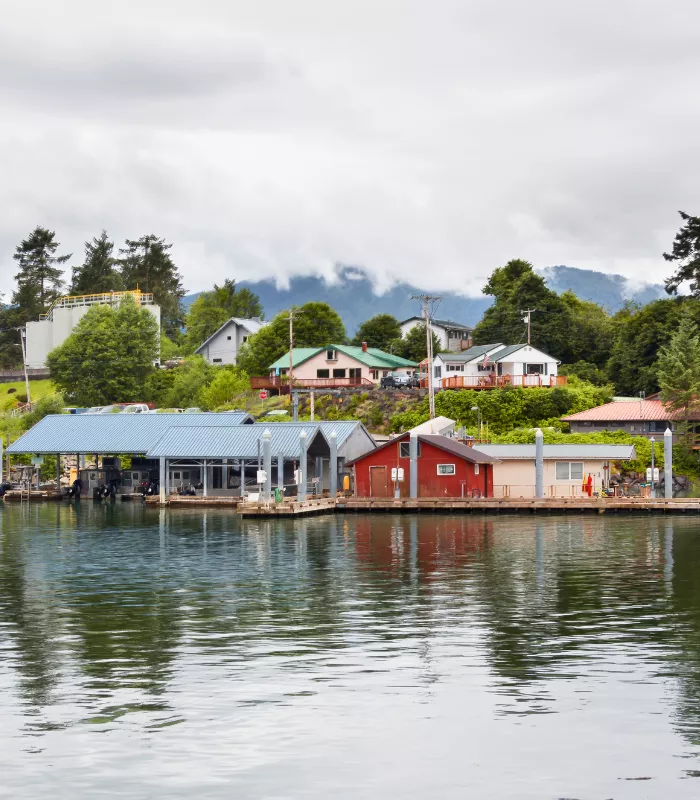
We drove past Wrangell for years without stopping, which honestly was our mistake, not the town’s.
Front Street held most of the shops and eateries within a few short blocks of the ferry landing, and the Nolan Center anchored the cultural side of things with performances and the Wrangell Museum tucked inside. Tlingit heritage ran deep here, layered under Russian and American history.
Wrangell also flew the British flag for a stretch, making it the only Alaska community to have lived under three different national flags.
Everything sat close enough that a short walk covered the whole town. A tight, walkable core made Wrangell easy to love on foot.
8. Kodiak, Island Life on the Water

Kodiak Island’s biggest town carried a maritime energy you felt the moment you stepped off the boat.
Fishing boats lined the harbor, and downtown streets sat close enough together for an easy stroll past shops with Russian-era roots still visible in the architecture. It never felt like a resort town, and that suited us fine.
Kodiak served as the capital of Russian America until 1804, when the seat of power moved to Sitka.
The working waterfront gave Kodiak a personality all its own.
9. North Pole, The Christmas-Themed Community

North Pole confused us the first time we visited, and honestly, it confused us the second time too.
A town near Fairbanks built its whole identity around Christmas, with candy-cane light poles and a year-round holiday theme that never let up. Walking through felt like stepping into a decoration nobody ever took down.
We still cannot fully explain the appeal, but plenty of folks loved it anyway.
10. Skagway, Gold Rush Downtown
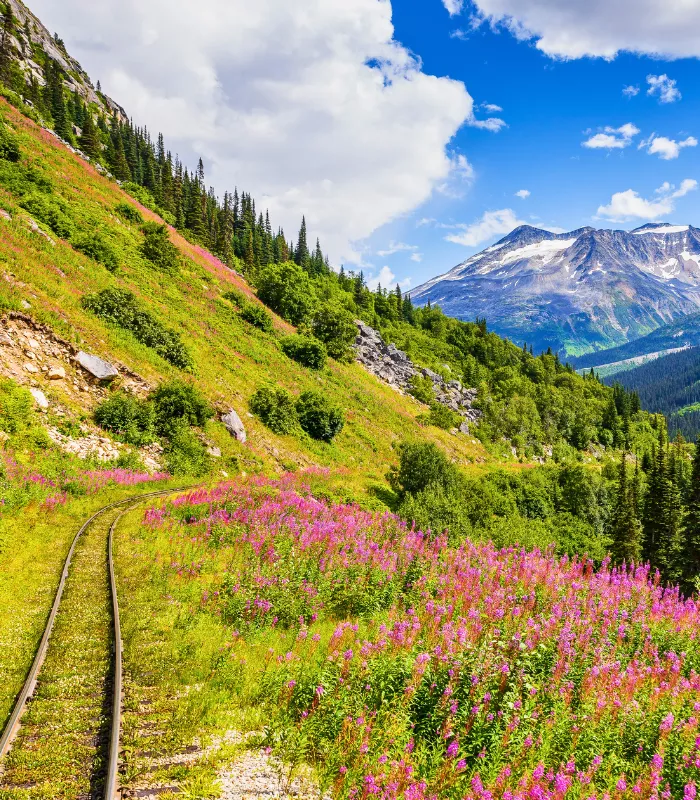
1898 gave Skagway its downtown bones, and somehow the layout barely changed after all those years.
The Gold Rush-era buildings lined a compact core that stayed walkable through generations of visitors and residents alike. Seasonal crowds came and went, but the streets themselves held their shape.
The National Park Service maintains many of these false-front buildings along the main street as part of Klondike Gold Rush National Historical Park.
Few Alaska towns preserved their original footprint quite like this one.
11. Petersburg, Norwegian Fishing Roots
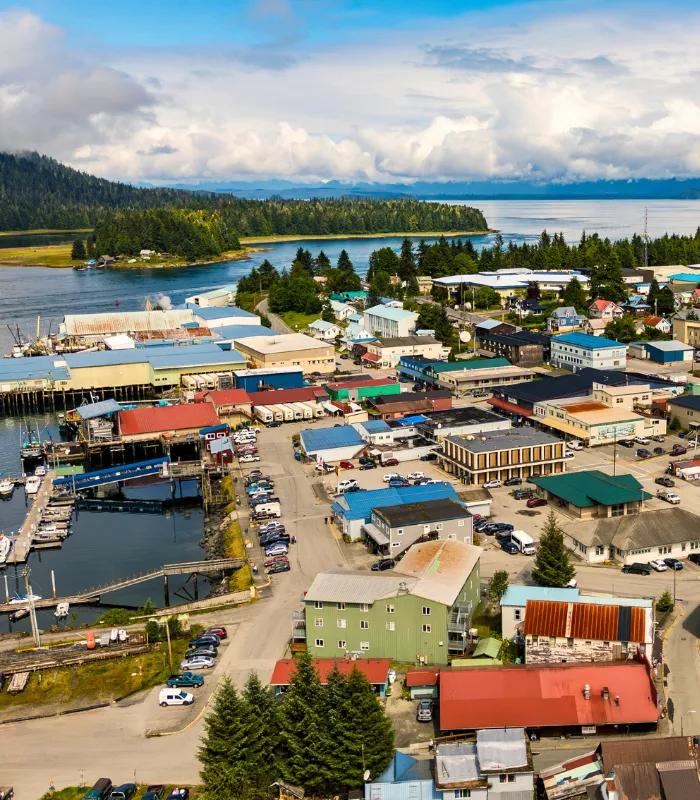
1900-something, and Norwegian fishermen settled Petersburg and never really left in spirit. That heritage still shapes the place today.
The Clausen Memorial Museum sits close to downtown, holding thousands of photos and objects tracing both Tlingit and Norwegian history. Walking the harbor front, you felt the fishing industry in the air, quite literally.
Everything downtown clustered tight enough to explore without a car. A working harbor town does not need sprawl to feel complete.
12. Ketchikan, Alaska’s First Stop
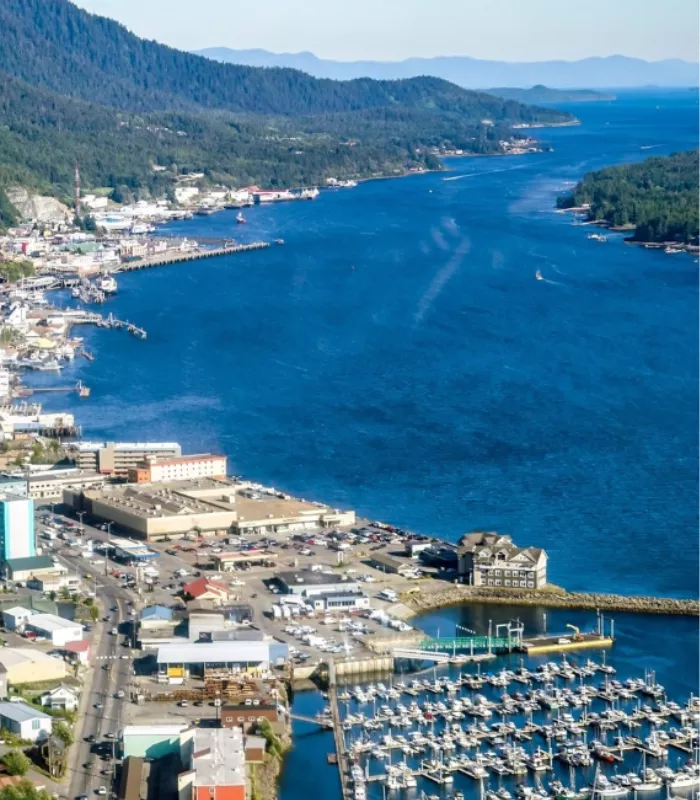
We used to call Ketchikan the front door of Alaska, and honestly, that nickname earned itself.
Creek Street ran along a wooden boardwalk with buildings perched on stilts above the creek itself, an odd little architectural trick that still made us smile decades later. The Totem Heritage Center held more upright totem carvings than anywhere else on Earth, spread across Totem Bight and Saxman Parks.
Ketchikan bills itself as the Salmon Capital of the World, a nickname stamped on everything from the visitor center to the local gear shops.
The whole downtown strip stayed walkable, packed with shops and eateries within a short stroll. Ferries and short flights connected it to the rest of the Inside Passage.
13. Talkeetna, Denali’s Quirky Doorstep
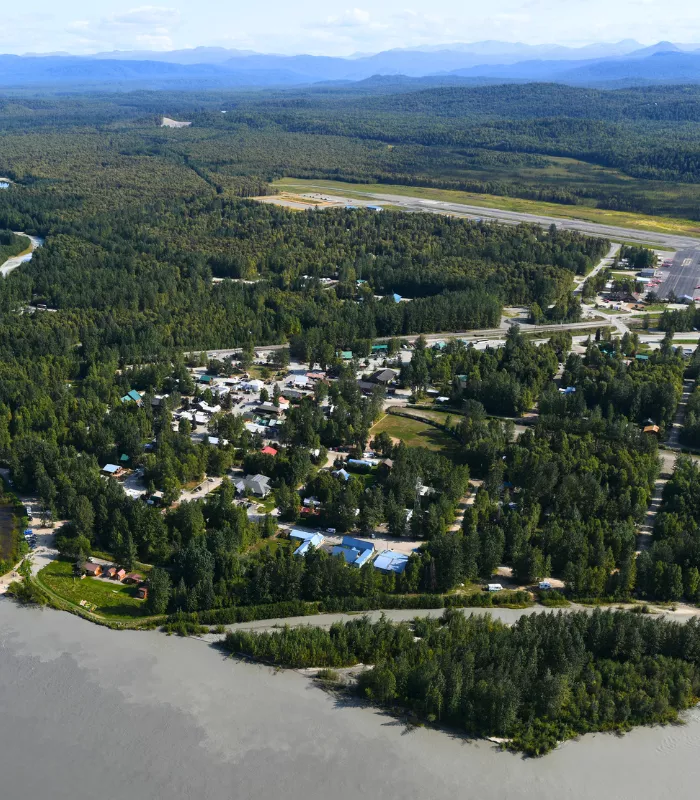
We never expected a tiny railroad town to charm us the way Talkeetna did.
The whole downtown fit into a few walkable blocks, lined with local eats and views toward Denali on a clear day. Its quirky reputation grew out of a mix of climbers, artists, and old railroad history all crammed into one small footprint.
It stayed compact on purpose, never sprawling out the way bigger towns did.
14. Haines, Arts and Eagle Country
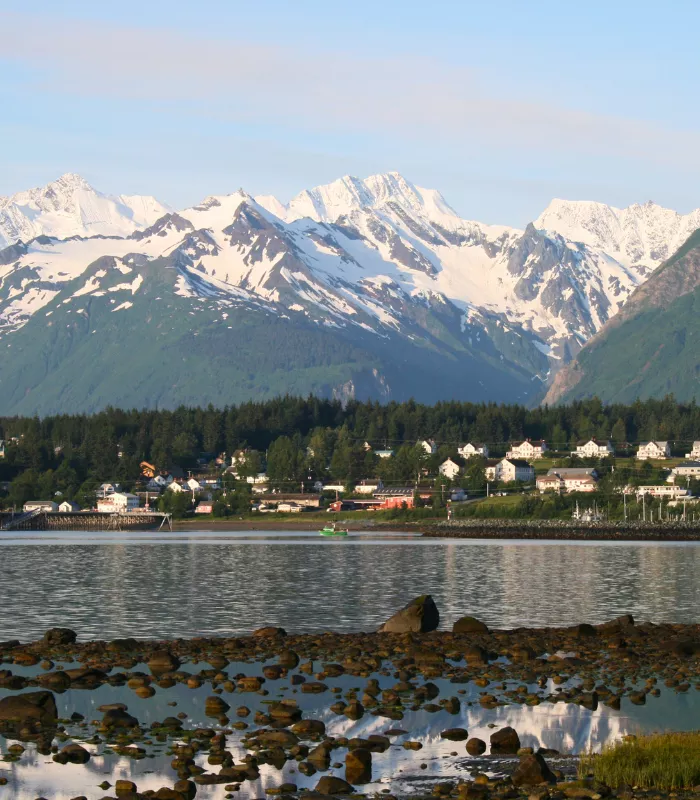
Most people got Haines wrong, assuming it was just a quieter version of Skagway. It never was.
Festivals and a strong arts scene gave Haines a personality of its own, set against mountains and bald eagle flyovers that drew crowds every fall. The downtown stayed small enough to wander end to end without much effort.
We appreciated a town that leaned into culture rather than just scenery.
15. Soldotna, Riverside Boardwalks

Here is a number worth remembering: king salmon runs on the Kenai River drew crowds every summer, and Soldotna’s riverside boardwalks made it easy to stroll right up to the action.
The town felt low-key most of the year, then came alive when the fish arrived. Walking the boardwalks near the river never required much planning or effort.
It was not flashy. It did not need to be.
16. Valdez, Little Switzerland

We called it Little Switzerland long before it became a nickname anyone printed on a postcard.
Snow-packed peaks ringed the town, and the drive toward Columbia Glacier counted among the most scenic in the state. Downtown stayed compact, letting you walk between shops and the harbor without much trouble even with those mountains looming close.
The scenery did a lot of the heavy lifting here, honestly.
17. Girdwood, Rainforest Ski Town
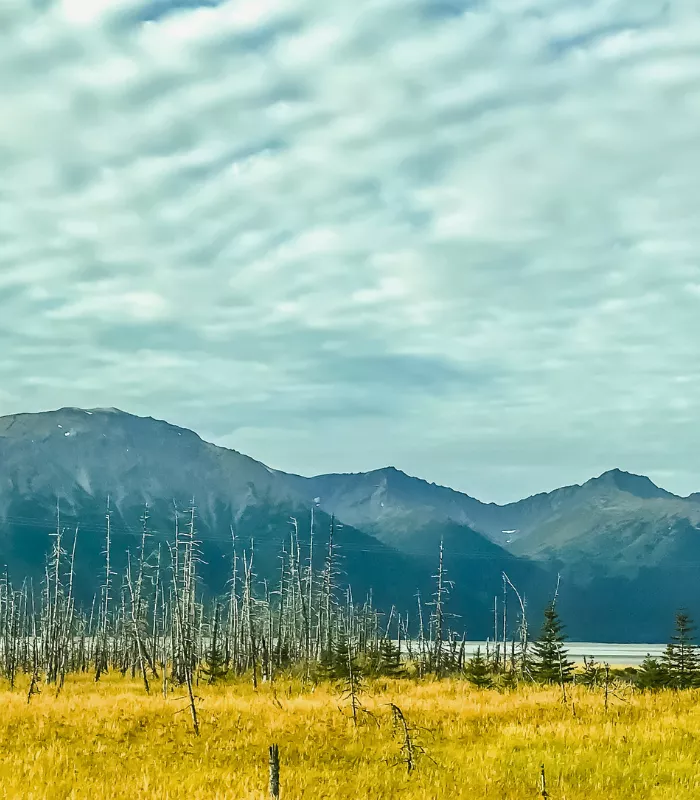
1970-something is roughly when Girdwood started building its reputation as Alaska’s premier ski scene, wrapped in coastal rainforest most people never expected to find this far north.
Summer trails took over once the snow melted, and the small downtown stayed walkable in both seasons. It never grew much beyond its core, which kept everything close together.
We loved the contrast between rainforest green and ski season white.
18. Juneau, Alaska’s Capital Downtown
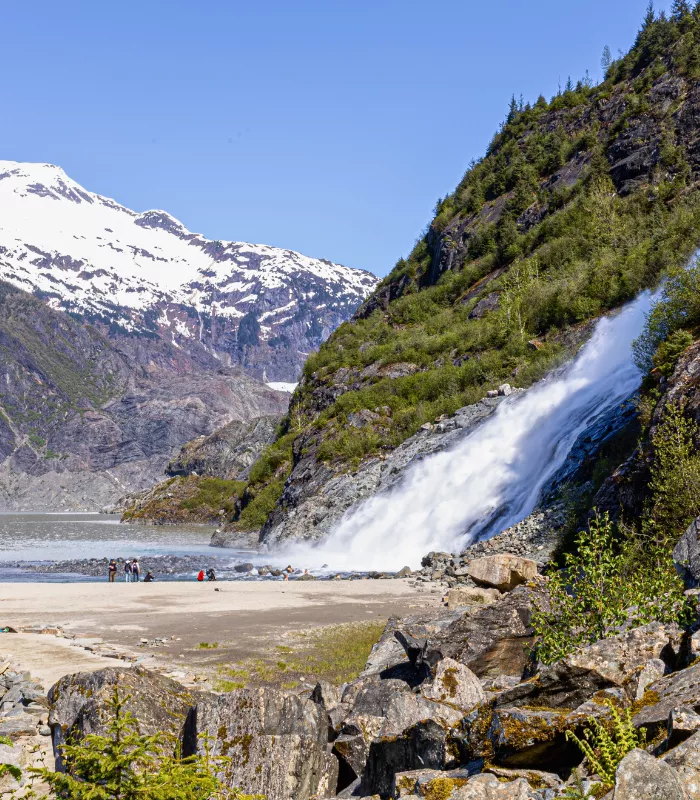
Juneau remains the only state capital you cannot reach by car, and that fact alone made it stand apart from every other town on this list.
Mendenhall Glacier stretched roughly thirteen miles long, with trails leading toward Nugget Falls, a 377-foot waterfall near the glacier’s edge. Downtown itself stayed dense and walkable, connecting shops, the Alaska State Museum, and the waterfront within a compact area.
Juneau’s population hovers around 32,000, making it one of the smallest state capitals in the country by population.
Getting there took a ferry or a short flight, never a highway.
19. Sitka, Alaska’s First Walk Friendly Community
2013 is when Sitka became the first town in Alaska officially named a walk-friendly community, and that recognition did not surprise anyone who had lived there.
The designation came from a consistently high walking rate, a low crash record, and an exceptional trail system that connected neighborhoods without much fuss. We took pride in that, even if the title itself sounded a little bureaucratic.
It was not flashy recognition. It reflected decades of a town simply built to be walked.
20. Wrangell, The Most Walkable Downtown in Alaska
Direct opinion, no hedging: Wrangell has the most walkable downtown in the entire state, and nothing else on this list came close.
The street pattern mirrored the shoreline, running parallel to Wrangell Harbor, with nearly every business and attraction within a ten-minute walk of the ferry terminal. The Nolan Center held the Wrangell Museum inside, tracing Tlingit heritage through Russian occupation and the Gold Rush, all just two blocks from the Stikine Inn. Front Street carried the shops and restaurants, including Michelle’s Taste of Asia, within three blocks of nearly everything.
Wrangell never chased tourist gimmicks. It just stayed itself, one tight, walkable grid at a time.