

Once upon a time, these corridors were the social media of the 70s, 80s, and 90s.
If you wanted news, gossip, and a new pair of slacks, you went to the same place.
Now, the plants are thriving because there are more ferns than customers.
Background music plays to an audience of ceiling tiles.
It is like watching retail history in reruns, only this time there are no commercials.
1. North Hanover Mall, Pennsylvania
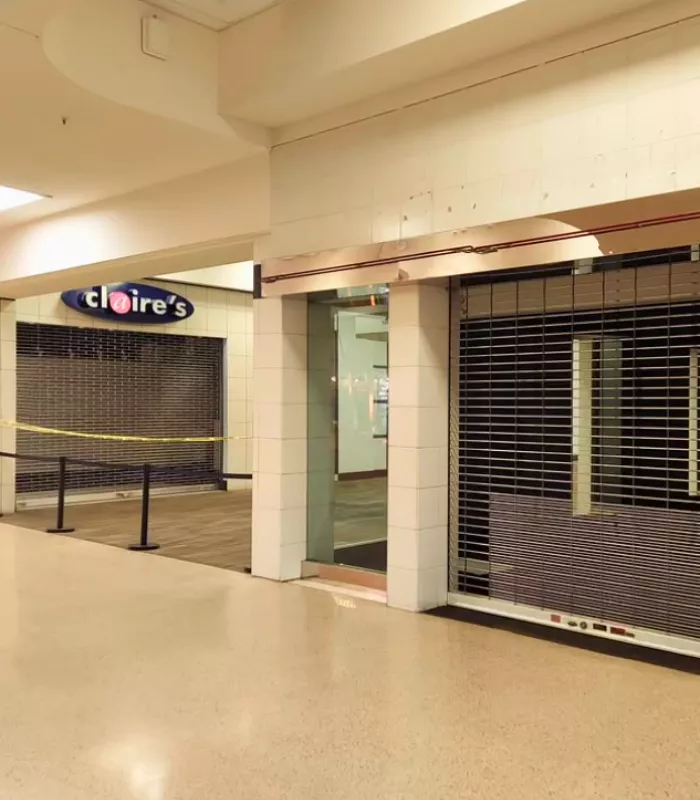
The North Hanover Mall was officially condemned in November 2025 after a partial wall collapse in the former JCPenney wing.
Officials found major roof leaks, collapsed ceilings, water in electrical boxes, and altered sprinkler heads. The mall had been declining for years under the ownership of NAMDAR Realty Group, which purchased it in 2014.
Before the condemnation, 19 stores were still operating despite the deteriorating conditions.
Only Rural King and a dialysis center remain open, protected by a firewall.
Emergency crews responded to the scene after discovering structural damage throughout the building.
The condemnation came after years of deferred maintenance and neglect by ownership.
Why It’s On This List: This mall literally collapsed and was condemned by authorities, forcing nearly all businesses to close immediately.
2. Chambersburg Mall, Pennsylvania
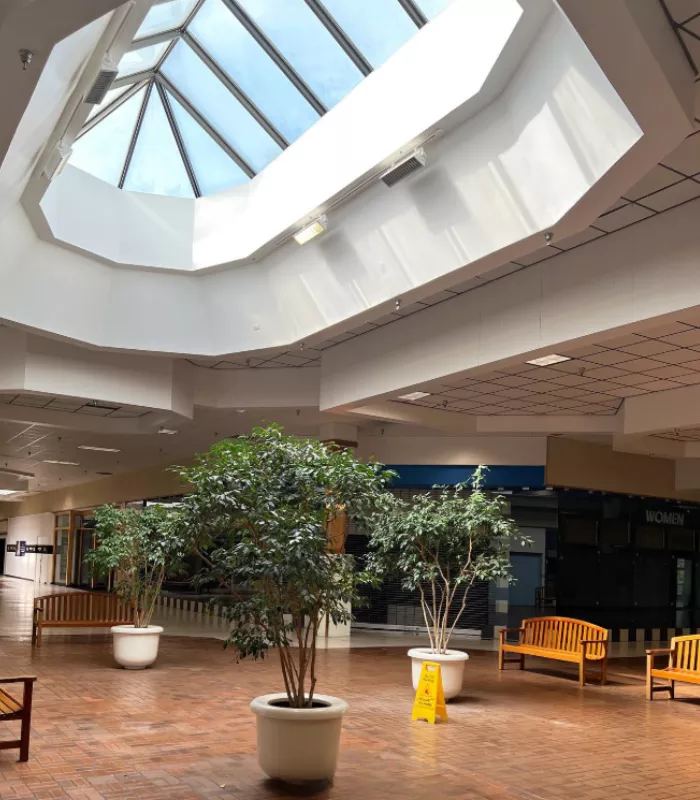
Chambersburg Mall permanently closed in June 2023 after its last tenant shut down.
The mall lost Bon-Ton in 2018 and Burlington in 2019. By 2020, occupancy dropped to just 10 percent.
NAMDAR Realty Group bought the property in 2013 but made no investments to save it.
The AMC Theater closed in April 2023, followed by Black Rose Antiques in June.
The final closure marked the end of a once-thriving shopping destination that served the community for decades.
Local businesses watched helplessly as the mall deteriorated under absentee ownership.
Why It’s On This List: The mall went from barely surviving to completely abandoned in just three years, with zero tenants remaining by mid-2023.
3. Pittsburgh Mills, Pennsylvania
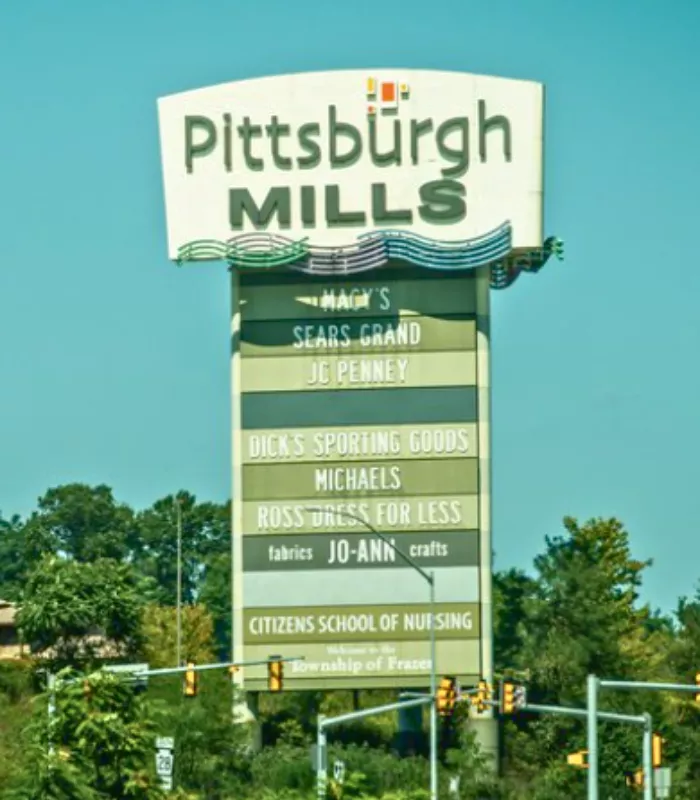
Pittsburgh Mills lost its last national retailer when Bath and Body Works closed in October 2025.
The mall opened in 2005 but immediately faced problems. NAMDAR Realty Group’s ownership led to its decline, matching the pattern seen at other Pennsylvania malls.
Dick’s Sporting Goods closed its Pittsburgh Mills location as part of 35 nationwide closures in 2025.
The mall is described as very dead despite remaining technically open.
Shoppers now find mostly local stores and vacant storefronts where national chains once operated.
The parking lots sit mostly empty even during peak shopping hours.
Why It’s On This List: A relatively new mall that failed within 20 years, now operating without any major national retailers to draw customers.
4. Nittany Mall, Pennsylvania
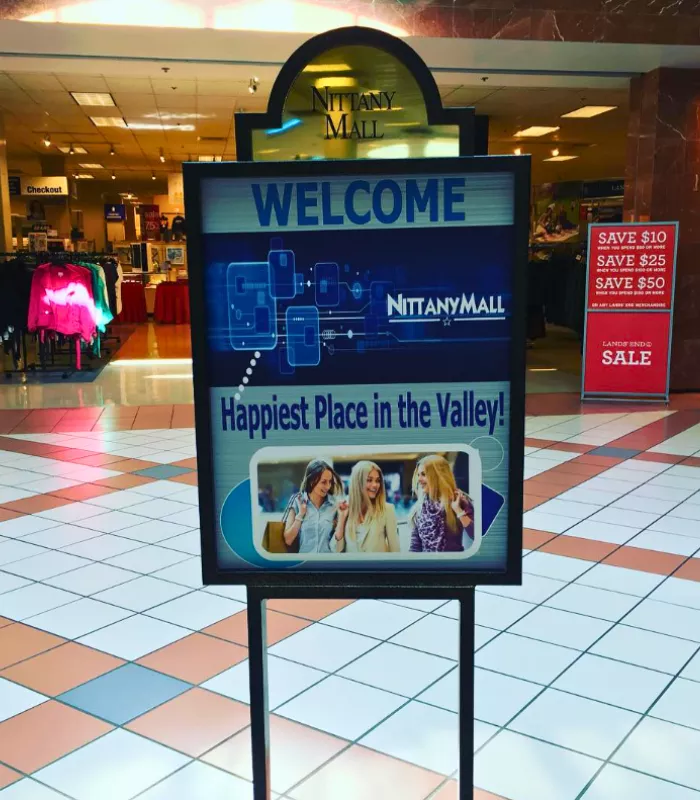
Nittany Mall in State College opened in 1968 and has been in slow decline ever since.
All four original anchor stores closed, including Sears, JCPenney, Macy’s, and Bon-Ton.
Macy’s has been empty since March 2020.
The mall interior shows many empty storefronts mixed with a few remaining national chains.
It’s located too far from Penn State University to attract student shoppers.
The massive anchor store spaces remain dark and unused, creating an eerie atmosphere for the few remaining visitors.
Management struggles to find any retailers willing to fill the vacant spaces.
Why It’s On This List: After 50 years of continuous decline, this mall has lost every single anchor tenant and struggles to fill even basic retail space.
5. Clearview Mall, Pennsylvania
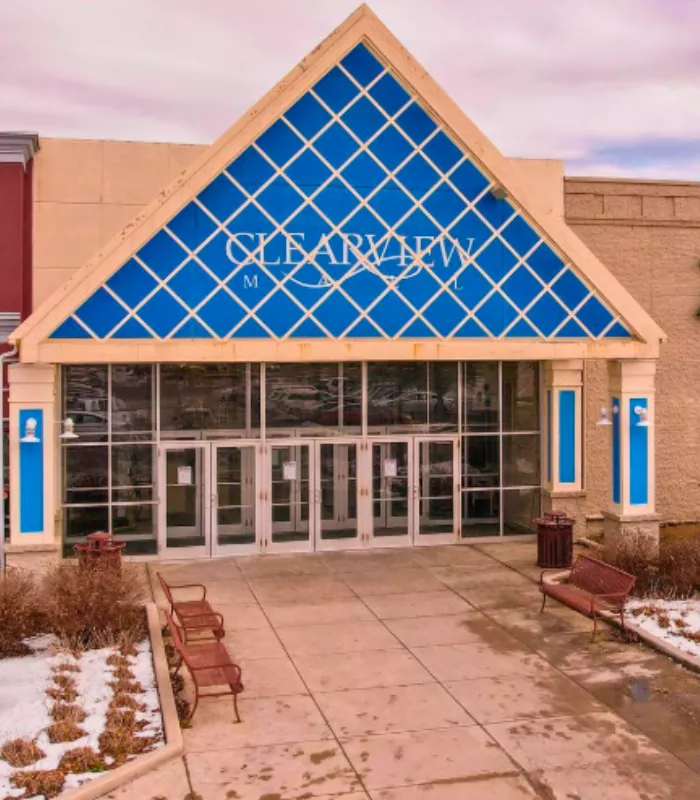
Clearview Mall in Butler opened in 1981 and peaked at 95 percent occupancy in 1998.
The mall now has only six stores operating, down from over 50 at its height.
JCPenney closed in August 2020 and remained empty for five years.
The former JCPenney space was sold in 2025 for $2.5 million to new developers.
TJ Maxx relocated to a newer store outside the mall.
Walking through the mall feels like a trip back in time, with outdated decor and empty corridors.
The few remaining stores cluster in one small section while the rest sits abandoned.
Why It’s On This List: Lost nearly 90 percent of its stores over two decades, with only 17 establishments currently operating in the entire complex.
6. Logan Valley Mall, Pennsylvania
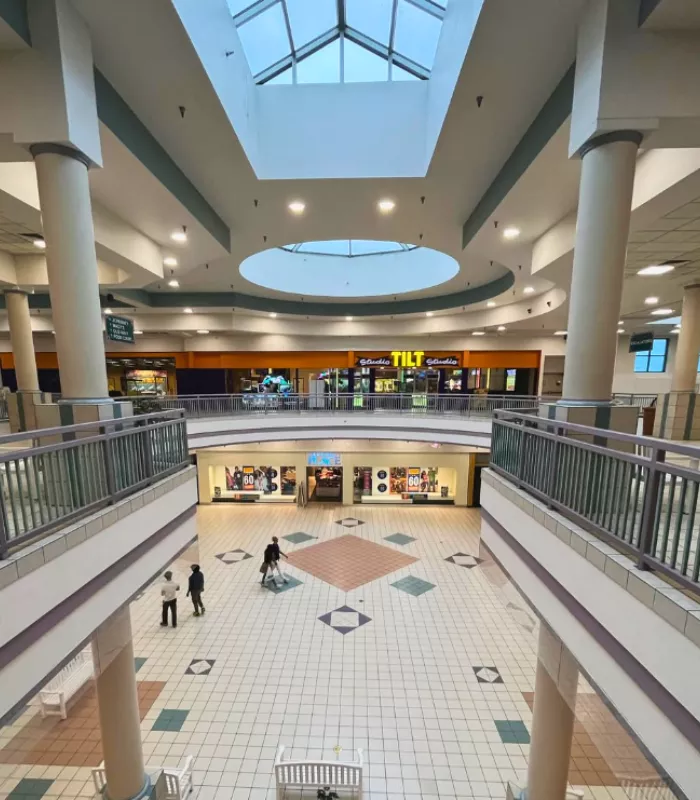
Logan Valley Mall in Altoona suffers from broken escalators, a partially closed parking garage, and moldy ceiling tiles.
The third-floor parking deck was closed for weeks during Christmas because of unplowed snow. Concrete fell from walls onto cars, forcing closure of one entrance ramp.
NAMDAR Realty Group and Mason Asset Management bought the property in 2017 for $33.2 million. Since then, major anchors like Sears, Macy’s, and the AMC theater closed.
Shop owners complain about water leaks, lack of maintenance, and dangerous conditions that threaten their businesses. One business owner predicted the parking garage will collapse within 10 years.
Why It’s On This List: The parking garage is literally falling apart, with one business owner predicting it will collapse within 10 years.
7. Colonial Park Mall, Pennsylvania
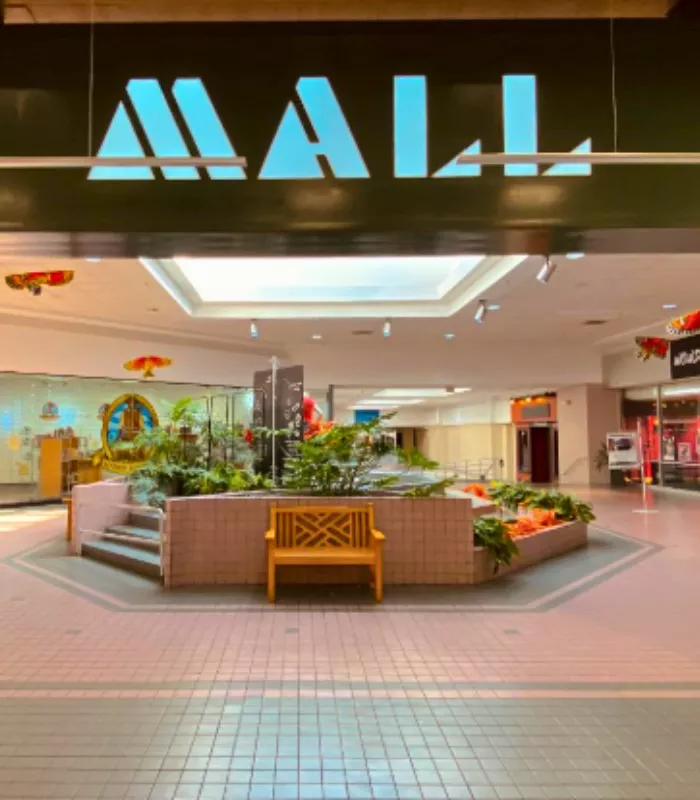
Colonial Park Mall faces numerous challenges and is back on the market.
The future remains uncertain as the property struggles to find a buyer. Multiple vacant storefronts dot the interior.
The mall’s appearance hasn’t impressed visitors who describe it as unattractive. It follows the same pattern as other struggling Pennsylvania malls.
Potential buyers have shown little interest in reviving the property due to its poor location and outdated design. The current ownership seems eager to unload the troubled asset.
Why It’s On This List: Owners are trying to sell because the mall can’t sustain itself financially, with no clear recovery plan in sight.
8. Johnstown Galleria, Pennsylvania
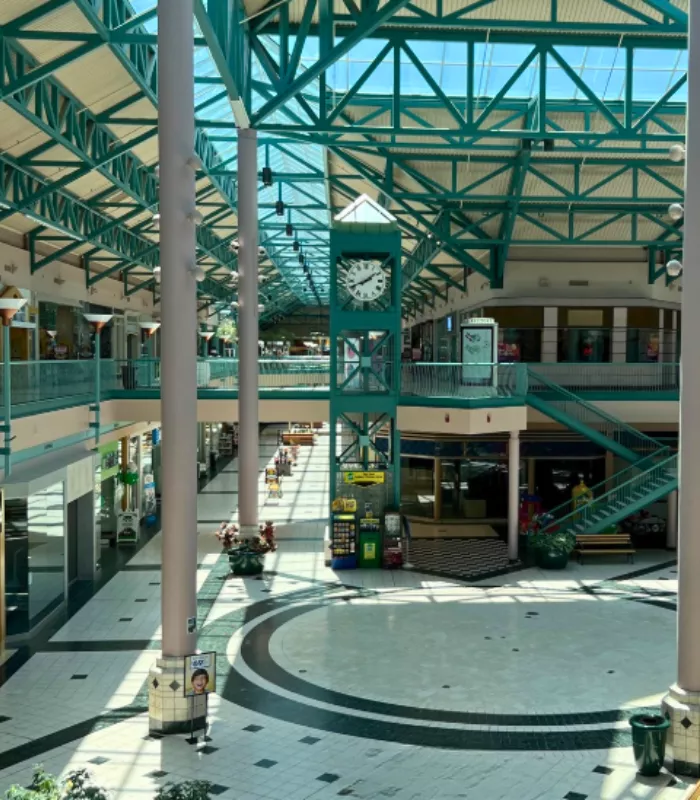
Johnstown Galleria has a stunning appearance but struggles despite new ownership efforts.
The new owner has tried to revitalize the property with limited success. The mall looks visually appealing but feels empty inside.
Foot traffic remains low even though the building itself is well-maintained. Local economic conditions make recovery difficult.
The beautiful architecture and clean hallways can’t hide the fact that most storefronts sit vacant. Even aggressive marketing campaigns haven’t brought shoppers back.
Why It’s On This List: Even aggressive revitalization efforts from new ownership haven’t been enough to bring shoppers back to this location.
9. Cranberry Mall, Pennsylvania
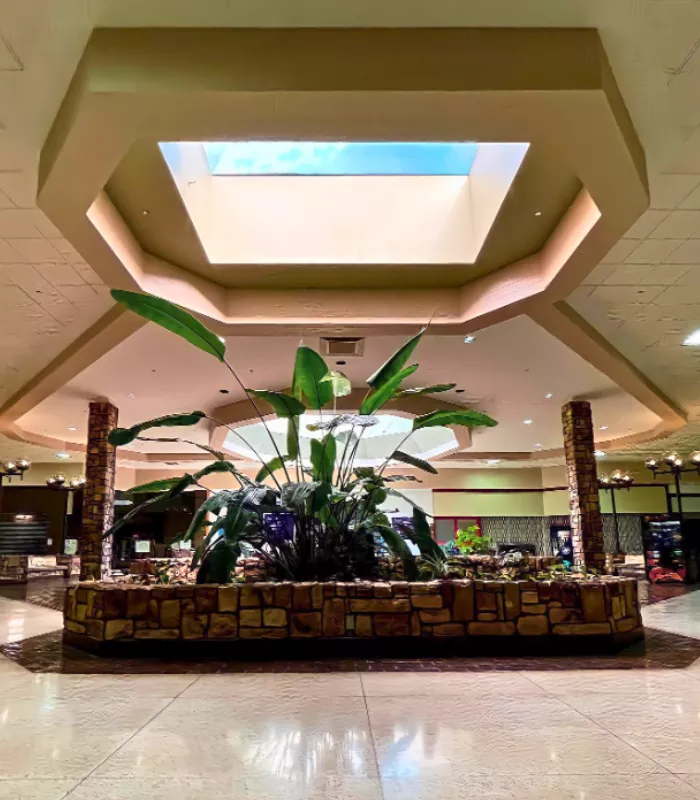
Cranberry Mall is in a precarious situation according to mall observers.
The mall faces an uncertain future despite being located in a growing area. Store closures have accelerated in recent years.
It’s considered an essential visit for those documenting dead malls. The property’s condition continues to worsen.
The contrast between the thriving community outside and the dying mall inside couldn’t be more stark. Residents drive past it to shop at newer developments instead.
Why It’s On This List: Located in an area with growth potential, yet still can’t attract or keep tenants due to poor management and maintenance.
10. Berkshire Mall, Pennsylvania
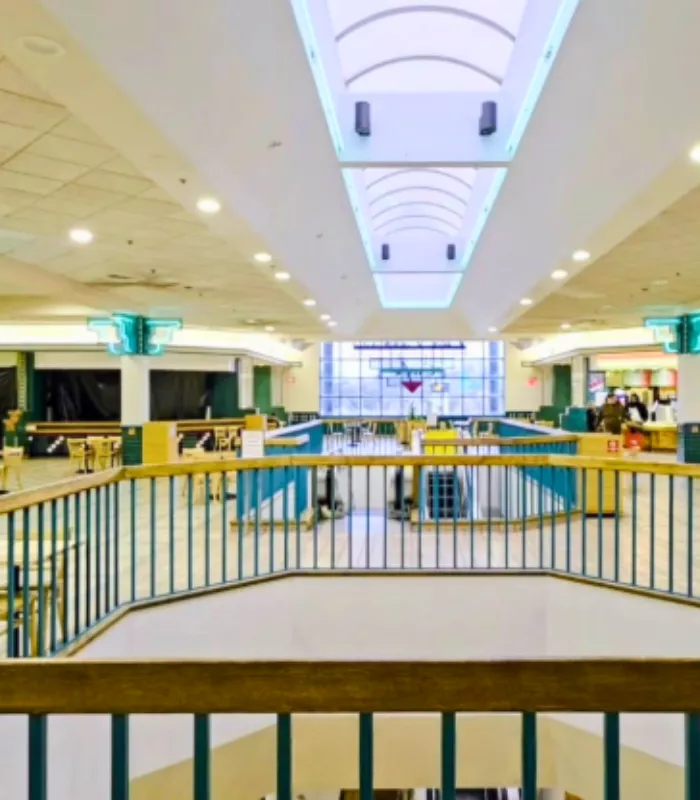
Berkshire Mall has an attractive design but struggles with empty storefronts.
The mall can get busy at certain times, showing some life remains. However, vacant spaces are still common throughout.
Its visual appeal hasn’t translated into sustained business success. The mall represents the challenge of maintaining relevance in the modern retail environment.
Occasional bursts of activity during holidays can’t mask the long-term decline happening here. The attractive exterior hides the struggling retailers inside.
Why It’s On This List: Good looks aren’t enough anymore – this mall proves that attractive buildings still fail without the right tenant mix and management.
11. Wyoming Valley Mall, Pennsylvania
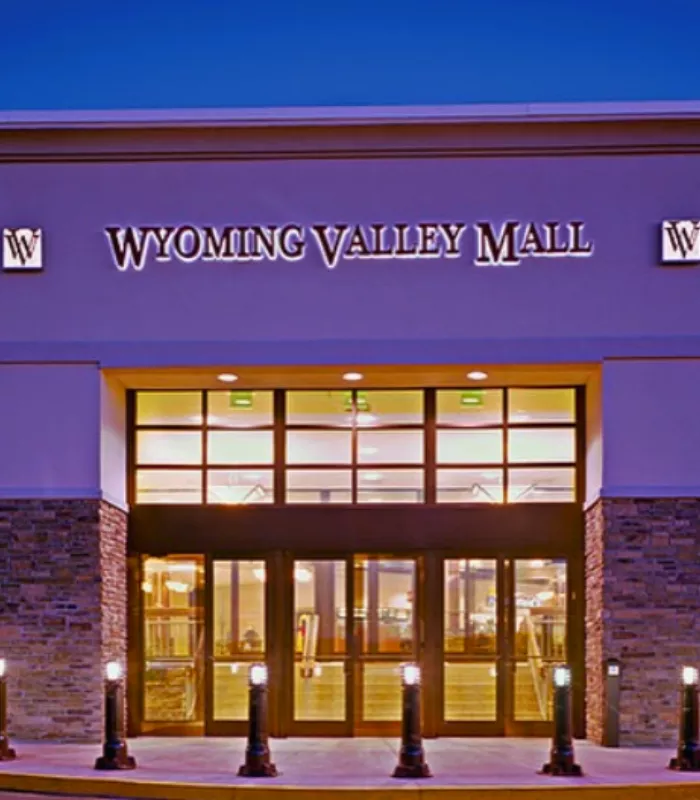
Wyoming Valley Mall in Wilkes-Barre was sold for just $17 million in December 2025 after the previous owner handed it to the mortgage holder to avoid foreclosure.
The property’s tax assessment plunged from $68.7 million to just $13.6 million, showing its massive loss in value. The former owner owed $72.8 million on the loan when they gave up the property in 2019.
Both Sears and Bon-Ton closed, leaving the mall at roughly two-thirds occupancy. Fitch Ratings labeled it as a Fitch Loan of Concern due to expected losses.
The dramatic price drop reflects how quickly mall values can collapse in today’s retail environment. Investors now view the property as a risky bet rather than a solid investment.
Why It’s On This List: The mall lost 80 percent of its value in just five years, with owners choosing foreclosure over trying to save it.
12. Marketplace at Steamtown, Pennsylvania
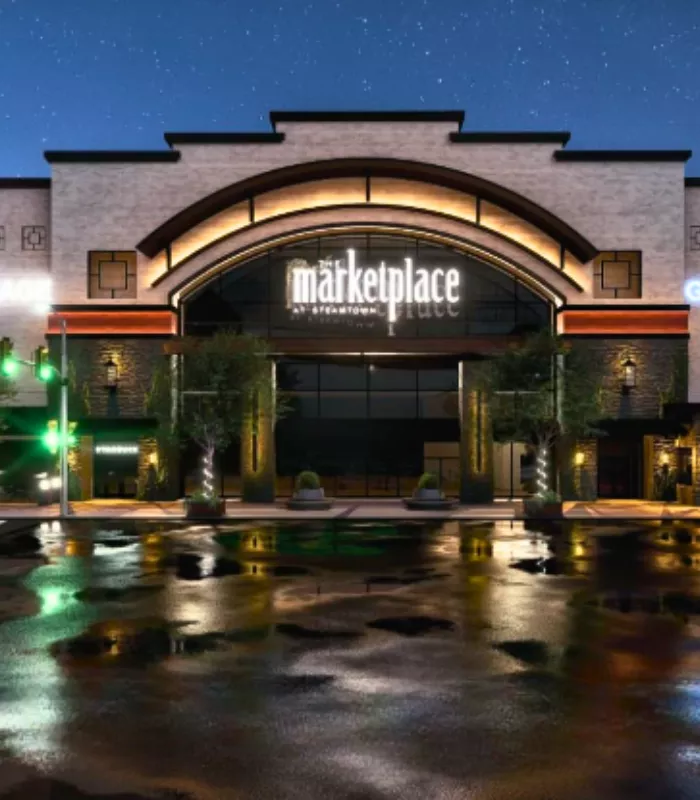
The Marketplace at Steamtown in Scranton opened in 1993 with massive fanfare but has struggled ever since.
The mall was built on an abandoned railroad yard and conceived as downtown Scranton’s savior. Montgomery Ward and The Globe Store both closed, leaving only Boscov’s as an anchor.
Visitors describe it as dying, pretty dirty, and sticky. The mall interior feels empty with very few popular stores to attract shoppers.
The ambitious downtown revitalization project never achieved its goals of bringing prosperity back to Scranton. What remains is a largely empty shell of broken promises.
Why It’s On This List: Despite national TV coverage and governor’s attendance at its opening, this mall never lived up to expectations and remains largely vacant.
13. Lycoming Mall, Pennsylvania
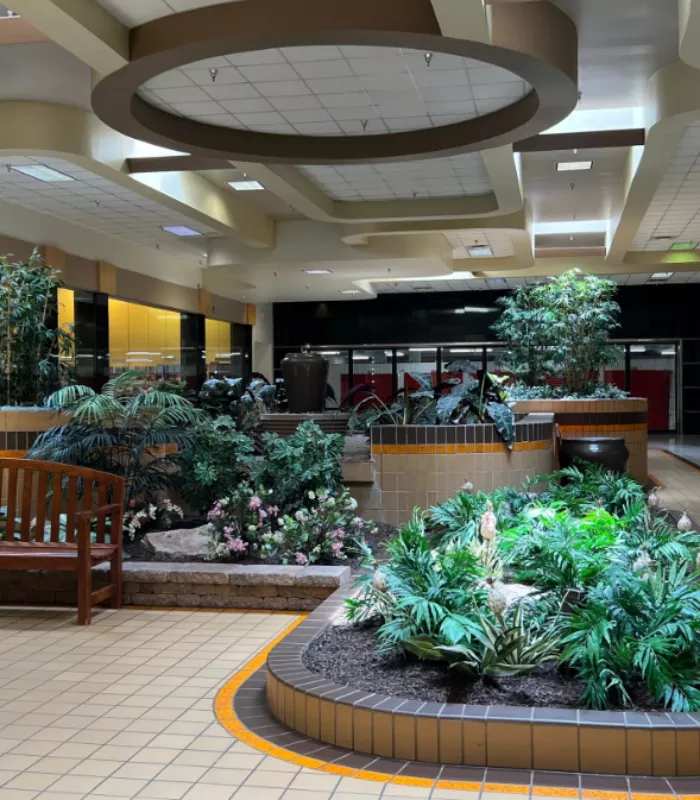
Lycoming Mall in Pennsdale had its power cut off for unpaid bills in the past.
All four anchor stores closed within two years, including Sears, Macy’s, JCPenney, and Bon-Ton. By 2020, the mall sat at only 60 percent occupancy across 85 storefronts.
About 10 empty storefronts dot the interior, with far fewer people shopping nowadays. The cost of lighting and air conditioning became too expensive as stores sat empty.
The embarrassing power shutoff highlighted just how dire the financial situation had become. Management couldn’t even keep the lights on as revenue dried up.
Why It’s On This List: When a mall can’t even pay its electric bill, you know things have hit rock bottom financially.
14. Palmer Park Mall, Pennsylvania
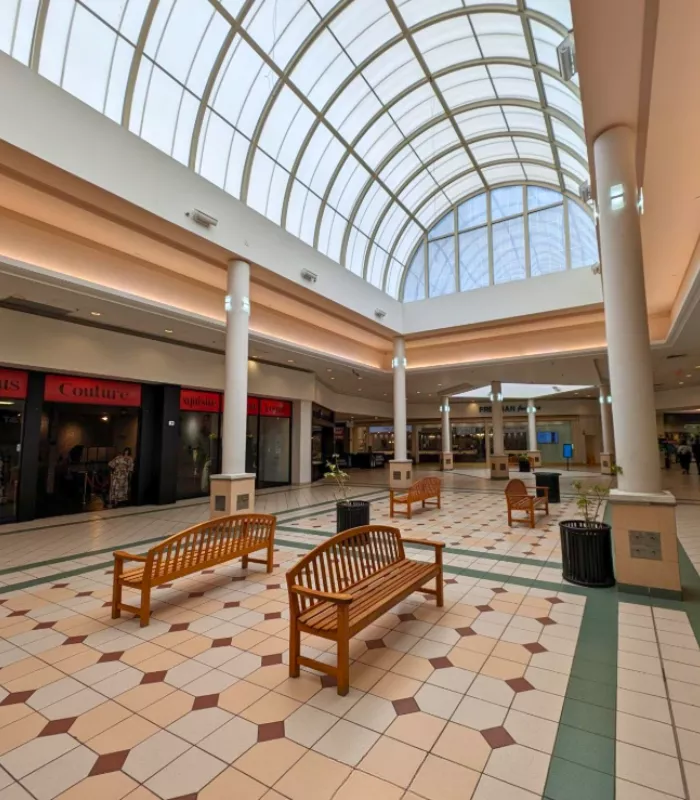
Palmer Park Mall in Easton no longer has a traditional food court and features many empty spaces.
Bon-Ton closed as a major anchor store, pushing the mall closer to dead mall status. Reviewers say Amazon is about to claim another victim here.
The future remains uncertain with only Boscov’s keeping it alive. The mall needs a major overhaul or new anchor to survive the next five years.
The absence of a food court eliminates a key reason families once visited. Without dining options, shoppers have little reason to linger.
Why It’s On This List: A one-level mall losing its anchor stores, with no food court and minimal foot traffic heading toward total closure.
15. Neshaminy Mall, Pennsylvania
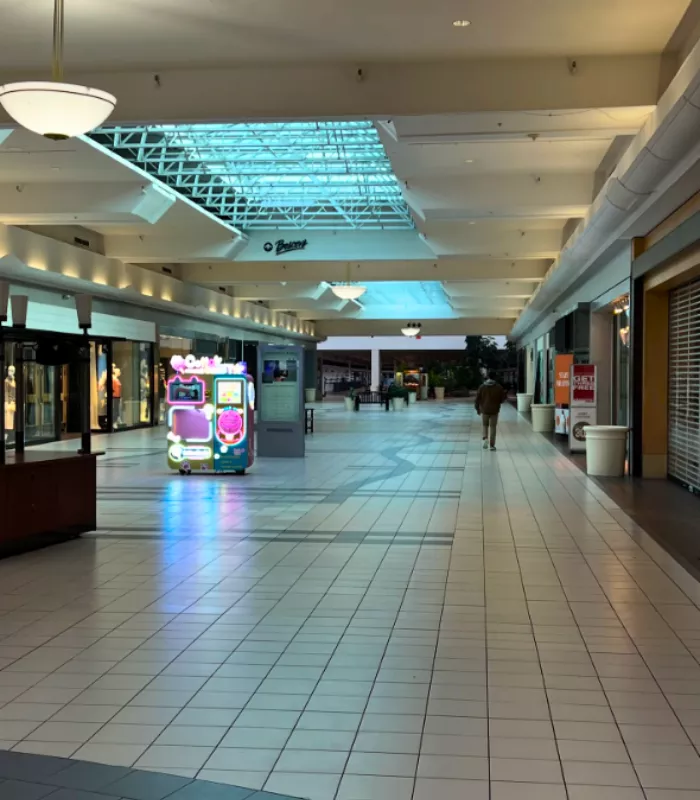
Neshaminy Mall in Bensalem saw more than half its stores become vacant by 2024.
The mall was put up for sale in February 2024 and sold for just $27.5 million in July. Macy’s closed in April 2017, followed by Foot Locker, Modell’s Sporting Goods, Chick-fil-A, and Charleys Philly Steaks.
Only 40 stores remained by 2024, down from over 100 at its peak. The abandoned section includes a closed Sears that shoppers now walk past.
The mall’s rapid decline shocked local residents who remembered when it was the place to shop. Now it’s a cautionary tale of retail’s changing landscape.
Why It’s On This List: Lost more than half its stores in just seven years, with the food court reduced to barely operating.
16. Whitehall Mall, Pennsylvania
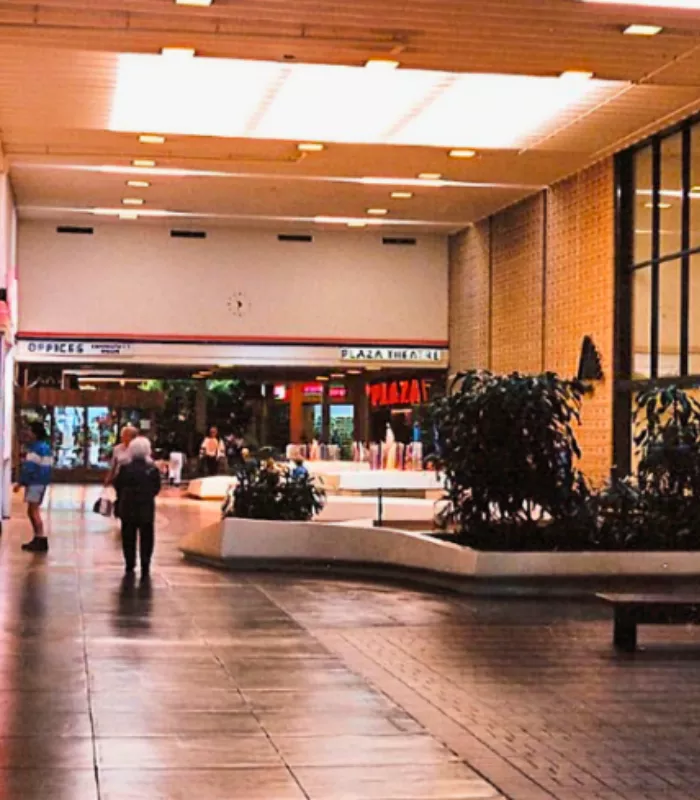
Whitehall Mall in the Lehigh Valley closed major retailers like Bed Bath and Beyond, Face Values, and Old Country Buffet in 2023.
The Sears location barely survived despite being the only Sears in the entire Lehigh Valley area. Entire wings of the Sears store remained completely empty but still accessible to shoppers.
Vendors terminated decades-old contracts with Sears because they lacked confidence in getting paid. The Sears building is now set for demolition.
Even monopoly status in a large market couldn’t save this failing anchor store. The demolition marks the final chapter of Sears in the region.
Why It’s On This List: Even having zero competition in a metro area of 650,000 people wasn’t enough to keep this Sears profitable.
17. Westmoreland Mall, Pennsylvania
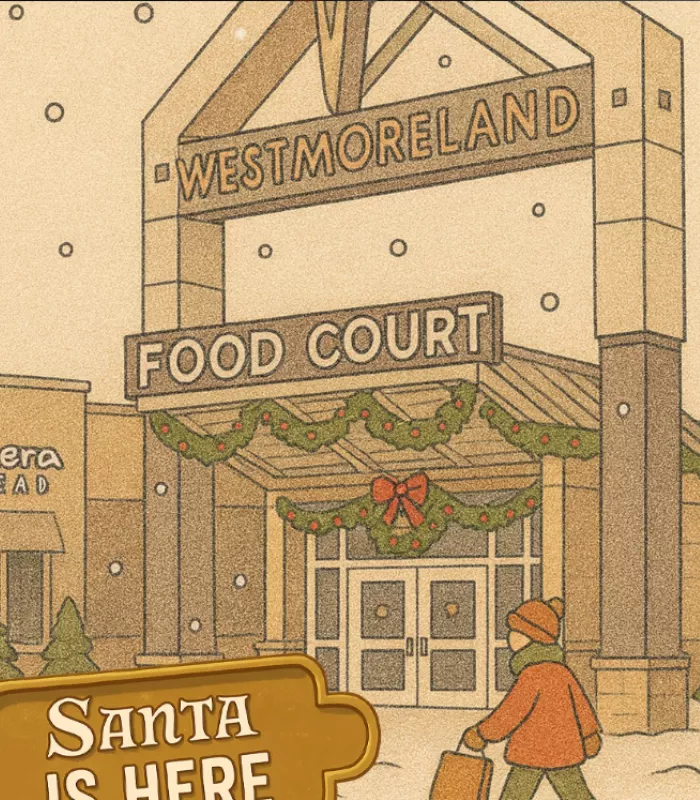
Westmoreland Mall in Greensburg was once one of western Pennsylvania’s largest indoor shopping malls.
The mall faced closures of major anchors JC Penney, Bon-Ton, and Macy’s over the years. Dick’s Sporting Goods at nearby Hempfield Pointe closed in early 2025, removing retail options from the area.
The mall is owned by CBL and Associates Properties, known for managing struggling malls. It lost significant foot traffic to newer developments in the region.
The mall that once defined shopping in Greensburg now struggles for relevance against modern competition. Each anchor closure brings it closer to joining Pennsylvania’s growing list of dead malls.
Why It’s On This List: Once the pride of western Pennsylvania, this mall now struggles to compete as anchor stores abandon ship one by one.