

The 1960s had bell-bottoms, the Beatles, and apparently, a burning need to reinvent capitalism.
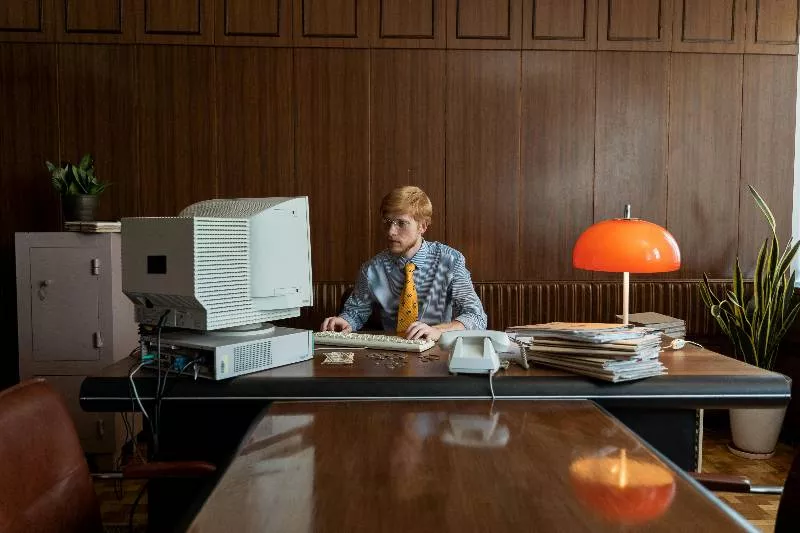
While the rest of the world was tuning in and dropping out, a surprisingly ambitious group of suits were furiously debating whether franchising a burger stand counted as a revolution.
It did.
Turns out the decade that gave us Woodstock also quietly rewired how money, ambition, and bad ideas with good timing could change an entire economy.
Some of the smartest business moves in history wore polyester.
1. The Rise of the Conglomerate
In the 1960s, big business got even bigger.
Companies started buying other companies in completely unrelated industries.
This was called a conglomerate.
By the late 1960s, conglomerates made up over 90% of the Fortune 500.
The big idea was “synergy” — the belief that a conglomerate as a whole could be worth more than the sum of its parts.
But here’s the catch: many of these deals were built on debt and inflated stock prices, not real value.
Why It’s On This List: The conglomerate craze reshaped every major American industry — and its collapse helped trigger the economic stagnation of the 1970s.
2. Franchising Fever
The 1960s were the golden age of the franchise.
Between 1964 and 1969, an estimated 100,000 new franchise businesses opened across the United States.
McDonald’s, KFC, Holiday Inn, and Burger King all hit or approached 1,000 locations during this decade.
Buying a franchise meant everyday people could own a business under a trusted brand — with training and marketing included.
The Interstate Highway System made it all possible, connecting suburbs to fast food, motels, and service stations.
Why It’s On This List: Franchising turned the dream of business ownership into something millions of ordinary Americans could actually reach.
3. Venture Capital Takes Shape
Before the 1960s, most entrepreneurs funded their ideas alone or through banks.
Then venture capital changed everything.
The Small Business Investment Act of 1958 created government-backed firms that poured money into early-stage companies.
By the late 1960s, hundreds of new venture capitalists emerged practically overnight, mostly focused on electronics and computing.
That’s why Silicon Valley became what it is today — the money followed the ideas.
Why It’s On This List: The venture capital model born in this era went on to fund Apple, Intel, and nearly every major tech company you know.
4. The MBA Obsession
In the 1960s, the business world fell in love with a new kind of professional: the MBA graduate.
Business schools were seen as factories for management genius.
Companies trusted MBA-trained executives to run industries they knew nothing about personally.
The idea was that great management could be applied to anything — steel, meat packing, electronics, you name it.
Historians now say this thinking helped conglomerates grow far too fast, with too little focus on actual products or people.
Why It’s On This List: The MBA craze of the 60s reshaped corporate culture in ways still felt today — for better and for worse.
5. The Space Race and Tech Startups
When the Soviet Union launched Sputnik in 1957, it shocked the United States into action.
Defense contracts poured billions into electronics and semiconductor companies.
Fairchild Semiconductor, founded in 1957, became one of the first major tech startups fueled by aerospace demand.
Engineers who left Fairchild went on to start dozens of new companies — a pattern that built Silicon Valley from the ground up.
One unusual perk at Fairchild changed business forever: employees could own company stock.
Why It’s On This List: The Space Race created the startup culture we recognize today — fast-moving, innovation-driven, and funded by big ambitions.
6. Minority Entrepreneurship Debates
Civil rights and business collided in the 1960s in ways that sparked real national debate.
Black Americans were largely excluded from business networks, country clubs, capital, and credit.
In 1968, the Ford Foundation began funding minority-owned businesses for the first time.
That same year, Rev. Leon Sullivan helped build the first minority-owned shopping center in the United States — Progress Plaza in Philadelphia.
It was a starting point, not a finish line, but it proved that the debate over economic equity in business had finally entered the mainstream.
Why It’s On This List: The push for minority enterprise in the 60s laid the groundwork for affirmative action in business contracting that followed in the decades ahead.
7. Consumer Power Wakes Up
Shoppers in the 1960s started pushing back.
They grew skeptical of advertising claims and frustrated with planned obsolescence — the practice of making last year’s product look outdated on purpose.
One Denver housewife summed it up perfectly: “I’ve got a good refrigerator in my kitchen.”
Entrepreneurs who listened to this shift built more honest, durable brands — and won loyal customers.
That’s why the consumer movement of the 60s became a real force in shaping how businesses had to operate.
Why It’s On This List: Consumer skepticism in the 1960s changed how companies marketed products — and gave rise to consumer protection laws still protecting you today.
8. The Economic Growth Debate
Everyone in the 1960s agreed America needed to grow faster — but nobody agreed on how.
After decades of roughly 3% annual growth, the country slipped to just over 2% by the early 1960s.
Politicians wanted 5% or 6%. Businessmen said 3% was more realistic.
President Kennedy argued that cutting tax rates would release dollars into the economy, creating jobs and new salaries.
His tax cuts passed in 1964 and helped fuel a 106-month economic expansion — the longest in U.S. history at the time.
Why It’s On This List: The growth debate of the 60s gave birth to supply-side economic thinking that still shapes tax policy debates in every election cycle.
9. Selling Stock Door to Door
Not every entrepreneur in the 1960s had a fancy office or Wall Street connections.
James Ling of Dallas literally hawked his company’s stock at a booth at the Texas State Fair.
He raised enough money to build Ling-Temco into the 14th largest industrial company in the country by 1960.
His story showed that boldness and hustle could substitute for pedigree — at least for a while.
I made a classic mistake reading his story: I assumed all 1960s business giants started with privilege. Many did not.
Why It’s On This List: Ling’s rise and fall is one of the most dramatic entrepreneurial stories of the 20th century — and it still has lessons worth learning.
10. Fast Food as a Business Model
In the 1950s, barely a dozen fast-food franchise companies existed.
By 1967, there were more than 150. By 1968, nearly 250.
McDonald’s, Taco Bell, KFC, Denny’s, IHOP, and Arby’s all went public during the 1960s.
The combination of suburban growth, the new Interstate Highway System, and baby boomers becoming teenagers created a perfect storm for fast food.
You’re better off thinking of these chains not as restaurants, but as the decade’s most successful entrepreneurial experiments in scale and consistency.
Why It’s On This List: The fast food IPO boom of the 1960s created the template for how franchise businesses raise money and grow nationally — a model still copied today.
11. The Direct Sales Revolution
Tupperware did not sell its products in stores.
Instead, it relied on housewives hosting parties in their living rooms.
By 1963, Tupperware was generating over $25 million a year through this model.
Direct sales gave women a way to earn income at a time when corporate jobs were largely closed to them.
Avon, Mary Kay, and Amway all grew rapidly using the same idea — sell person to person, not shelf to shelf.
Why It’s On This List: The direct sales model of the 60s gave millions of women their first taste of entrepreneurship — and it still powers a multi-billion-dollar industry today.
12. The Self-Help Business Movement
The 1960s saw a flood of books telling ordinary people they could build wealth on their own.
Napoleon Hill’s “Think and Grow Rich” from 1937 found a massive new audience.
Dale Carnegie’s teachings were adapted into corporate training programs across the country.
The idea that mindset and attitude could determine business success became a defining belief of the decade.
That’s why motivational speaking became its own industry — and why it has never stopped growing since.
Why It’s On This List: The self-help business culture of the 60s gave birth to a coaching and personal development industry now worth over $40 billion globally.
13. Advertising Gets Bold
Before the 1960s, most ads simply described what a product did.
Then a small New York agency named Doyle Dane Bernbach changed everything with the Volkswagen Beetle campaign.
“Think Small” ran in 1960 and dared to mock the very product it was selling.
It worked. Sales surged. The ad is still ranked the greatest of the 20th century.
Entrepreneurs realized for the first time that humor, honesty, and self-awareness could sell better than polish and perfection.
Why It’s On This List: The creative advertising revolution of the 60s permanently changed how businesses connect with customers — and set the stage for modern brand storytelling.
14. Credit Cards Enter the Conversation
BankAmericard — later renamed Visa — launched nationally in the early 1960s.
By 1967, it had over 2 million cardholders across the United States.
Small business owners debated fiercely: accept cards and pay fees, or stick to cash and lose customers?
Many held out. But the customers who carried cards often spent more per visit.
That’s why credit card acceptance eventually became non-negotiable for anyone running a retail business.
Why It’s On This List: The credit card debate of the 60s mirrors today’s debates about digital payments and transaction fees — same argument, different technology.
15. The Independent Inventor Fades Out
For over a century, the lone inventor in a garage was America’s favorite entrepreneurial hero.
But by the 1960s, corporate research labs had taken over.
IBM, Bell Labs, and Xerox were filing thousands of patents per year.
Individual entrepreneurs could no longer compete in capital-heavy industries — they had to work with big companies or get swallowed by them.
But here’s the deal: the garage inventor never truly disappeared. The 1970s and 1980s would bring them roaring back.
Why It’s On This List: The tension between independent inventors and corporate R&D labs in the 60s set up the personal computer revolution that followed just one decade later.
16. Women in Business Push Back
In 1963, Betty Friedan published “The Feminine Mystique” and shook the country.
Women were frustrated with being steered away from professional and entrepreneurial life.
By 1967, female business ownership was growing faster than at any point since World War II.
Women who started businesses in this era often had to use their husband’s credit scores, because banks refused to give loans to women directly.
The Equal Credit Opportunity Act would not arrive until 1974 — but the debate started loudly in the 1960s.
Why It’s On This List: The fight for women’s access to business capital in the 60s led directly to laws still protecting female entrepreneurs today.
17. The Shopping Mall Transforms Retail
Victor Gruen designed the first fully enclosed shopping mall in Edina, Minnesota, in 1956.
By the mid-1960s, hundreds of malls were under construction across the country.
Small retailers had a painful choice: move into a mall and pay high rent, or stay on Main Street and watch foot traffic disappear.
The mall did not just change where people shopped — it changed how entrepreneurs thought about location, experience, and retail design.
Many of the small business owners who made the move thrived. Many who resisted did not survive the decade.
Why It’s On This List: The mall revolution of the 60s is the clearest historical parallel to today’s debate about whether small businesses can survive alongside Amazon.
18. The Automation Scare
When factories started installing new automated equipment in the 1960s, workers and business owners both panicked.
A 1964 government report warned that machines could eliminate millions of jobs within a generation.
Entrepreneurs debated whether to invest in automation and face public backlash, or hold off and fall behind competitors.
The fear turned out to be partly right and partly wrong — automation eliminated some jobs and created entirely new ones.
You’re better off viewing this 1960s debate as the direct ancestor of today’s conversations about artificial intelligence and the future of work.
Why It’s On This List: The automation debate of the 60s is one of the most accurate historical mirrors for the AI disruption debate happening right now in 2026.
19. Going Global for the First Time
After World War II, American companies slowly began to look beyond U.S. borders.
By the 1960s, international expansion had become a serious entrepreneurial trend.
Companies like Coca-Cola, IBM, and Ford had significant overseas operations — and smaller businesses wanted a piece of that growth.
The big debate was whether American business culture and products could translate to foreign markets.
Most entrepreneurs who tried it in the 1960s discovered that success abroad required local knowledge, local partners, and a lot of patience.
Why It’s On This List: The global expansion experiments of the 60s created the international business playbook that millions of companies still follow today.
20. The Idea That Anyone Could Be Rich
Perhaps no entrepreneurial trend from the 1960s was more powerful — or more debated — than this one.
The American Dream had always promised upward mobility. But in the 1960s, it became a product.
Seminars, books, newsletters, and sales pitches all sold the same message: ordinary people could build wealth with the right system.
Some of those systems were brilliant. Others were closer to get-rich-quick schemes dressed up in business language.
The debate about which was which never fully got resolved — and it is still going on today.
Why It’s On This List: The “anyone can get rich” movement of the 60s gave birth to modern entrepreneurship culture — the same spirit that drives every startup pitch, side hustle, and small business dream you see today.