

The 1980s workplace offered a pension, a company car, and a parking spot with your name on it.
One of these is a better deal.
The perks that defined 80s employment were built around a simple idea: if you give your working years to this company, the company gives something real back.
That idea has been fading ever since.
These 20 perks are what it actually looked like.
1. Free Coffee All Day Long

In the 1980s, free coffee was not a perk. It was a given.
Most offices had a communal coffee pot running from the moment the first person walked in.
Office coffee culture in the 80s was a social ritual as much as a caffeine fix.
Nobody had a Keurig on their desk. Nobody was ordering oat milk lattes.
There was one pot, one kind of coffee, and everyone shared it.
Workers who remember it say there was something genuinely warm about gathering around that old machine every morning.
Why It’s On This List: Free coffee sounds basic today, but in the 80s it was one of the most universally remembered office perks. It also anchored a daily social ritual that most modern workplaces have quietly lost.
2. Company Cars

Getting a company car in the 1980s was a serious status symbol.
Sales reps, managers, and executives were often given a car as part of their compensation package.
By the mid-1980s, there were an estimated 3 million company cars on U.S. roads.
The type of car you got told everyone exactly where you ranked in the company.
A Buick meant middle management. A Lincoln Town Car meant you had arrived.
Company car programs have shrunk dramatically since then, replaced by car allowances and mileage reimbursements.
Why It’s On This List: The company car was one of the most tangible and talked-about perks of 80s corporate life. It was not just transportation. It was a message about your value to the organization.
3. Long Business Lunches on the Company Tab
The expense account lunch was a prized perk of 1980s corporate culture.
Taking a client — or even a colleague — to a nice restaurant and charging it to the company was completely normal.
The IRS allowed businesses to deduct 100% of meal expenses until the Tax Reform Act of 1986 cut it to 80%.
That tax change signaled the beginning of the end for the lavish business lunch era.
But through most of the 80s, a long lunch at a good restaurant was just part of the job.
Workers who lived it still talk about those meals with a certain fondness.
Why It’s On This List: The expense account lunch was a fixture of 80s work life that felt glamorous even when it was routine. Its slow disappearance changed how business relationships were built.
4. Company Picnics and Holiday Parties

The annual company picnic and holiday party were major events in 1980s workplaces.
Companies invested real money in these gatherings, often renting venues, hiring caterers, and including families.
These events were seen as a genuine investment in morale and company loyalty.
Workers brought their spouses and kids. Bosses mingled with everyone.
The holiday party in particular was a highlight of the year in many organizations.
Today, budget cuts and HR concerns have made these events smaller, more cautious, and less memorable.
Why It’s On This List: Company social events in the 80s were a real perk that built genuine community. People who worked then remember them as some of the best memories from their careers.
5. Defined Benefit Pensions

If you worked for a large company in the 1980s, a pension was often part of the deal.
A defined benefit pension meant the company promised you a set monthly income for life after retirement.
In 1980, about 83% of private sector workers with retirement plans had a defined benefit pension.
That number has collapsed. Today, fewer than 15% of private sector workers have one.
The 80s were the last decade when most corporate workers could count on a pension as a real retirement foundation.
Many people who had them look back and realize they did not appreciate how valuable that promise really was.
Why It’s On This List: The defined benefit pension was the most financially significant perk of 80s employment. Its near-disappearance is one of the biggest shifts in American working life over the past 40 years.
6. On-Site Gyms

Large corporations in the 1980s began adding on-site gyms as a benefit for employees.
It was seen as a forward-thinking perk that signaled a company cared about its workers.
Studies in the 80s began linking employee fitness to productivity, which gave executives a business case for the investment.
Having a gym in the building meant no commute to work out and no monthly membership fee.
Workers who had access to one often say it genuinely changed their health habits.
Today, gym benefits are common in big tech and finance, but the on-site gym was an 80s innovation that felt very new at the time.
Why It’s On This List: The on-site corporate gym was a genuine 80s perk that felt ahead of its time. It signaled a shift in how companies thought about employee wellbeing.
7. Generous Vacation Time

Many large employers in the 1980s offered vacation packages that seem generous by today’s standards.
Three or four weeks of paid vacation after a few years of service was not unusual in major corporations.
The U.S. has never mandated paid vacation by law, but corporate norms in the 80s often delivered it anyway.
Workers were expected to take their vacation. Bosses encouraged it.
The idea of someone banking unused vacation days for years would have seemed strange to most 80s managers.
Today, “unlimited PTO” policies often result in people taking less time off, not more.
Why It’s On This List: Vacation time in the 80s was a real perk backed by real culture. People actually took it, and companies actually wanted them to. That combination has become surprisingly rare.
8. Office Supply Rooms You Could Actually Use

In the 1980s, the office supply room was treated almost like a shared resource for everyone.
Workers could take home pens, notepads, folders, and basic supplies without filling out a form or asking permission.
The casual access to office supplies was seen as a small but meaningful part of the job’s overall value.
It also built a sense of trust between employers and employees that is harder to find today.
Over time, tightening budgets and inventory control software changed all of that.
Today, ordering a box of pens often requires a purchase order.
Why It’s On This List: Free access to office supplies sounds minor, but it was a symbol of a trust-based workplace culture in the 80s that felt very different from the controlled environments many workers know today.
9. Casual Fridays
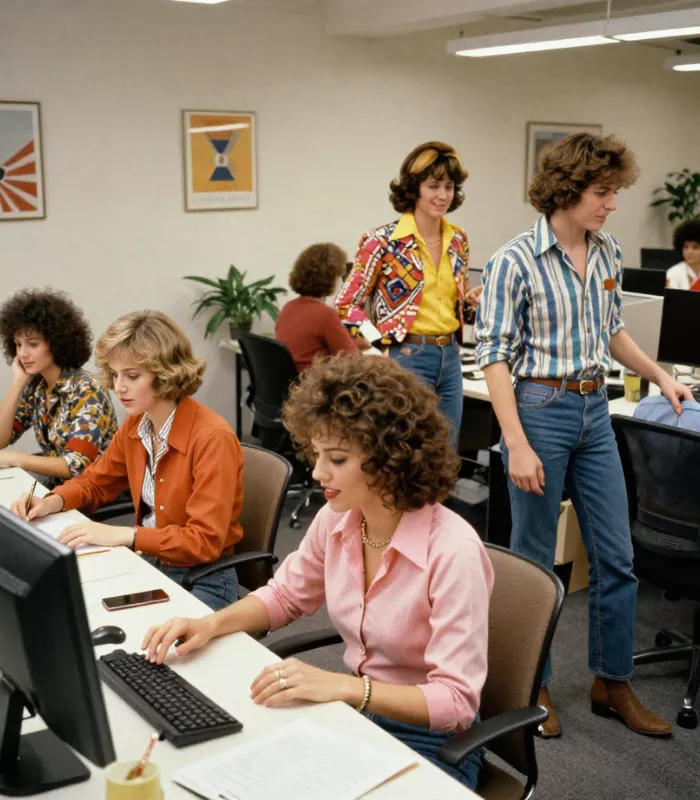
Casual Friday started gaining real traction in American workplaces during the 1980s.
For workers used to suiting up five days a week, it felt like a genuine reward.
Some trace the formal start of Casual Friday to a 1983 campaign by Levi Strauss encouraging companies to let employees wear jeans on Fridays.
But here’s the catch: in the early 80s, “casual” often meant khakis and a polo, not jeans.
The debate about what was appropriate led to actual memos outlining what casual meant.
What started as a perk eventually became the standard for tech companies, and then almost everywhere.
Why It’s On This List: Casual Friday was a genuine novelty and a celebrated perk in the 80s. It seems obvious now, but at the time it was a real shift in how companies thought about the relationship between dress and work.
10. Employee Discounts on Company Products

Working for a company that made a product you actually used came with a real perk in the 1980s.
Auto workers got deals on cars. Retail workers got discounts on merchandise. Airline employees flew for almost nothing.
These discounts were often substantial — sometimes 30 to 50% off — and they were a meaningful part of total compensation.
Families of employees often benefited too, which made the perk feel even more valuable.
You’re better off understanding this as more than a discount. It was a way companies kept workers emotionally invested in what they were making.
That connection between worker and product is something many modern companies have lost entirely.
Why It’s On This List: Employee discounts in the 80s were both financially meaningful and psychologically powerful. They tied workers to the company’s success in a way that a pay stub alone never could.
11. Profit Sharing and Bonuses

Many 1980s companies tied a portion of worker compensation to company performance.
Profit-sharing plans and year-end bonuses were common, especially in manufacturing and finance.
In strong years, some workers received bonuses equivalent to an extra month or two of salary.
It created a real sense that everyone had a stake in how the company performed.
When the company did well, workers felt it in their paychecks.
That alignment between company success and worker reward has become less common and less generous over the decades since.
Why It’s On This List: Profit sharing in the 80s made workers feel like genuine partners in the business. Its decline has widened the gap between executive compensation and front-line worker rewards.
12. Paid Sick Days Without Questions

Calling in sick in a 1980s workplace with a solid benefits package was generally uncomplicated.
Large employers routinely offered 10 or more paid sick days per year.
Workers were not typically required to provide a doctor’s note for a single sick day.
The unspoken trust was that adults could manage their own health without justifying it to their employer.
Over time, tightening attendance policies changed that in many organizations.
The pandemic years reminded people just how important paid sick leave actually is.
Why It’s On This List: Paid sick leave without hassle was a quiet but meaningful perk of 80s employment at good companies. Its erosion in some sectors has had real consequences for workers and public health.
13. On-Site Cafeterias with Hot Meals

Large employers in the 1980s often ran full cafeterias inside their buildings.
Workers could get a hot breakfast or lunch at subsidized prices without leaving the office.
Some corporate cafeterias offered full menus, including daily specials, soups, sandwiches, and desserts — all below market price.
It saved time, saved money, and gave workers a communal space to eat and connect.
The cafeteria was also a place where hierarchy relaxed a little, since everyone needed to eat.
Today, many companies have downsized or eliminated on-site food service entirely.
Why It’s On This List: The corporate cafeteria was a practical perk that also served a social function. Workers who had access to one remember it as one of the most genuinely useful daily benefits they ever had.
14. Job Security and Long-Term Employment

Working for a major company in the early 1980s often came with an unspoken promise of job security.
If you did your job, the expectation was that you would work as long as you wanted to.
That changed sharply as the decade progressed, with waves of corporate downsizing hitting in the mid and late 80s.
Companies like AT&T, GM, and IBM shed tens of thousands of jobs in restructuring moves.
Workers who had counted on lifetime employment were blindsided.
The shift from job security to “at-will” reality was one of the defining workplace changes of the decade.
Why It’s On This List: Job security was the most emotionally significant perk of early 80s employment. When it disappeared mid-decade, it changed how an entire generation of workers thought about loyalty and career planning.
15. Training and Education Programs

Many large employers in the 1980s offered extensive on-the-job training and tuition reimbursement programs.
Companies invested in developing their workers because they expected those workers to stay.
IBM was famous in the 80s for spending more on employee training than almost any company in the world.
Tuition assistance for evening and weekend classes was common at major corporations.
Workers could get their degrees paid for while they worked, with the understanding that they would bring those skills back to the company.
That’s why so many 80s workers were able to advance in ways that feel harder today.
Why It’s On This List: Corporate training and education benefits in the 80s were a genuine ladder for working people. The companies that invested heavily in developing their staff got decades of loyalty in return.
16. Reserved Parking Spots

A reserved parking spot was a serious status symbol in 1980s corporate America.
Getting your name on a sign in the company lot meant you had moved up.
In large suburban office parks — which boomed in the 80s — parking was plentiful, and the best spots went to the most senior people.
It sounds trivial, but workers who lived it say the parking hierarchy was taken very seriously.
Losing your spot — or not getting one when you expected to — was a genuine source of workplace tension.
Today, remote work and open parking arrangements have made the assigned spot mostly a relic.
Why It’s On This List: The reserved parking spot was one of the most visible perks of 80s corporate hierarchy. It said more about your standing in the company than almost anything else, without a single word being spoken.
17. Company-Sponsored Sports Teams
Company softball teams, bowling leagues, and golf outings were staples of 1980s workplace culture.
Employers organized and funded these activities as a way to build team spirit outside the office.
At peak participation in the early 1980s, bowling leagues alone had more than 8 million participants in the U.S., many of them company-sponsored.
These events mixed people from different departments in a relaxed setting.
Friendships made on the softball diamond often translated back into better working relationships.
Budget pressures gradually eliminated most of these programs through the 90s and beyond.
Why It’s On This List: Company sports leagues were a genuine community builder in the 80s. They gave coworkers a reason to spend time together outside work and built the kind of trust that made teams actually function.
18. Personal Secretaries and Administrative Support
In the 1980s, having a dedicated secretary or administrative assistant was a mark of professional status.
Managers and executives had staff who handled correspondence, scheduling, and phone calls on their behalf.
Administrative staff made up one of the largest job categories in the U.S. through the 1980s.
Having someone managing your calendar and correspondence freed up enormous amounts of time for higher-level work.
The rise of personal computers in the late 80s began shifting that work back to the manager’s own desk.
Today, most managers handle their own email, scheduling, and correspondence without any help at all.
Why It’s On This List: Personal administrative support was a significant and often overlooked perk of 80s professional life. Its disappearance quietly added hours of administrative work to every manager’s day.
19. Corner Offices and Private Workspaces
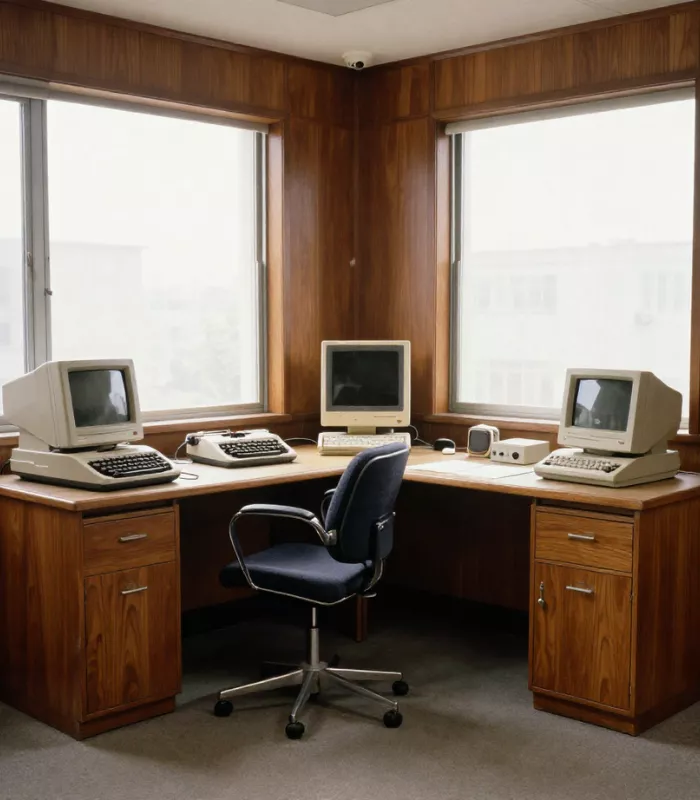
In the 1980s, getting your own office was a major milestone in a professional career.
Private offices were common in large corporations, and they came with a door you could actually close.
The open-plan office concept existed but was not yet dominant — private space was still seen as a basic professional right for many workers.
Your own office meant you could think, make calls, and work without constant interruption.
The shift to open-plan offices in the 1990s and 2000s was driven by cost-cutting, not by worker preference.
Many people who had offices in the 80s will tell you the loss of that space changed how they worked fundamentally.
Why It’s On This List: Private offices were a real productivity perk in the 80s that companies gave away in the name of collaboration. Workers who remember them often describe them as the single most missed feature of their old working lives.
20. Generous Relocation Packages

If a company asked you to move in the 1980s, they paid for it and then some.
Relocation packages often included moving costs, temporary housing, real estate assistance, and cost-of-living adjustments.
Some 80s relocation packages were worth tens of thousands of dollars, covering everything from packing to mortgage assistance.
Companies needed to move talent across the country and they competed to make the transition as painless as possible.
Workers who relocated for a good company in the 80s often say the package made a genuine difference to their family’s financial stability.
Today, relocation packages exist but are typically far leaner.
Why It’s On This List: Generous relocation packages were a powerful signal that a company genuinely valued the worker it was asking to uproot their life. Their decline has made job mobility more financially risky for families.