

Some had been around since before your parents were born.
Some had hundreds of locations in every major city.
Some were doing billions in sales just a few years before the lights went out.
All of them found out the hard way that size, history, and brand loyalty mean absolutely nothing when the business model stops working.
1. Sports Authority

Sports Authority was once the largest sporting goods chain in the United States.
At its peak, it had more than 450 stores from coast to coast.
But here’s the catch: it was slow to move online while Amazon and Dick’s Sporting Goods were pulling customers away fast.
It filed for Chapter 11 bankruptcy in March 2016, carrying over $1 billion in debt.
Nike owed $48 million, and Under Armour owed $23 million when it all fell apart.
By August 2016, every single store had closed for good.
Employees showed up to work one day and learned their jobs were simply gone.
Entire shopping centers lost their anchor tenant overnight, leaving empty storefronts that took years to fill.
Why It Fell: Management kept opening stores that looked just like the old ones. No fresh ideas, no real changes. Shoppers stopped seeing a reason to visit.
2. Herman’s World of Sporting Goods

If you grew up on the East Coast, you probably remember Herman’s.
Founded in 1916, it grew to 259 stores across 35 states by 1992.
That’s impressive. But the company changed hands too many times and racked up too much debt along the way.
Herman filed for bankruptcy in 1993, tried to recover, and then filed again in 1996.
It was caught between big-box giants like Sports Authority and small specialty shops. There was no room left in the middle.
The last stores closed in 1996 after 80 years in business.
Thousands of workers lost their jobs as liquidation sales swept through locations up and down the East Coast.
For many families, losing Herman’s felt like losing a neighborhood institution that had been part of their lives for generations.
Why It Fell: New owners slashed inventory to boost short-term cash flow. The shelves looked empty. Customers went elsewhere and never came back.
3. Modell’s Sporting Goods

Modell’s holds a sad record. It was the oldest sporting goods chain in the world when it finally shut down in 2020.
The first store opened back in 1889. That is 131 years of history.
For generations of families in New York and New Jersey, going to “Mo’s” was as normal as going to the grocery store.
By early 2020, the company had 141 stores. Then came a bad holiday season, unpaid landlords, and unpaid vendors.
It filed for bankruptcy on March 11, 2020, and then COVID-19 shut everything down before the liquidation sales could even finish.
Loyal shoppers who had spent decades buying their kids’ first baseball gloves and gym sneakers there had nowhere left to go.
A brand that had outlasted two world wars, the Great Depression, and decades of retail upheaval could not outlast one bad winter and a pandemic.
Why It Fell: Online shopping pulled younger customers away. Warm winters hurt apparel sales. And a brutal holiday season in 2019 was the final blow.
4. Gander Mountain
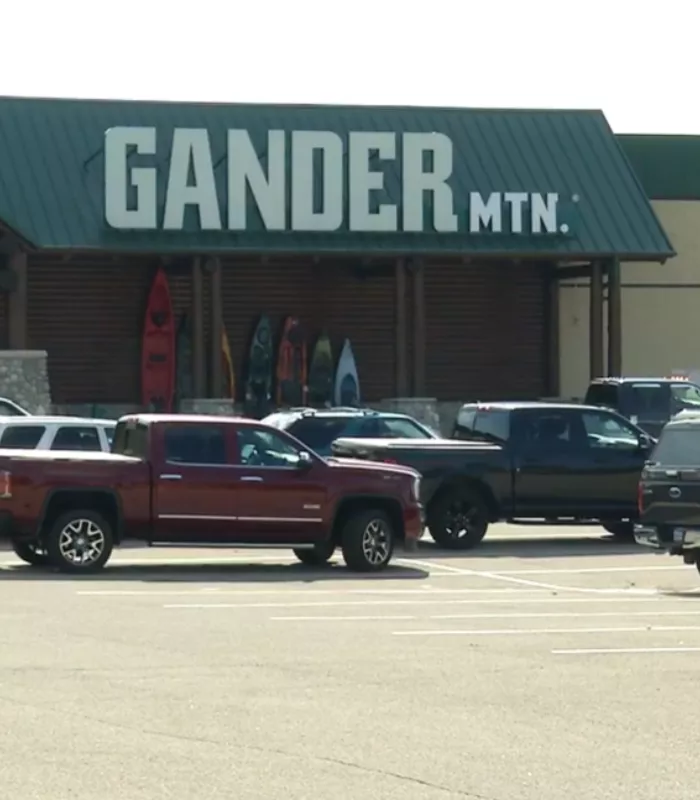
Gander Mountain was a favorite for hunters, anglers, and outdoor lovers for decades.
It specialized in hunting gear, fishing equipment, and camping supplies at a time when few stores did that well.
But Gander Mountain filed for bankruptcy not once, not twice, but three separate times.
Its final Chapter 11 filing came in March 2017, when it announced it would close 32 of its 162 stores.
It had debts totaling hundreds of millions of dollars and simply could not keep up with changing customer habits.
The brand was later reborn as Gander Outdoors, but the original chain was gone.
Loyal hunters and fishermen who had shopped there for decades were left searching for a replacement that never quite felt the same.
The stores that closed left behind empty big-box buildings in small towns that had few other retail options nearby.
Why It Fell: The company over-expanded and took on too much debt. Online retailers could offer the same hunting and fishing gear at lower prices with no need for a big storefront.
5. Sport Chalet

Sport Chalet was a beloved outdoor and sporting goods retailer based in California.
It was known for its knowledgeable staff and wide selection of gear for skiing, scuba diving, and team sports.
That’s why loyal customers were heartbroken when it announced its closure in April 2016.
Its parent company, Vestis Retail Group, filed for Chapter 11 bankruptcy protection and all Sport Chalet stores closed by June 2016.
The same bankruptcy filing took down Eastern Mountain Sports and Bob’s Stores along with it.
Staff who had spent years building real expertise in outdoor gear were suddenly out of work with little warning.
Southern California lost one of the few retail chains that actually trained its employees to know what they were selling.
Why It Fell: Sport Chalet relied on specialty shoppers but struggled to compete as online retailers offered the same niche gear at a lower price and delivered it to your door.
6. MC Sports

MC Sports was a Midwest staple for families looking for affordable sports equipment and athletic wear.
Based in Grand Rapids, Michigan, it operated dozens of stores across the Great Lakes region.
In 2017, MC Sports filed for bankruptcy and closed all of its stores.
Shoppers in Michigan, Indiana, and Ohio who had grown up with the chain suddenly had nowhere local to go.
The brand could not find a way to compete with big national chains and the growing convenience of shopping online.
Families that had outfitted their kids for Little League, soccer, and basketball for years were left without a local option.
The closures hit smaller Midwest communities especially hard, where MC Sports was often the only sporting goods store for miles around.
Why It Fell: Regional chains like MC Sports were hit especially hard. They lacked the buying power of national giants but faced the exact same competition from Amazon and Walmart.
7. Olympia Sports

Olympia Sports was founded in 1975 and became a go-to store for athletic footwear and team sports gear in the Northeast.
For years, it was a familiar name in New England shopping malls and strip centers.
After years of slow decline and a difficult period under private equity ownership, Olympia Sports filed for bankruptcy in July 2022 and closed all 35 remaining stores.
It was another sign that mid-size regional chains were losing the battle for survival.
Stores closed for good by September 30, 2022.
New England families who had bought their kids’ first pair of cleats or running shoes there watched a piece of their shopping history disappear quietly.
Private equity ownership had loaded the company with debt while doing little to modernize the stores or build a stronger online presence.
Why It Fell: Mall traffic had been falling for years before 2022. Private equity ownership added debt without adding the fresh ideas needed to bring shoppers back in.
8. Galyan’s Trading Company

Galyan’s was known for its giant, adventure-themed stores that were as fun to walk through as they were to shop in.
Some locations featured climbing walls and other hands-on displays. It was ahead of its time in creating a retail experience.
Galyan’s was acquired by Dick’s Sporting Goods in 2004, and all locations were rebranded or closed.
At the time of the acquisition, Galyan’s operated around 47 stores, mainly in the Midwest and South.
Dick’s picked up the best locations, but the Galyan’s name disappeared forever.
Shoppers who loved the adventurous atmosphere and hands-on features found that the new Dick’s locations felt more like a standard big-box store.
A retail concept that could have grown into something truly unique was folded into a competitor and never given the chance to reach its potential.
Why It Fell: Galyan’s was owned by Limited Brands, a fashion retailer. Sporting goods were never their core business, and the chain was eventually sold off rather than grown into what it could have been.
9. Oshman’s Sporting Goods

Oshman’s was a Texas-born chain that grew into one of the more innovative sporting goods retailers of its era.
It was one of the first chains to introduce in-store interactive sports areas, like batting cages and putting greens, in the 1990s.
Despite those creative ideas, Oshman’s was acquired by Gart Sports in 2001, and the name faded away.
Gart Sports itself later merged with Sports Authority in 2003, and the Oshman’s identity was completely absorbed.
What started as a bold Texas retail story ended quietly inside a bigger company that itself eventually collapsed.
The interactive store concept that Oshman’s pioneered was never fully embraced by the companies that absorbed it.
It was a case of a genuinely good idea being buried under corporate mergers instead of being built into something that could have changed the industry.
Why It Fell: Being swallowed up by larger competitors is a quiet way to disappear. Oshman’s never got the chance to see if its interactive store concept could have saved it in the long run.
10. Golfsmith

Golfsmith was the go-to destination for serious golfers across North America.
It sold clubs, bags, apparel, and custom fitting services in large format stores that catered to the dedicated golfer.
In 2016, the same brutal year that took down Sports Authority and Sport Chalet, Golfsmith filed for bankruptcy.
It had more than 100 locations in the United States and Canada at the time of its filing.
Dick’s Sporting Goods acquired 36 to 38 locations and rebranded them as Golf Galaxy. The rest closed permanently.
Custom club fitting specialists and golf pros who had built careers at Golfsmith found themselves out of work almost overnight.
2016 became one of the deadliest years in sporting goods retail history, and Golfsmith was one of its most notable casualties.
Why It Fell: Golf participation in the United States had been declining for years. Fewer new golfers meant fewer customers. Online retailers also made it easy to buy clubs without ever stepping into a store.
11. G.I. Joe’s

G.I. Joe’s was a beloved Pacific Northwest institution known for its mix of sporting goods, outdoor gear, and army surplus items.
It had a loyal following in Oregon and Washington for decades.
The chain tried to reinvent itself by rebranding as “Joe’s” in 2007, but it did not work.
G.I. Joe’s filed for bankruptcy in 2009 and closed its doors.
Seven of its locations were taken over by Dick’s Sporting Goods, but the original brand that generations of Pacific Northwesterners loved was gone.
The rebranding stripped away the identity that made the store special and replaced it with something that felt generic and forgettable.
Customers who had grown up shopping there felt like the store had abandoned them long before the bankruptcy papers were ever filed.
Why It Fell: Rebranding without a clear strategy rarely saves a struggling retailer. The loyal customers who loved G.I. Joe’s were attached to exactly what it was, not a newer, blander version of it.
12. Bob’s Stores
Bob’s Stores was a New England institution for nearly 70 years, selling sports gear, footwear, and team apparel to families across the region.
It had survived ownership changes and tough retail periods for decades.
But in 2024, Bob’s Stores filed for Chapter 11 bankruptcy and announced it would close permanently.
It was another reminder that even well-known regional names with loyal customers are not immune to the pressures of rising costs and online competition.
By 2025, all Bob’s Stores locations had gone dark for good.
Families who had bought their kids’ first pair of cleats, hockey skates, and winter boots there for decades had to find somewhere else to go.
Nearly 70 years of brand loyalty and community presence was not enough to overcome the financial pressures that had been building for years.
Why It Fell: You are better off with a niche identity or a national scale in today’s retail world. Bob’s Stores was caught in the middle, too regional to compete with Amazon and too general to stand out as a specialist.
13. Gart Brothers Sporting Goods

Gart Brothers was a Colorado institution that became one of the largest regional sporting goods chains in the American West.
It was founded in Denver in 1928 and for decades was the place to go for ski gear, team sports equipment, and outdoor supplies.
At its peak, Gart Brothers operated a flagship store in Murray, Utah that stretched 75,000 square feet across two levels. It was the largest store of its kind in the state at the time.
Gart Brothers merged with Oshman’s Sporting Goods in 2001, then merged again with Sports Authority in 2003.
The combined chain grew to more than 400 stores and generated over $3.4 billion in annual sales by 2014. But the Gart name was gone forever.
Generations of Colorado families who had grown up buying their ski boots and camping gear at Gart Brothers watched the name vanish without so much as a farewell sale.
A 75-year-old brand built on genuine community loyalty was absorbed into a corporate chain that itself would eventually collapse just over a decade later.
Why It Fell: Gart Brothers did not disappear from failure alone. It was absorbed, renamed, and swallowed by bigger mergers. That’s why so many loyal customers woke up one day to find their beloved local store had turned into something else entirely.
14. Big 5 Sporting Goods
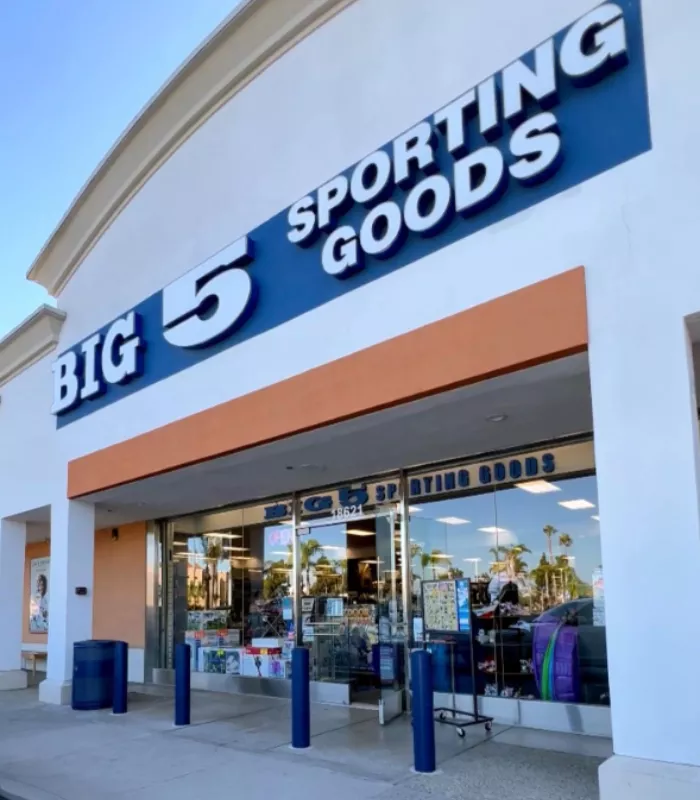
Big 5 Sporting Goods has been a fixture in Western states since 1955 and has built a reputation for affordable gear and no-frills shopping.
For 70 years, it was the place families across California, Nevada, Arizona, and the Pacific Northwest turned to for sneakers, camping gear, and team sports equipment.
But by fiscal year 2024, Big 5 was closing more stores than it opened. By mid-2025, it operated roughly 414 stores, down from its highs in prior years.
Multiple Colorado locations launched liquidation sales in early 2026, and the company acknowledged in its own SEC filings that competitors have stronger e-commerce capabilities and more stores.
The chain is now in the process of being acquired by Worldwide Golf and Capitol Hill Group, which may reshape or further shrink its retail footprint.
Shoppers who had relied on Big 5 for affordable gear for decades are watching another familiar name inch closer to the exit door.
A 70-year run built on value pricing and community presence may not be enough to survive in a retail world that has fundamentally changed around it.
Why It Fell: Big 5 stuck to a no-frills format in an era when shoppers either wanted a premium experience or a rock-bottom online price. Being stuck in the middle with no strong digital presence made it hard to survive the retail pressure of the 2020s.