

Somewhere between the third home renovation show and the second trip to the hardware store, good judgment quietly left the building.
Trends convinced us that our perfectly fine homes needed rescuing.
Floating vanities. Industrial pipes. Accent walls are the color of a stormy sea.
It all looked brilliant on screen.
Screens do not have to live with the consequences.
1. Open Shelving in the Kitchen, A Grease Trap Waiting to Happen
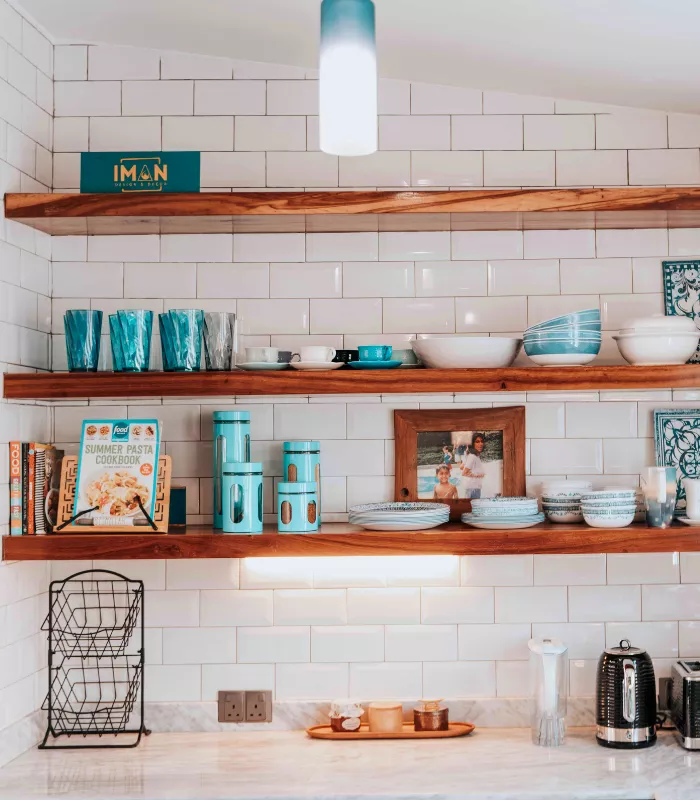
Open shelves look great in magazines.
But in real life, they collect grease, dust, and clutter fast.
A 2022 survey found that over 60% of homeowners who installed open shelving wished they had kept their cabinet doors.
The idea is simple: show off your dishes and make your kitchen feel bigger.
But most of us do not have a collection of matching dishes worth displaying.
We have mismatched mugs, half-used condiments, and that blender we never put away.
Open shelves demand that everything on them look good all the time.
That is a full-time job on top of actual cooking.
Kitchens are working rooms, not photo sets.
Closed cabinets exist for a very good reason.
They hide the reality of daily life, and there is nothing wrong with that.
Grease from cooking coats everything within reach, and open shelves are no exception.
A fine film of dust settles on stacked plates within days, even in a kitchen that gets used every single day.
Every item on display needs to be wiped down regularly, or it starts looking neglected.
That means pulling everything off, cleaning each shelf, and putting it all back again.
Most homeowners do not realize how often they need to happen until they are already doing it.
Cabinet doors take about two seconds to open and save hours of cleaning every month.
| Kitchen Reality Check |
|---|
| What looks clean and “airy” on day one becomes a daily chore to keep tidy. You’re better off with cabinets that hide the mess. |
2. All-White Everything, A Color That Shows Every Mistake
The all-white kitchen and living room trend swept through homes for years.
It feels fresh at first.
But white shows every scuff, stain, and fingerprint. Repainting and recleaning become a part-time job.
White looks serene in a staged home with no one actually living in it.
Add a spilled cup of coffee, muddy paw prints, or everyday foot traffic and that changes quickly.
White grout turns gray within months no matter how carefully you clean.
White sofas develop a yellowish tint that no slipcover fully hides.
White walls show every scuff from furniture, bags, and passing shoulders.
Keeping a white home looking white is genuinely exhausting.
Warm neutrals like cream, linen, and soft taupe give you the same airy feeling.
But they forgive the small messes that real life leaves behind.
White cabinets chip and yellow at the edges faster than any other color.
Touching them up requires finding the exact same white, which is harder than it sounds.
Paint companies carry hundreds of whites, and none of them match your existing cabinets perfectly.
White countertops stain from wine, turmeric, and berries in ways that darker surfaces simply do not.
Turmeric in particular can set into porous stone within minutes, long before most people even reach for a cleaning rag.
A home that looks lived-in and warm is far more inviting than one that looks sterile.
| Maintenance Truth |
|---|
| Bright white walls and furniture are hard to maintain, especially in high-traffic areas. Warm off-white or soft greige ages far more gracefully. |
3. Shiplap Walls Everywhere, A Dust-Grooved Farmhouse Fad
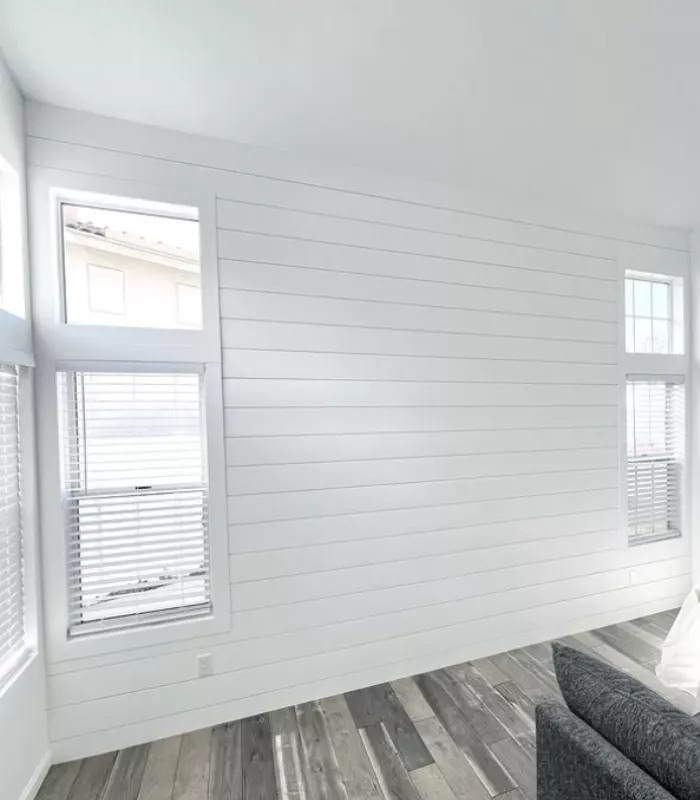
Shiplap exploded in popularity thanks to home renovation TV shows.
People put it in living rooms, bathrooms, and even ceilings.
It can make a room feel trendy for about two years and dated for the next twenty.
Shiplap has its place in farmhouse-style homes with the right architecture.
But it was applied to condos, split-levels, and modern townhouses, where it never truly belonged.
Dust and debris settle into the grooves between the boards.
Standard shiplap grooves run about a quarter inch deep, just wide enough to trap crumbs, pet hair, and stray dust bunnies.
Painting over it later is a tedious and time-consuming project.
Many homeowners are now covering it up or tearing it out entirely.
The cost of removal often surprises people who thought it was a simple upgrade.
A well-painted, smooth wall never goes out of style.
It also never traps dust in horizontal grooves across your entire living room.
In bathrooms, shiplap can trap moisture behind the boards if not perfectly sealed.
That moisture leads to mold problems that are expensive and unpleasant to fix.
TV renovation shows rarely follow up two years later to show the maintenance reality.
Real homeowners are left dealing with problems that never made it to the air.
The lesson is that what works on television does not always work in your actual home.
| Trend Lifespan |
|---|
| Shiplap works in the right home style, but slapping it on any wall in any room is a decision many homeowners now regret. |
4. Barn Doors, Rustic Charm With Zero Privacy
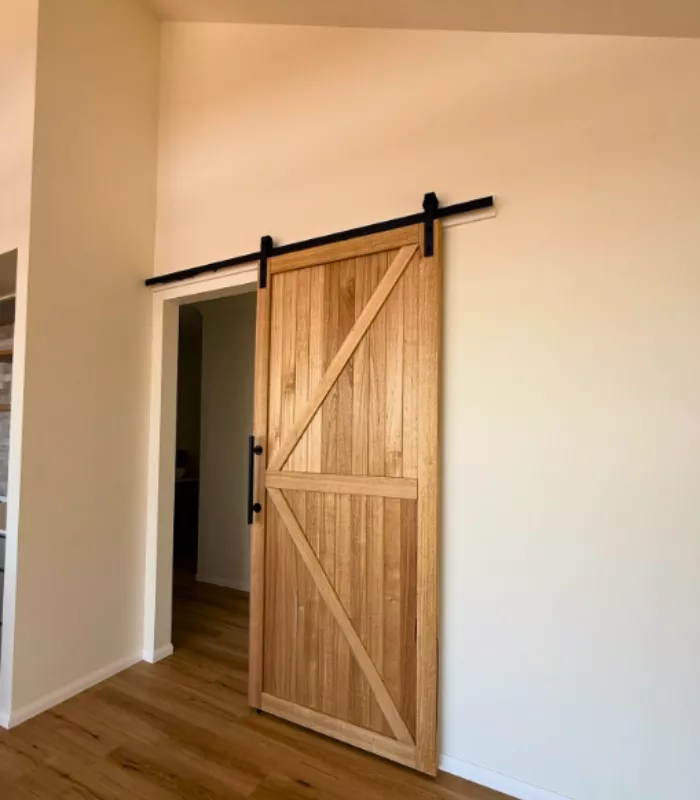
Sliding barn doors became a must-have feature after 2015.
They look rustic and charming in photos.
The problem? They do not block sound. They do not seal a room. And the hardware can be awkward for anyone to slide open and closed smoothly.
Barn doors require wall space on either side to slide open fully.
In smaller homes, that space simply does not exist without awkward furniture arrangements.
The hardware can loosen over time, causing the door to wobble or stick.
They leave a gap along the edge that lets light, noise, and cold air through.
For a bathroom or bedroom, that gap becomes a real privacy concern.
Anyone who has tried to have a private phone call behind a barn door knows the problem.
They are also heavier than they look, which makes them harder to slide open smoothly.
A standard hinged door is easier to open, closes completely, and never goes out of style.
Barn door hardware is also significantly more expensive than a standard door installation.
The track, rollers, and custom sizing can add up to several hundred dollars quickly.
If the track is not perfectly level, the door drifts open or closed on its own.
That becomes annoying within days and is not always easy to correct after installation.
Form should support function in every room, and barn doors too often sacrifice one for the other.
| Function vs Style |
|---|
| A barn door trades function for style, and that trade gets old fast. Standard doors simply work better for privacy and noise control. |
5. Gray Laminate Flooring, Sleek Until the Dust Settles
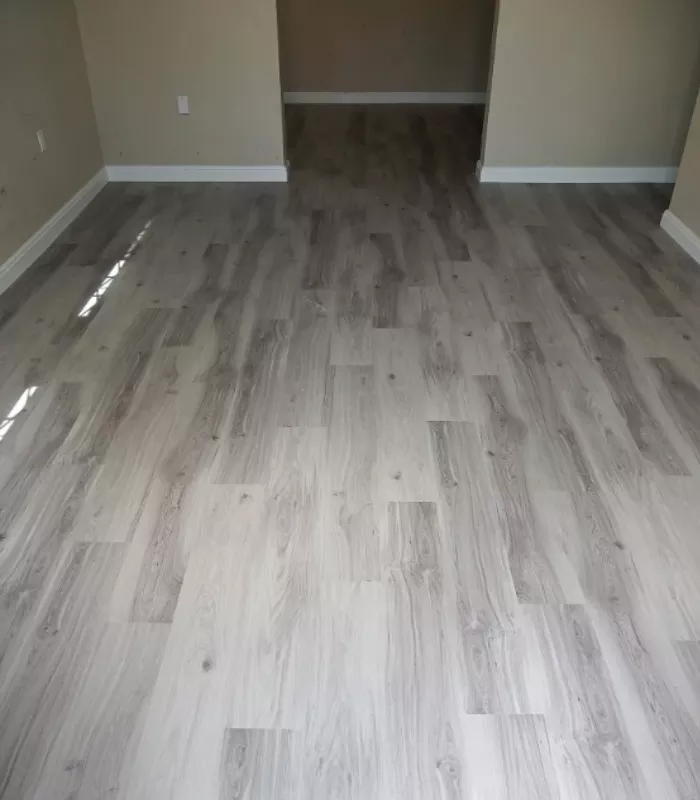
Cool gray floors dominated home design for over a decade.
They seemed modern and sleek.
But gray flooring shows dust like nothing else. It also feels cold and can clash with warm-toned furniture that most people already own.
Gray floors became popular because they photograph beautifully in bright, staged spaces.
Real homes are not always bright and staged.
On a cloudy day, gray floors can make a room feel dim and unwelcoming.
They also show pet hair, lint, and light dust in a way that darker or warmer floors simply do not.
Some of the most popular shades carried names like “driftwood” and “storm cloud,” evoking exactly the cool, overcast look that made them so trendy.
Many homeowners found that their existing furniture, which had warm wood or earthy tones, clashed badly with the cool gray underneath.
Replacing furniture to match a floor trend is an expensive domino effect.
Warm honey oak and medium walnut tones are back in style for good reason.
They feel grounded, hide everyday mess, and work with almost any color