

Small-town businesses in the 1960s operated on a currency we’ve mostly abandoned: knowing your customers by name.
The butcher wrapped your meat in paper and gossip.
The pharmacist delivered prescriptions to your door when you were too sick to pick them up.
These weren’t just transactions.
They were relationships with receipts.
The stores are mostly gone now, but the people who remember them can still smell the sawdust and fresh bread.
1. Woolworth’s Five and Dime
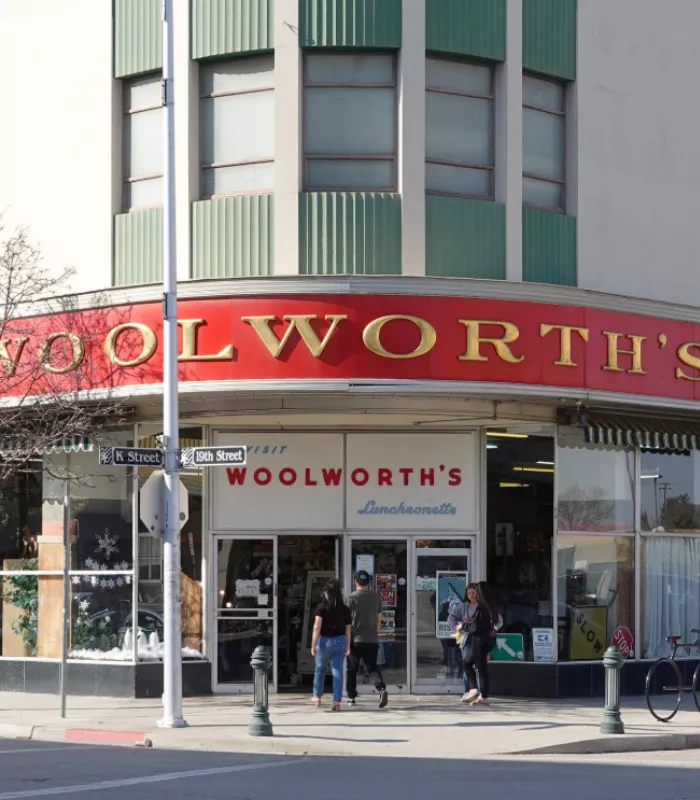
You could buy sewing supplies for a nickel and stay for a grilled cheese sandwich.
Woolworth’s was the place where everything cost next to nothing and somehow had exactly what you needed.
From pet turtles to comic books to birthday candles, these stores were packed with surprises on every shelf.
Why It’s On This List: The lunch counter alone made it legendary. You could shop for supplies and then sit down for a milkshake served by someone who knew your name.
2. A&W Root Beer Stand
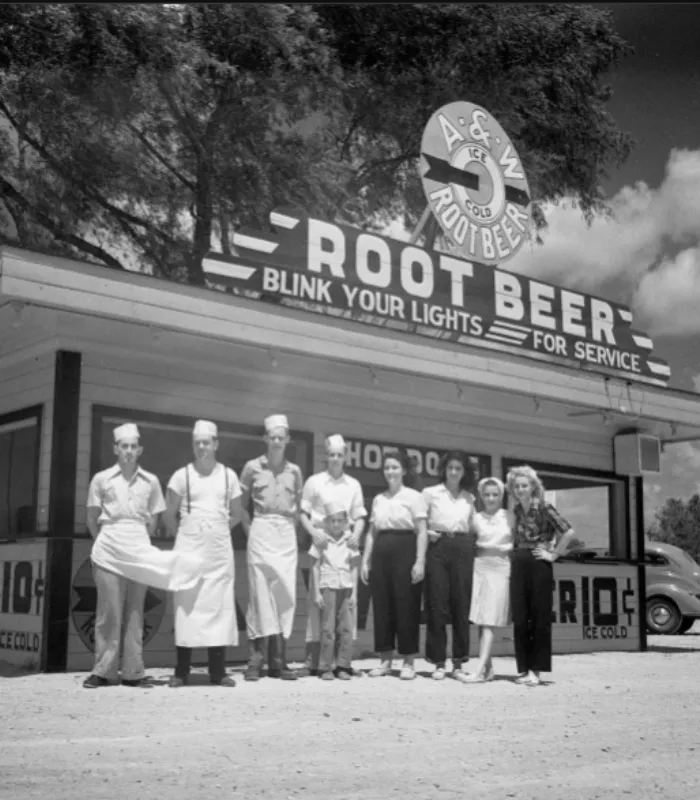
Carhops brought frosty mugs of root beer right to your car window.
A&W started franchising in 1925, making it America’s first franchise restaurant chain.
By 1933, there were 170 locations across the country.
The 1950s and 60s were the heyday when neon signs lit up parking lots and teenagers made it their Friday night headquarters.
Root beer floats cost less than a dollar and tasted like summer.
Why It’s On This List: These weren’t just restaurants. They were vibrant social hubs where car culture and community came together under bright neon lights.
3. Ben Franklin Craft Store
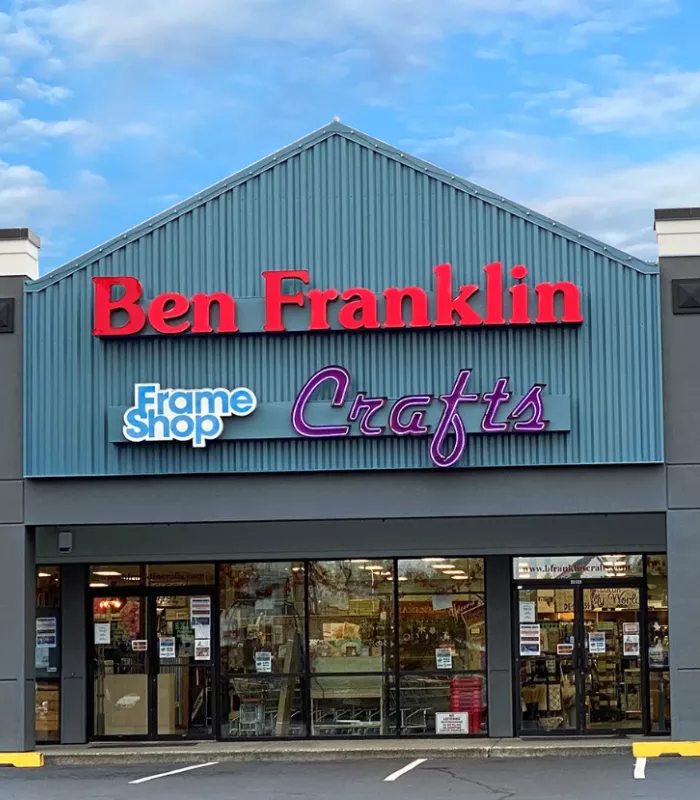
By the 1950s, Ben Franklin signs appeared in towns from coast to coast.
You went there for a birthday candle, a spare doorknob, or the latest comic book.
It was perhaps the first retail franchise, starting way back in 1927.
The stores were friendly, affordable, and full of surprises.
If your mom needed craft supplies or your dad needed a household fix, Ben Franklin had it.
Why It’s On This List: These five-and-dime stores brought big-city variety to small towns through smart franchising, making them a reliable main street anchor.
4. Rexall Drug Store
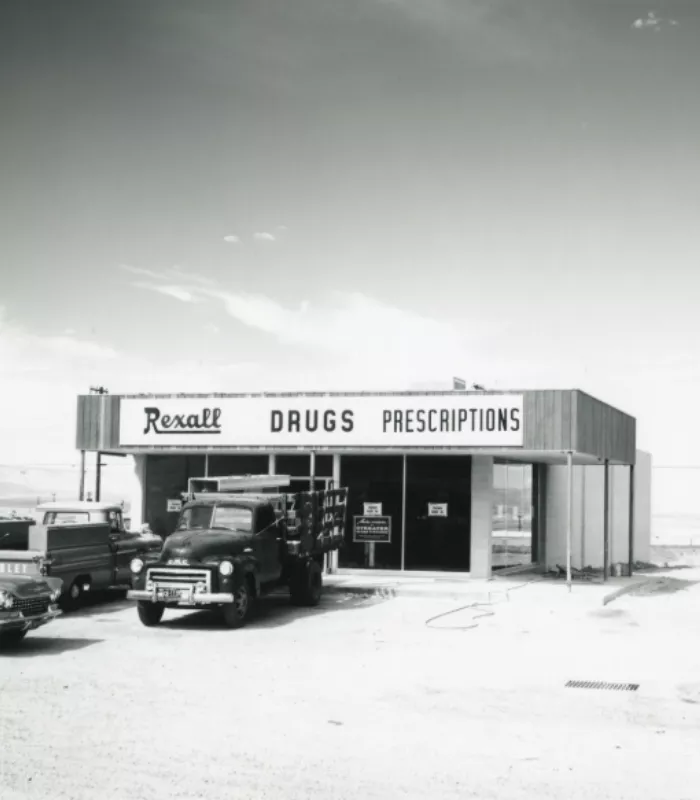
The soda fountain counter was the real draw.
You could get medicine over the counter and then sit down for a hot fudge sundae or a delicious cherry phosphate.
Round tables with Coca-Cola chairs filled the space where neighbors would catch up over newspapers and postcards.
It had comic books, cameras, film, and gifts all in one spot.
The pharmacist knew your family by name.
Why It’s On This List: Rexall combined practical pharmacy services with small-town social life, creating a gathering spot that served both medicine and memories.
5. Western Auto Supply Store
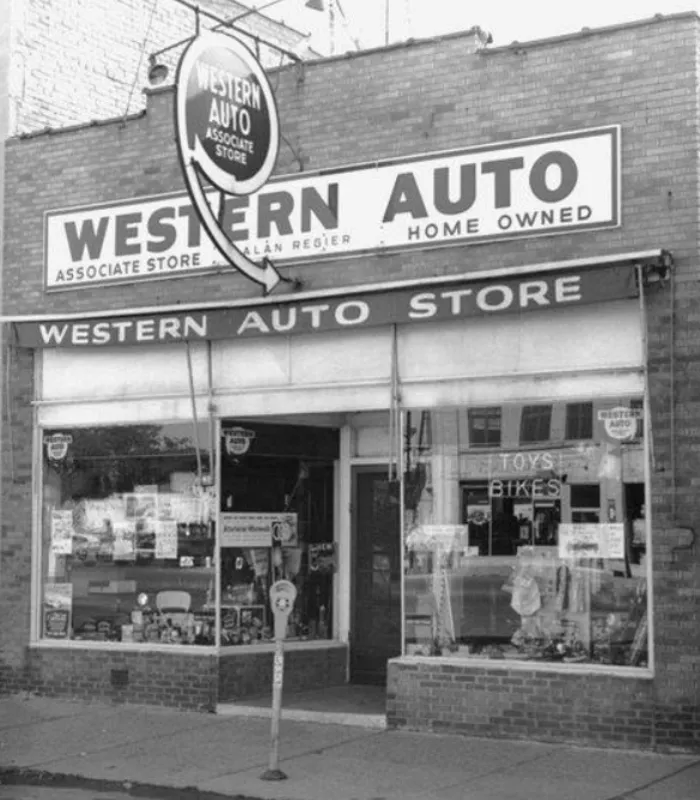
By the mid-1960s, Western Auto had over 1,200 stores nationwide.
You walked in for a car battery and left with a new bike for your kid.
It served the entire family, not just car buffs.
The stores were designed to be easy to access in both big cities and rural spots.
Started as a mail order business in 1909, it pioneered the associate store program that modern franchises copied.
Tool kits, household items, and auto parts shared the same aisles.
Why It’s On This List: Western Auto transformed from an auto parts supplier into a true one-stop family shop that small towns could count on.
6. Dairy Queen
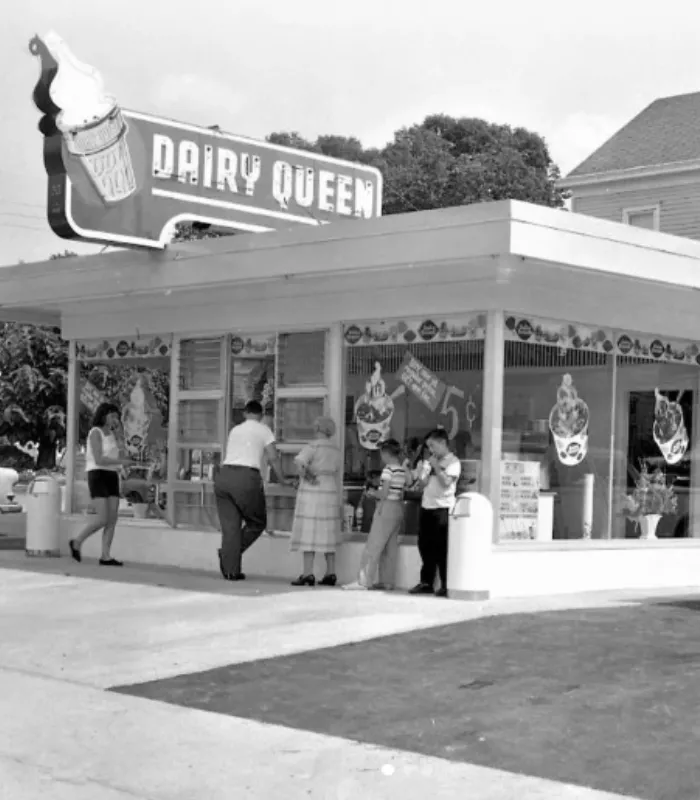
Dairy Queens were a fixture of social life in small Midwestern and Southern towns during the 1950s and 1960s.
You went there after Little League games and on hot summer nights.
In the early 1960s, the chain introduced barn-like stores with a charming Dutch maid weathervane on top.
The soft serve ice cream was the star, but the Dilly Bars ran a close second.
Everyone knew someone who worked there during high school.
Why It’s On This List: Dairy Queen has been reflected in countless stories and memoirs of small-town America because it was where memories were made, one cone at a time.
7. S.S. Kresge Five and Dime
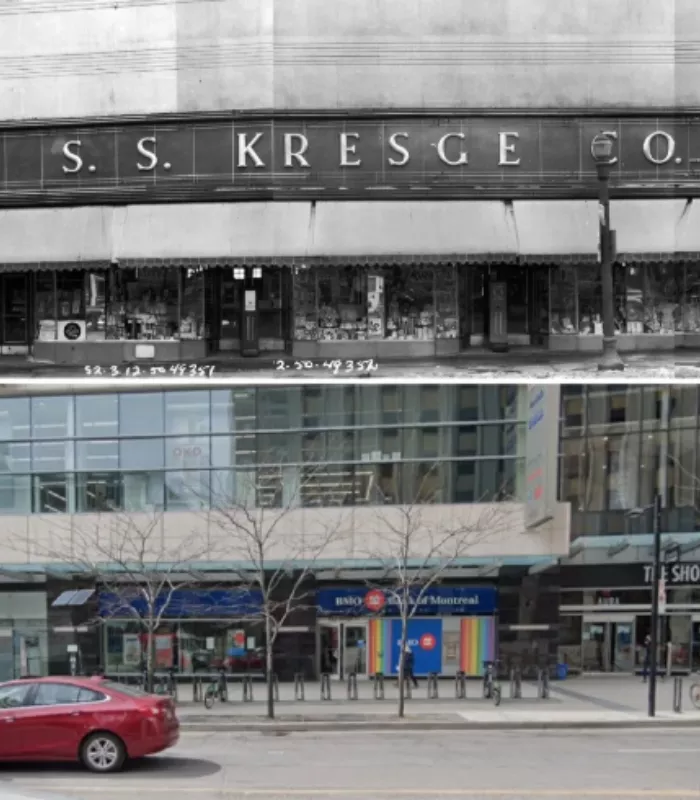
Everything had a price tag you could afford on a kid’s allowance.
Kresge stores sold goods at rock-bottom prices and filled downtown storefronts across America.
The national chain opened locations starting in 1906 and became a main street staple.
Narrow aisles with creaky wooden floors held toys, candy, household goods, and school supplies.
The candy vending machines near the entrance were filled with Zagnut, Zero, and Clark bars.
Why It’s On This List: Kresge proved that a national chain could still feel local, hiring townspeople and supporting school functions while keeping prices low.
8. J.C. Penney Downtown Store
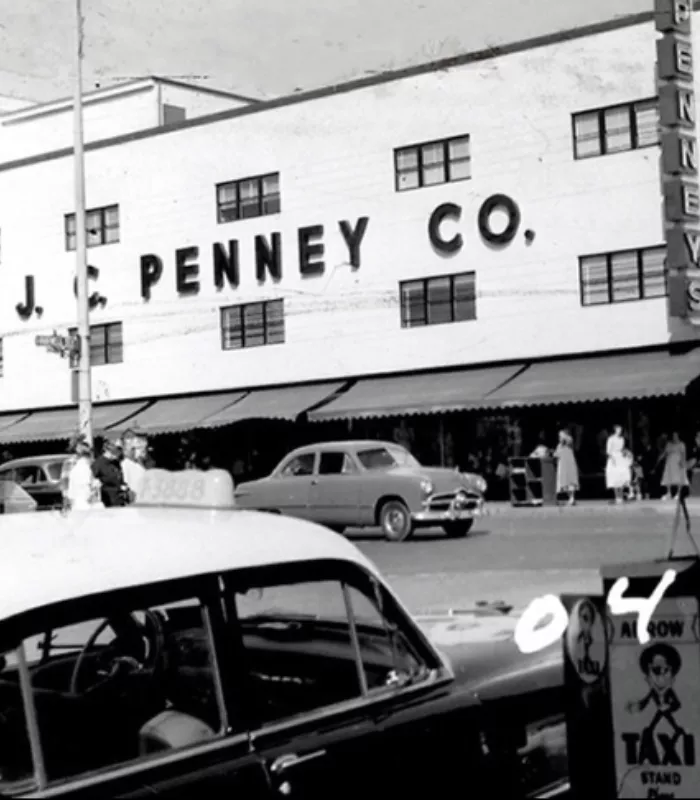
These weren’t suburban mall locations.
They were big brick buildings right on Main Street with narrow aisles and wooden floors.
You bought shirts, shoes, and school clothes there while your parents chatted with neighbors in line.
J.C. Penney hired locals and supported parades and school functions.
The catalog desk let you order items not in stock and pick them up the following week.
It blended in with local shops instead of pushing them out.
Why It’s On This List: J.C. Penney occupied downtown real estate and acted like a community member, not just a chain competing with local businesses.
9. True Value Hardware Store
The owner knew exactly which screw would fix your screen door.
True Value shops had sawdust on the floor and everything organized just so.
The system was built on trust.
You could buy on credit if you were going through a tough time, and the owner would never embarrass you about it.
Kids came in for penny nails for school projects while their dads picked up tools that would last decades.
Paint, plumbing supplies, gardening tools, and advice all came free with every visit.
Why It’s On This List: True Value Hardware stores were relationship hubs where the owner’s expertise and willingness to extend credit made them irreplaceable parts of small-town life.
10. Local A&P Grocery Store
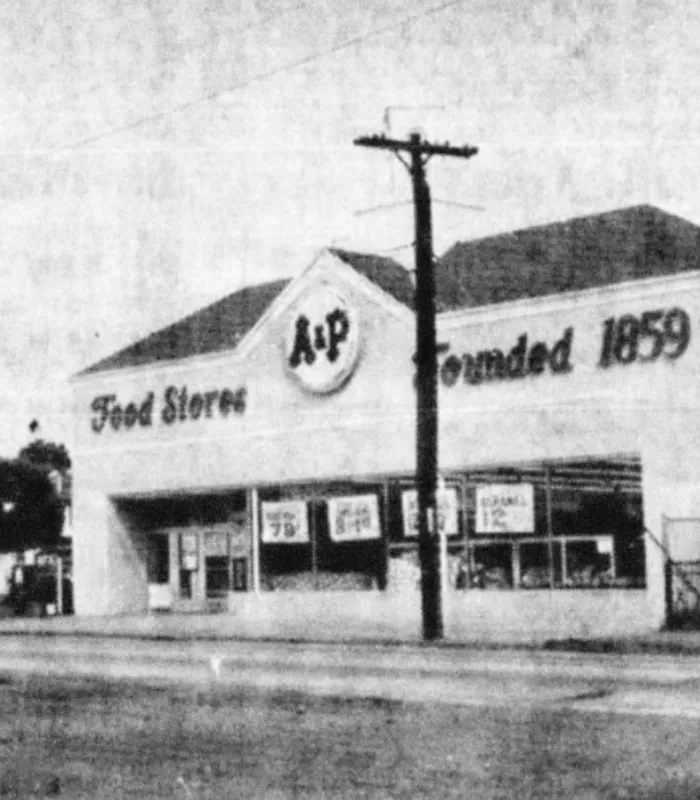
The A&P was the heartbeat of the neighborhood in the 1960s.
At its peak, the Great Atlantic and Pacific Tea Company operated nearly 4,000 stores across the country.
But here’s the deal: it was never just about groceries.
The checkout ladies knew your mother by name and asked about your grandmother’s health.
Canned goods, fresh produce, and house-brand coffee lined the aisles at prices working families could afford.
Saturday mornings meant a cart full of groceries and a handful of trading stamps to lick and paste into a booklet.
Why It’s On This List: The A&P was one of the first true neighborhood grocery chains and gave small-town families affordable food with a personal touch that big-box stores never replicated.
12. Sinclair or Gulf Full-Service Gas Station
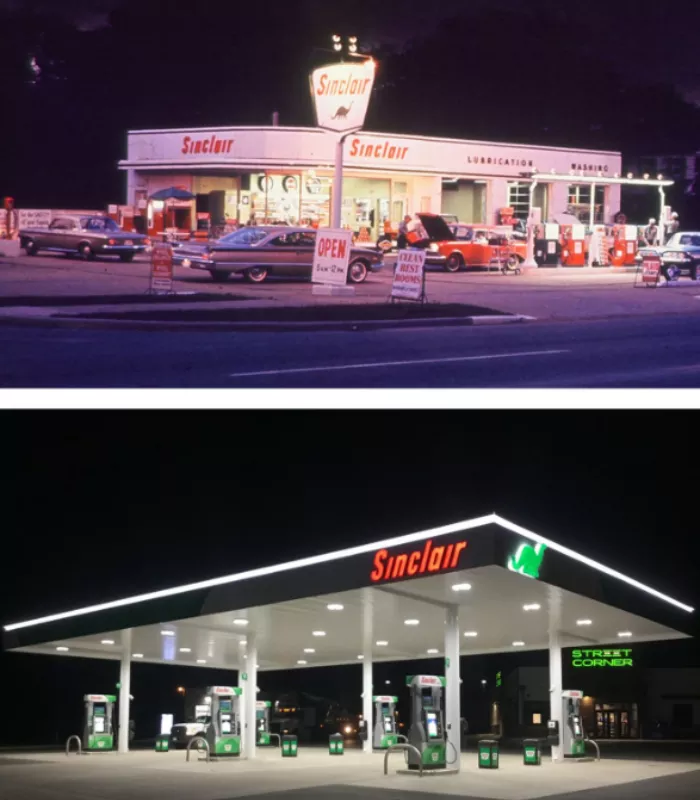
Attendants in uniforms pumped your gas, checked your oil, and washed your windshield without being asked.
Sinclair’s green dinosaur sign and Gulf’s orange disc were fixtures on small-town corners throughout the 1960s.
The owner knew your car’s quirks and would remind you when you were due for an oil change.
Kids got free road maps for school projects and lollipops while parents filled the tank.
The station doubled as an informal gathering spot where men discussed sports and local news.
Mechanics worked in attached bays and could fix almost anything with basic tools.
Why It’s On This List: Sinclair and Gulf stations were not just fuel stops. They were service hubs run by people who took personal pride in keeping the town’s vehicles running smoothly.
13. Tastee-Freez
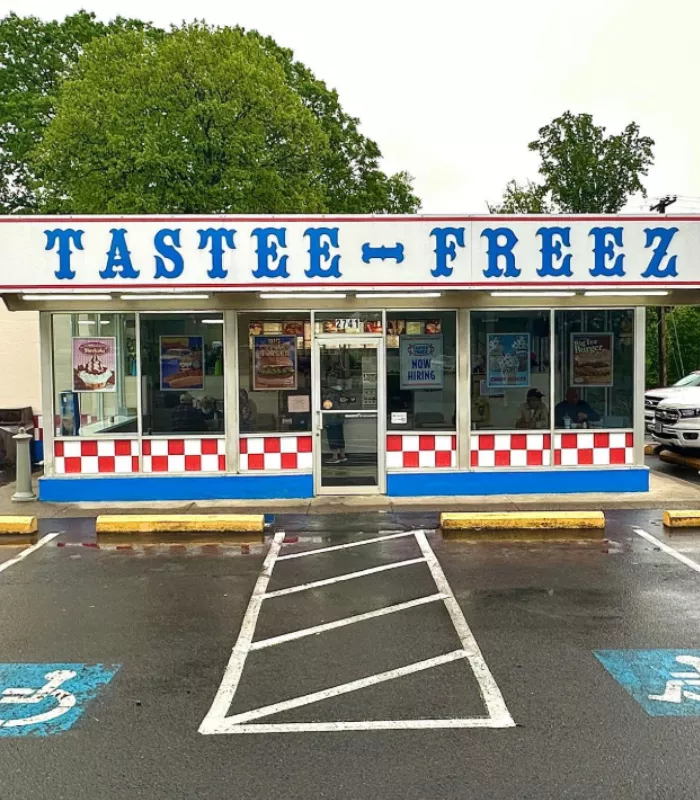
A soft-serve cone from Tastee-Freez or Dairy Queen was the reward after Little League games and Sunday drives.
Dairy Queen opened its first location in 1940, and by the 1960s, it had become a small-town institution.
Tastee-Freez gave Dairy Queen a run for its money with over 1,500 locations by the mid-1960s.
You ordered through a screen window and ate at a picnic table while mosquitoes circled the overhead light.
A small cone cost a dime, and a Dilly Bar was a special treat saved for good report cards.
Families lined up after church on Sunday, and the line sometimes stretched around the building.
Why It’s On This List: Soft-serve stands were where summer memories were made, one twist cone at a time, and no small-town childhood in the 60s was complete without them.
14. Piggly Wiggly Grocery Store
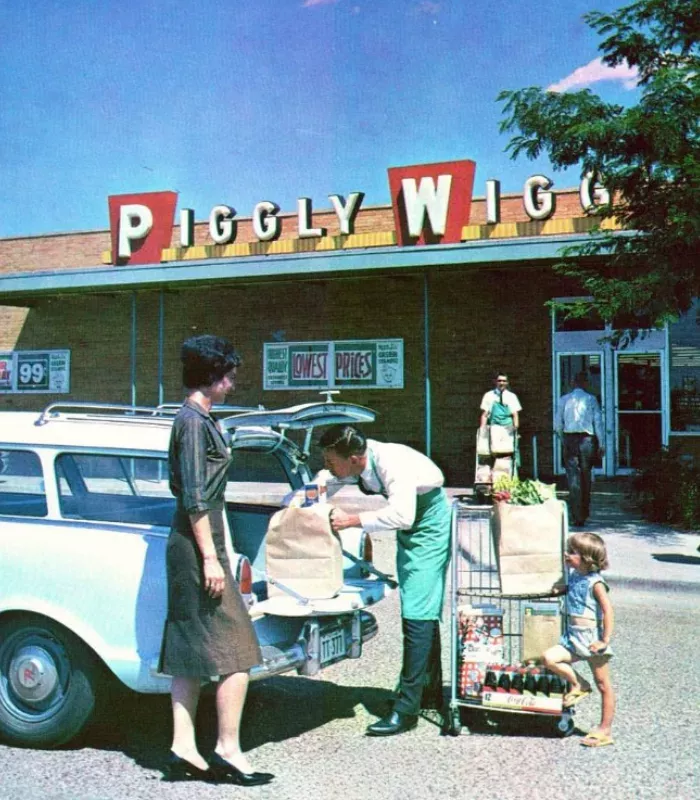
Piggly Wiggly invented the modern self-service grocery store concept back in 1916, and by the 1960s it was a small-town staple.
Shoppers pushed their own carts down the aisles and picked items off shelves themselves, which was still considered a novelty in smaller communities.
That’s why shopping at Piggly Wiggly felt like a small act of independence for postwar families.
The store carried house brands at lower prices, which stretched tight family budgets without sacrificing quality.
Butchers behind the counter cut meat to order while cashiers tallied totals by hand on register keys.
Green stamps were handed out with every purchase, and filling those stamp booklets was a family project.
Why It’s On This List: Piggly Wiggly helped define how Americans shopped for food and gave small towns a modern grocery experience that felt like progress without losing the personal touch.
15. Sears and Roebuck Store
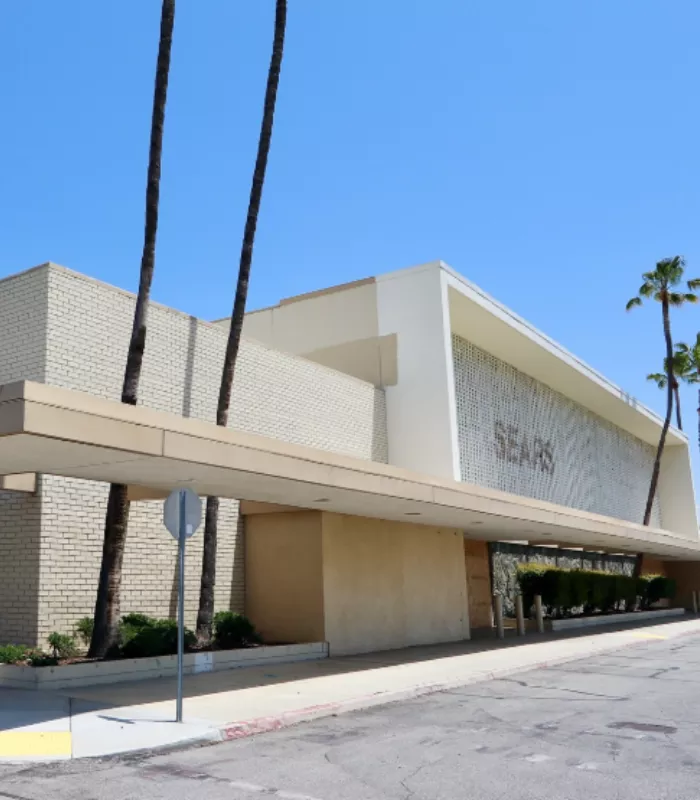
Before the internet, the Sears catalog was how millions of small-town families shopped for almost everything.
The brick-and-mortar stores brought that same magic in person, stocked with appliances, tools, clothing, and sporting goods.
I made a classic mistake as a kid: I dog-eared every toy page in the Christmas Wish Book and handed it to my parents.
The automotive center out back handled oil changes and tire rotations while the whole family browsed inside.
Craftsman tools came with a lifetime guarantee, and people took that promise seriously for decades.
By 1965, Sears was the largest retailer in the United States and a defining part of small-town commerce.
Why It’s On This List: Sears was the anchor of Main Street retail in the 60s, offering quality, trust, and a famous catalog that made every family feel like they had access to the best America could offer.
16. Kmart Blue Light Special Store
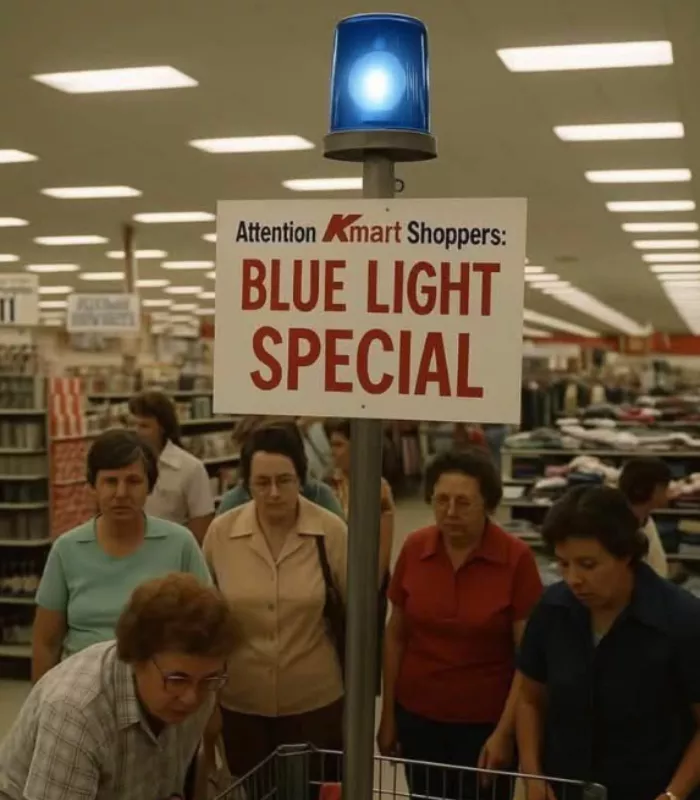
Kmart opened its first store in 1962 and expanded fast, landing in small towns that had never seen discount retail before.
The Blue Light Special was a roving announcement of surprise deals that sent shoppers rushing across the store.
But here’s the catch: once that blue light started flashing, you had about five minutes to get there.
Families spent entire Saturday afternoons browsing aisles of clothing, housewares, toys, and garden supplies.
The lunch counter near the entrance served hot dogs and fountain drinks for next to nothing.
For many small towns, Kmart was the first big retail store within driving distance.
Why It’s On This List: Kmart brought affordable, one-stop shopping to small-town America and turned the simple act of bargain hunting into a community event with the flick of a blue light.
16. Howard Johnson’s Restaurant
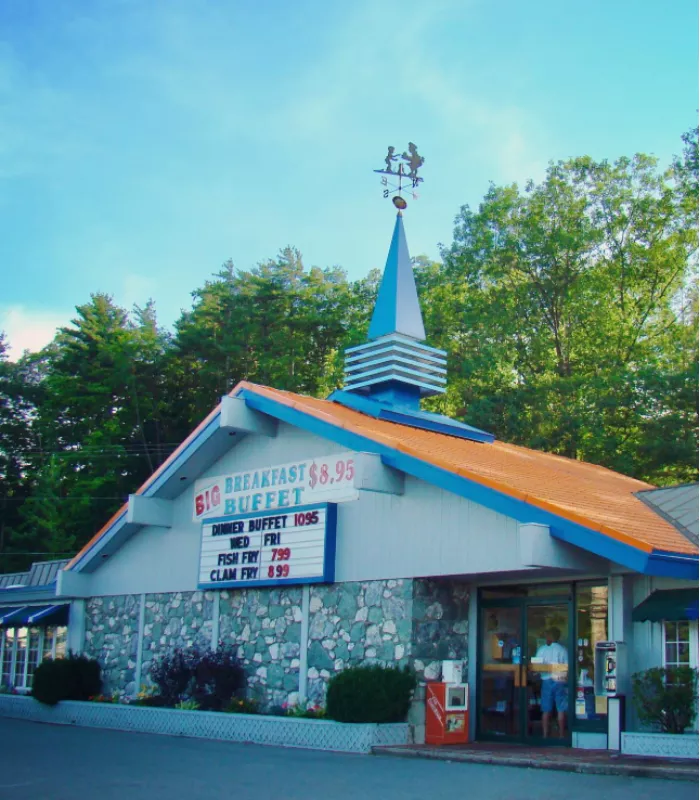
The orange roof and turquoise cupola of a Howard Johnson’s was a welcome sight on any highway or Main Street.
By the mid-1960s, HoJo’s had over 1,000 locations and was the largest restaurant chain in the country.
The 28 flavors of ice cream were the stuff of legend, and kids counted them like a personal challenge.
Fried clam strips, macaroni and cheese, and the famous franks were comfort food before the term was invented.
Road trips were planned around HoJo stops, and families knew exactly what to expect every single time.
That consistency was the whole point in an era when familiar meant safe and trustworthy.
Why It’s On This List: Howard Johnson’s fed a generation of road-tripping families and small-town diners with reliable comfort food and 28 flavors of ice cream that made every stop feel like a reward.
17. Western Union Telegraph Office
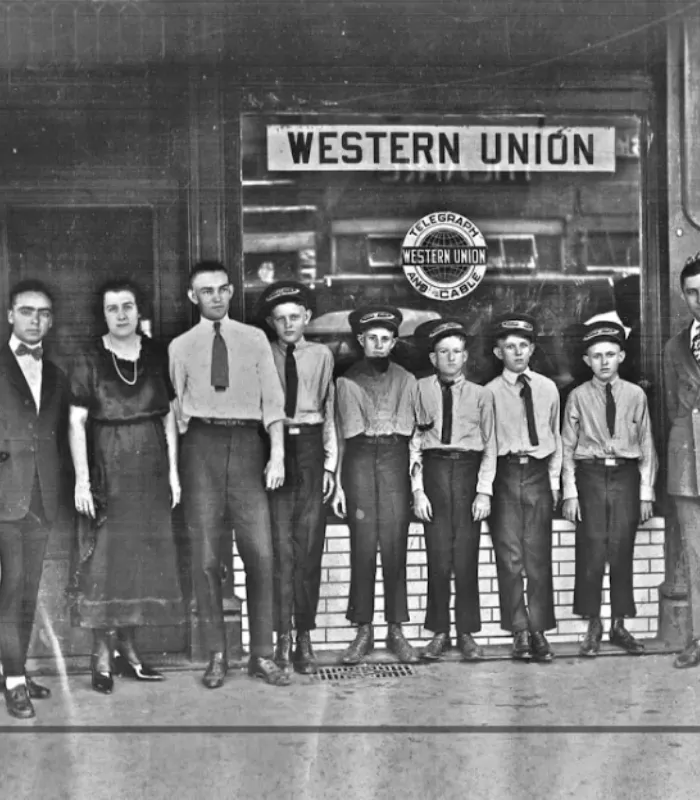
Before long-distance phone calls were affordable, a Western Union telegram was how you delivered urgent news.
Every small town had a Western Union office, usually tucked inside a pharmacy, hotel lobby, or train depot.
You’re better off imagining it as today’s text message, except someone in a uniform delivered it to your door.
Families sent money through Western Union when a relative was stranded, sick, or starting over somewhere new.
The arrival of a telegram was a serious moment that could mean news from a soldier overseas during the Vietnam era.
Operators memorized Morse code and transmitted messages across the country in minutes.
Why It’s On This List: Western Union was the lifeline of small-town communication in the 60s, connecting families across distances at a time when a letter took days and a phone call cost a week’s wages.
18. Greyhound Bus Depot
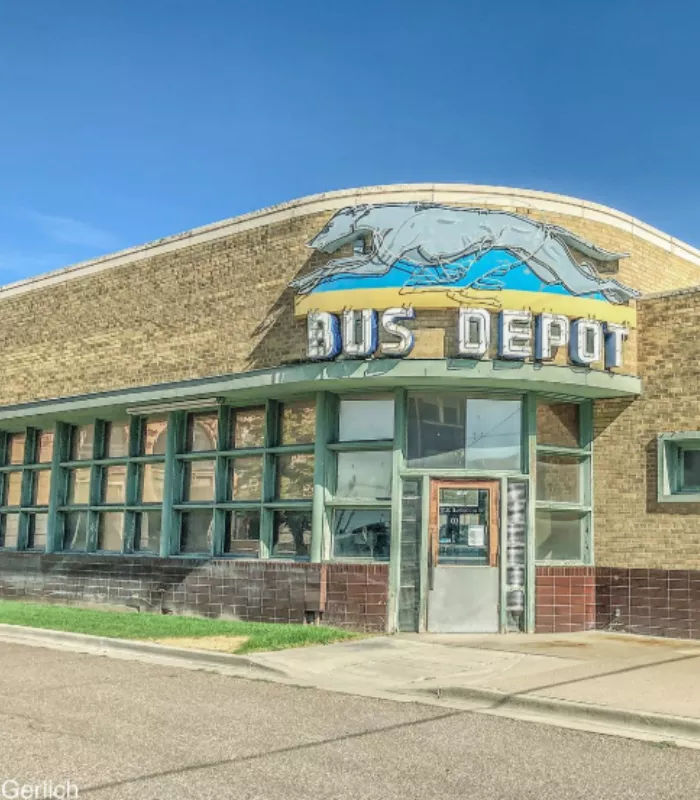
The Greyhound depot was how small-town Americans got to the big city before interstates made driving easier.
By the early 1960s, Greyhound operated over 4,700 buses on more than 100,000 miles of routes across the country.
That’s why the depot was one of the busiest spots in town on any given weekend.
College kids left for school, soldiers shipped out for basic training, and families reunited at the same worn wooden benches.
A diner or lunch counter inside served coffee and pie to passengers with layovers between connections.
The smell of diesel, cigarettes, and fresh coffee made every departure feel both exciting and bittersweet.
Why It’s On This List: The Greyhound depot was a gateway to the wider world for people who had no other way out of town, making it one of the most emotionally charged places in small-town America.
19. Local Drive-In Movie Theater
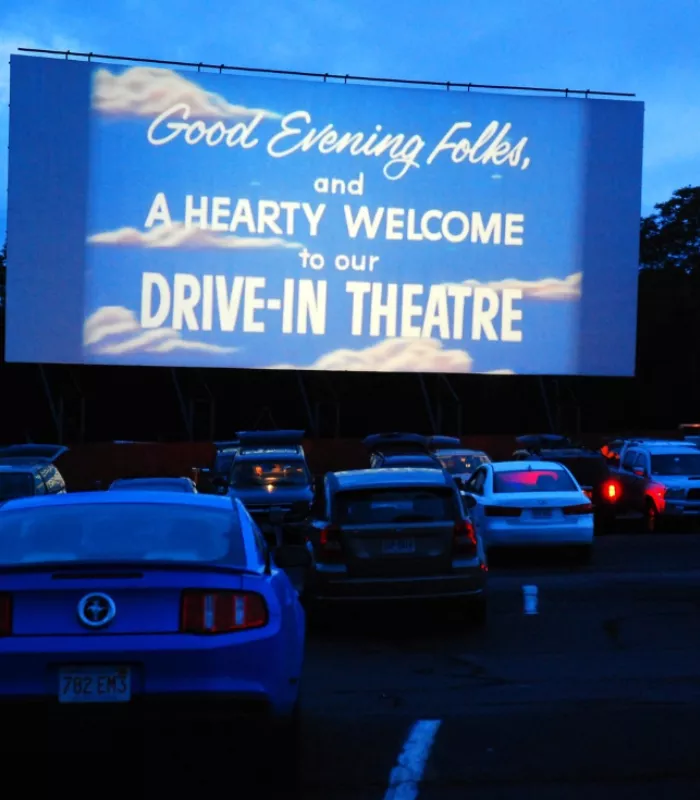
Drive-in theaters peaked in the early 1960s with over 4,000 locations operating across the United States.
You pulled in, hooked a tinny speaker onto your car window, and watched two features under the open sky.
The intermission reel with dancing hot dogs and popcorn boxes was just as anticipated as the movie itself.
Families loaded kids into pajamas in the back seat, knowing they would fall asleep before the second film ended.
Teenagers came for the privacy, parents came for the low ticket price, and everyone came for the snack bar.
A family of four could see two movies for under two dollars on a Friday night.
Why It’s On This List: Drive-in theaters turned Friday nights into affordable family adventures and gave teenagers a rare space of their own, all under a sky full of stars and flickering film light.
20. Burger Chef
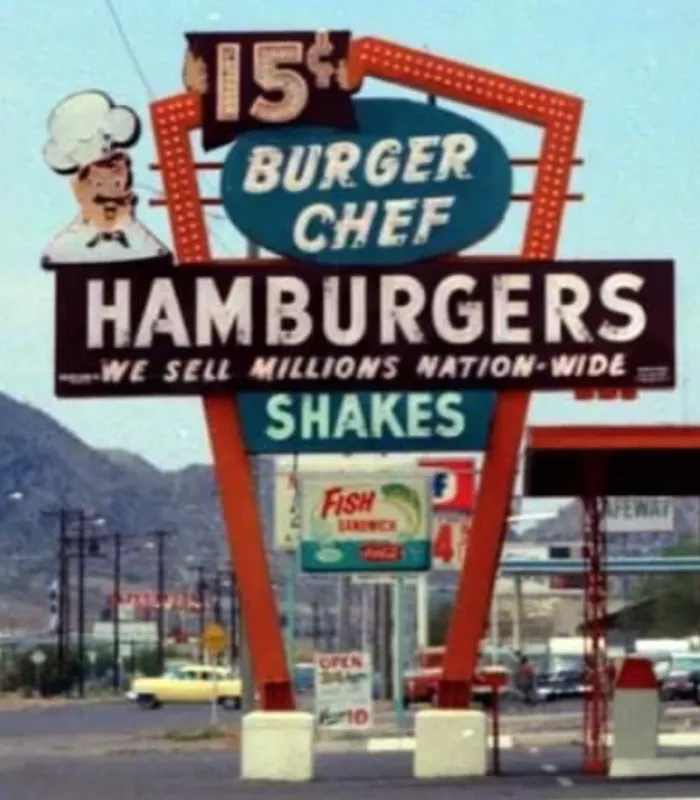
Burger Chef launched in 1954 and by the early 1960s it was giving McDonald’s a serious run for its money.
At its peak, the chain had over 1,000 locations across the country, many of them anchored on small-town main roads.
The menu was simple: burgers, fries, and shakes at prices working families could actually afford.
A burger cost 15 cents, and fries were a dime, which meant a family of four could eat for under a dollar.
Kids loved the Fun Meal, one of the earliest versions of what would later become the Happy Meal concept.
That’s why so many people who grew up in small towns in the 60s remember Burger Chef more fondly than McDonald’s.
Why It’s On This List: Burger Chef fed a generation of small-town families with honest, affordable fast food before bigger chains crowded it out, making it one of the most genuinely missed names in American dining history.