

Austria does not do “nice views.” Austria does have views that make you forget your own name.
These are not towns you pass through. They are towns that change how you think about what a place can feel like.
Cobblestone streets, glacier peaks, thermal baths, and apple strudel so good it should be illegal.
Austria has quietly been winning at mountain towns for about 700 years.
1. Hallstatt, Ancient Salt Town Carved Into a Cliff Above a Glassy Lake
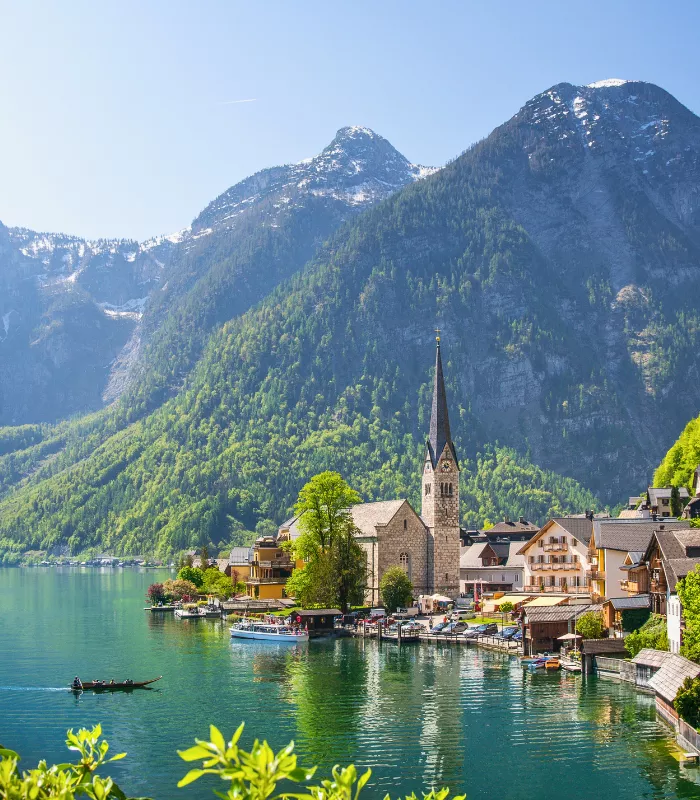
Hallstatt sits on the edge of a glassy lake. The Alps rise up behind it like a painted backdrop. It is one of the oldest salt-mining towns in the world.
The town has fewer than 800 residents. But it welcomes millions of visitors every year. That’s why it feels like stepping into a living postcard.
Every street here tells a story. The wooden houses cling to steep cliffs above the water. It is a place that stays with you long after you leave.
| The Case for It | A UNESCO World Heritage Site with over 7,000 years of history, making it one of the most remarkable mountain towns on earth. |
|---|---|
| Don’t Miss | The Hallstatt Skywalk platform, perched 360 meters above the lake with unobstructed views of the entire valley. |
2. Zell am See, Four-Season Lake Town With a Glacier on the Horizon

Zell am See is built right on the shores of a mountain lake. Snow-capped peaks surround it on every side. It is beautiful in every season.
In winter, the ski slopes are world-class. In summer, the lake is perfect for swimming and boating. You’re better off visiting in the shoulder season to avoid the biggest crowds.
The town center is easy to walk to. Shops, cafes, and restaurants line the lakefront promenade. It is one of Austria’s most beloved resort towns for good reason.
| Why It Works | Year-round mountain activities with a charming town center, sitting at 752 meters above sea level with stunning views of the Kitzsteinhorn glacier. |
|---|---|
| Shoulder Season Tip | May and October bring far fewer crowds, lower rates, and the same mountain views without the peak-season traffic. |
3. Kitzbühel, Medieval Ski Town Where the World’s Most Feared Downhill Begins
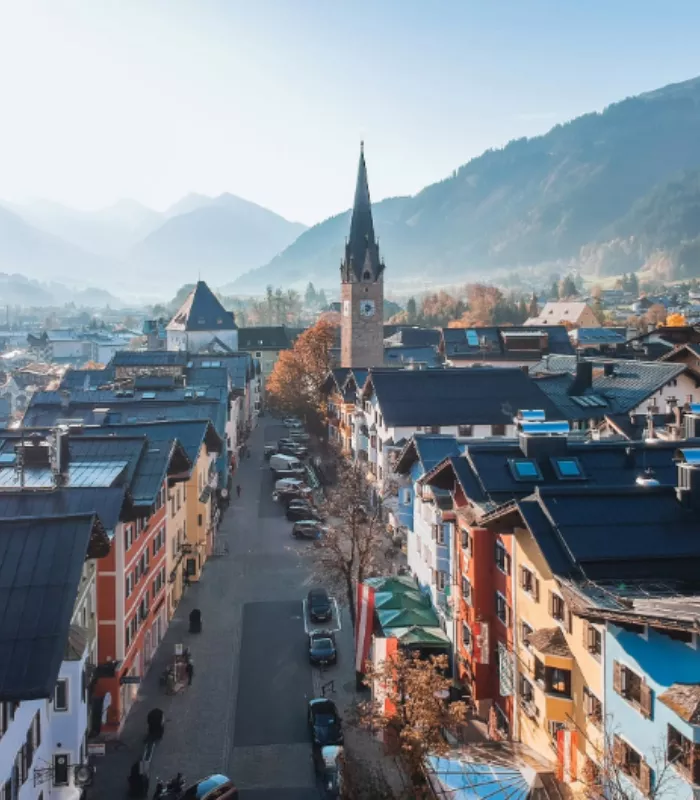
Kitzbuhel is one of Austria’s most famous ski towns. It has been a resort destination since the 1890s. The town has kept its medieval charm through the centuries.
The Hahnenkamm downhill race happens here every January. It is considered the most challenging ski race in the world. But even non-skiers fall in love with this town.
The rose-painted buildings and cobblestone streets are stunning. The golf courses and hiking trails shine in summer. Kitzbuhel truly has something for everyone.
| The Draw | A history stretching back to the 13th century and a reputation as one of Europe’s premier ski destinations – a mountain town that sets the gold standard. |
|---|---|
| Signature Event | The Hahnenkamm race weekend each January draws tens of thousands of spectators to the steepest start gate in World Cup skiing. |
4. Bad Ischl, Imperial Summer Capital With 19th-Century Elegance Still Intact

Bad Ischl was once the summer retreat of Emperor Franz Joseph I. He spent 60 summers here in his beloved Imperial Villa. The town still carries that royal elegance.
The streets are lined with beautiful 19th-century architecture. The famous Konditorei Zauner bakery has been serving pastries here since 1832. That’s why food lovers feel right at home.
Bad Ischl sits at the heart of the Salzkammergut lake district. Mountains surround it on all sides. It is peaceful, refined, and deeply Austrian in character.
| Historic Weight | Bad Ischl was selected as a European Capital of Culture for 2024, shining a global spotlight on its rich imperial history and breathtaking alpine setting. |
|---|---|
| Worth Knowing | Konditorei Zauner, open since 1832, is where Emperor Franz Joseph reportedly enjoyed his Zaunerstollen – a recipe still made to the original method today. |
5. Mayrhofen, Zillertal Valley Base Camp for Four-Season Mountain Adventure

Mayrhofen sits deep in the Zillertal Valley. It is one of Austria’s top winter sports destinations. Families and adventure seekers both love it here.
The Zillertal Arena offers approximately 169 km of marked runs across connected slopes above the valley. The town itself is lively and welcoming. It gets very busy during peak ski season, so book early.
In summer, the valley transforms into a hiking paradise. Wildflowers cover the hillsides. The air is crisp and incredibly clean.
| What It Offers | A gateway to the Zillertal Alps, with some of the most varied terrain for outdoor adventures in Austria across all four seasons. |
|---|---|
| Summer Switch | The Ahornbahn cable car rises to 2,000 meters above the valley floor, opening up high-alpine meadows and ridge walks throughout July and August. |
6. Schladming, World Championship Town With Slope-Side Streets Worth Exploring Slowly
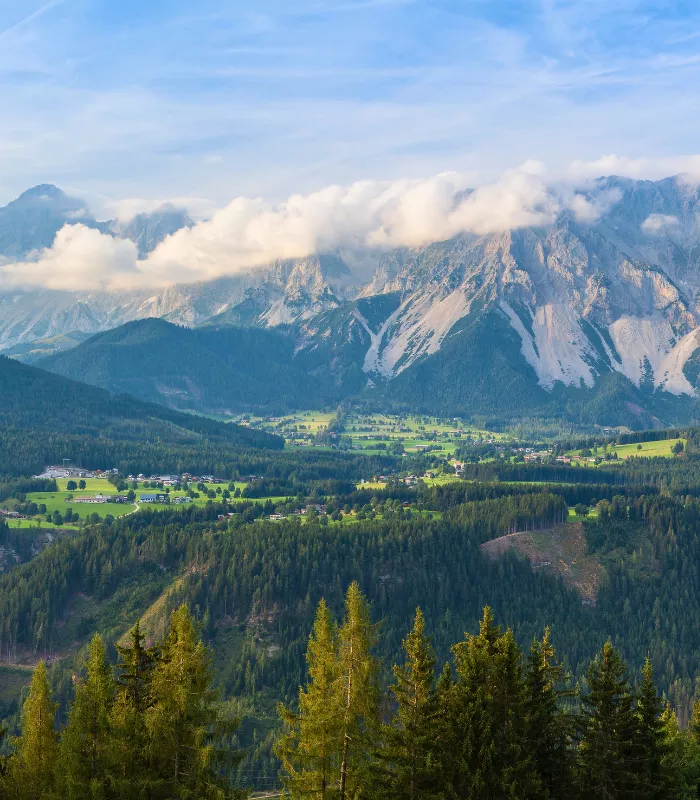
Schladming hosted the Alpine Skiing World Championships in 1982 and again in 2013. That tells you everything about its reputation. It is a serious mountain town with serious slopes.
The town itself is warm and welcoming despite its impressive pedigree. Local restaurants serve hearty Styrian food at reasonable prices. You’re better off exploring on foot to discover its quieter corners.
The surrounding Dachstein-Tauern region is stunning in every direction. Dozens of hiking trails lead out from the town center. It is a dream for anyone who loves the mountains and the outdoors.
| The Hook | Schladming’s night ski area is one of the largest in Europe, offering a remarkable alpine experience even after the sun goes down. |
|---|---|
| Local Flavor | The Kirchenplatz town square fills with visitors each evening during ski season – a lively but unhurried scene of Styrian food and Austrian warmth. |
7. Innsbruck, Tyrol Capital Where a Funicular Takes You From Old Town to Alpine Ridge
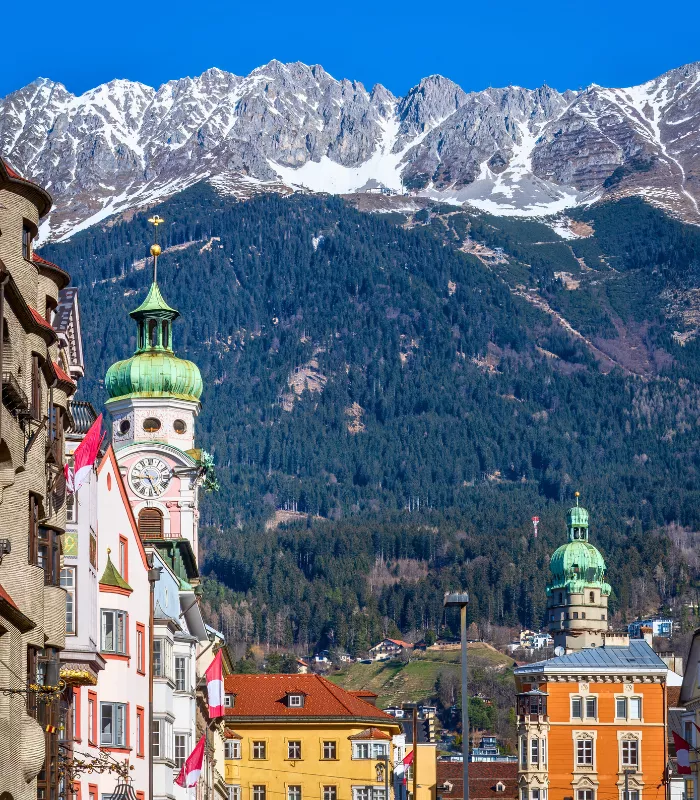
Innsbruck is the capital of the Tyrol region and one of Austria’s great cities. But it is also a mountain town at its core. The peaks of the Nordkette range rise directly above the city streets.
It has hosted the Winter Olympics twice, in 1964 and 1976. The old town is full of beautifully preserved medieval buildings. That’s why it works perfectly as a base for exploring the surrounding Alps.
A funicular takes you from the city center to the mountain in just minutes. The views from the top are extraordinary. Few cities in the world blend urban life and alpine adventure this well.
| Why It Belongs | World-class museums, a stunning historic old town, and immediate access to some of Austria’s finest mountain terrain – all within one city. |
|---|---|
| Quick Fact | The Nordkettenbahn funicular, designed by Zaha Hadid, connects the historic Innsbruck city center to 2,256 meters elevation in under 30 minutes. |
8. Lech am Arlberg, Discreet Alpine Village That European Royalty Claims as Its Own

Lech am Arlberg is one of the most exclusive ski resorts in the world. European royalty and celebrities have long called it their winter home. Yet the village itself remains genuinely charming.
It sits at 1,450 meters above sea level. The snowfall here is legendary, with some of the most reliable powder in the Alps. You do not need to ski to enjoy the magic of this village.
The church, the frozen river, and the cozy wooden chalets create a fairy-tale atmosphere. Restaurants here are outstanding. Lech is simply one of the most beautiful villages in all of Europe.
| The Numbers | Consistently ranked among the top five ski resorts in the world, receiving an average of 9 meters of snowfall every single winter season. |
|---|---|
| Beyond the Slopes | The village’s horse-drawn sleigh rides through the snow-covered lanes are among the most requested non-ski activities in the Arlberg. |
9. Saalbach-Hinterglemm, Twin-Village Circuit With 270 Kilometers of Connected Slopes

Saalbach-Hinterglemm is actually two connected villages in one breathtaking valley. Together, they form one of Austria’s largest ski circuits. That’s why skiers keep coming back year after year.
The terrain suits all levels, from gentle beginner slopes to challenging expert runs. The villages are lively but never overwhelming. There is always a warm fire and a good meal waiting for you at the end of the day.
In summer, the area becomes a mountain biking destination. Gondolas carry bikes up the hills for you. It is the kind of place that makes you want to stay just one more day.
| The Scale | The Skicircus Saalbach-Hinterglemm-Leogang-Fieberbrunn covers 270 km of slopes, making it one of the largest and most connected ski areas in the entire Alps. |
|---|---|
| Summer Mode | Over 70 downhill mountain biking trails are accessible by gondola throughout July and August, drawing riders from across Europe. |
10. Velden am Wörthersee, the Austrian Riviera Where Alpine Meets Lakeside Elegance
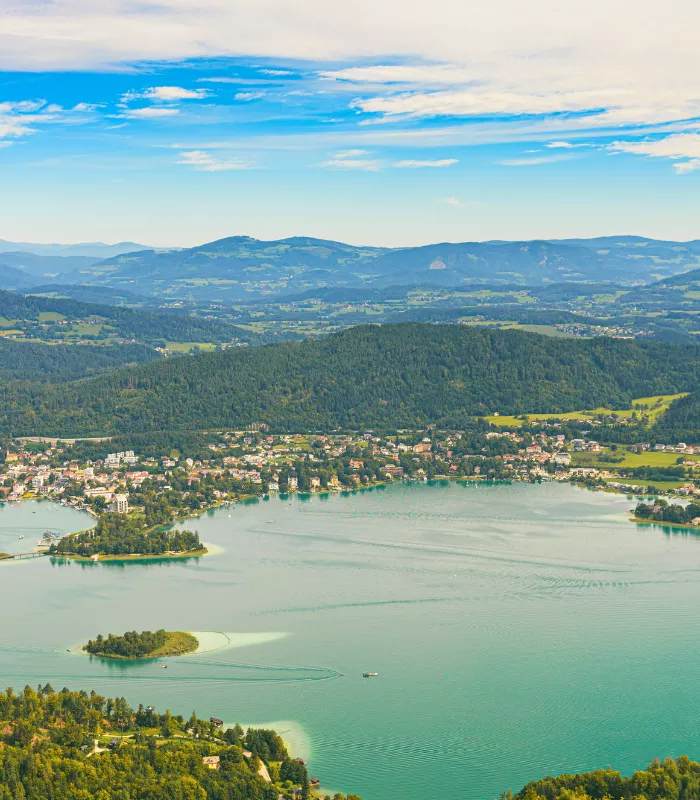
Velden sits on the western shore of the Worthersee, Carinthia’s most famous lake. Mountains rise gently on every side. The water here is famously warm for an alpine lake.
The town has an elegant, old-world resort feel. The famous Schloss Velden castle hotel dominates the lakefront. Strolling the promenade at sunset is one of life’s simple pleasures.
Summers here are long and sunny by Austrian standards. The lake reaches swimming temperatures of up to 28 degrees Celsius. You’re better off visiting in late June or early July for the best combination of warmth and fewer tourists.
| The Appeal | Known as the “Austrian Riviera,” Velden offers a blend of lakeside charm and easy access to surrounding mountain trails and alpine scenery. |
|---|---|
| Lake Fact | The Wörthersee is one of the warmest natural lakes in the Alps, reaching up to 28°C in summer – warmer than many coastal Mediterranean spots. |
11. Alpbach, Flower-Box Village Where Every Building Follows a 700-Year-Old Blueprint
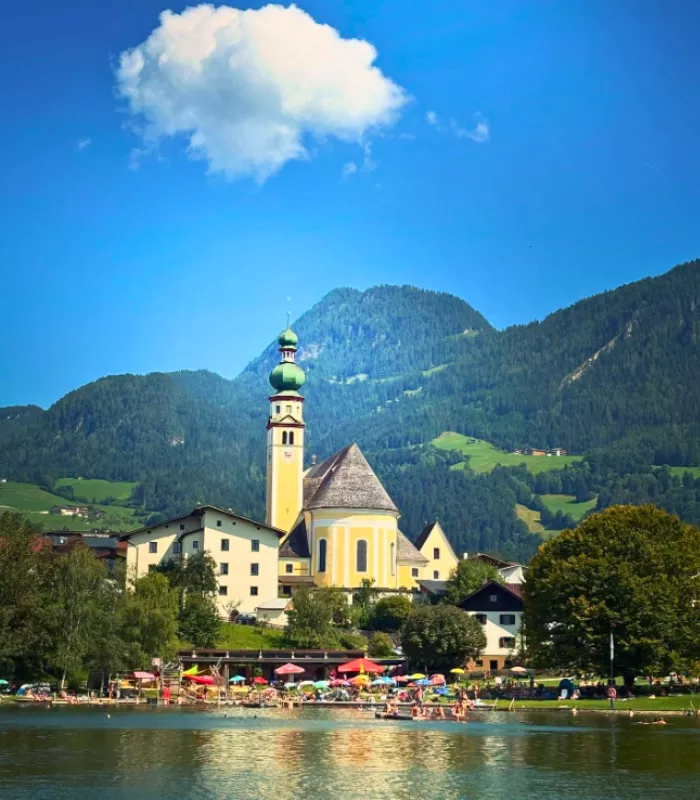
Alpbach is often called the most beautiful village in the Alps. Every building in the village is built in the same traditional Tyrolean wooden style. Flower boxes burst with color on every balcony in summer.
The village is small and wonderfully quiet. There are no big hotel chains or flashy developments here. That’s why it feels like Austria the way Austria used to be.
Hiking in summer is superb. The ski area is relaxed and uncrowded in winter. For anyone seeking peace and mountain beauty, Alpbach is hard to beat.
| What Protects It | One of the few villages in Austria where all buildings must follow strict traditional architectural guidelines, preserving its appearance for generations. |
|---|---|
| Village Scale | With fewer than 2,500 residents, Alpbach is compact enough to explore entirely on foot in a single unhurried afternoon. |
12. St. Anton am Arlberg, Birthplace of Alpine Ski Culture With Slopes Still Worthy of the Title

St. Anton is where modern alpine skiing was born. Hannes Schneider developed his famous ski school here in the early 1900s. The town has been a skiing legend ever since.
The slopes here are serious and rewarding. The village center is pedestrian-only, which makes walking around it a true pleasure. It is equally wonderful as a summer hiking destination, with far fewer visitors.
The mountain scenery around St. Anton is extraordinary. The Arlberg region gets some of the deepest snowfall in the Alps. It is a place built for people who love the mountains in their bones.
| The Legacy | Widely credited as the birthplace of alpine ski culture, St. Anton remains one of the top ski destinations in the world over a century later. |
|---|---|
| Off-Season Reward | The Arlberg Hospiz trail in summer connects St. Anton to neighboring villages through some of the most dramatic high-alpine scenery in Tyrol. |
13. Heiligenblut, Tiny Glacier Village at the Foot of Austria’s Highest Peak

Heiligenblut sits at the foot of the Grossglockner, the highest mountain in Austria at 3,798 meters. The village is tiny, with fewer than 1,000 residents. But the scenery around it is absolutely breathtaking.
The famous Grossglockner High Alpine Road begins here. It is one of the most scenic drives in all of Europe. You’re better off driving it on a clear morning when the views are at their sharpest.
The Gothic church in the village center is iconic. Its slender spire in front of the glacier is one of Austria’s most photographed images. Heiligenblut feels untouched and deeply authentic.
| Gateway Role | The starting point for the Grossglockner High Alpine Road and the entrance to Hohe Tauern National Park, covering over 1,800 square kilometers of protected alpine wilderness. |
|---|---|
| The Drive | The Grossglockner High Alpine Road rises to 2,504 meters at the Hochtor pass – a 48-kilometer route with 36 bends and views of over 37 peaks above 3,000 meters. |
14. Bad Gastein, Belle Époque Cliffside Town Built Around a Waterfall and a Revival
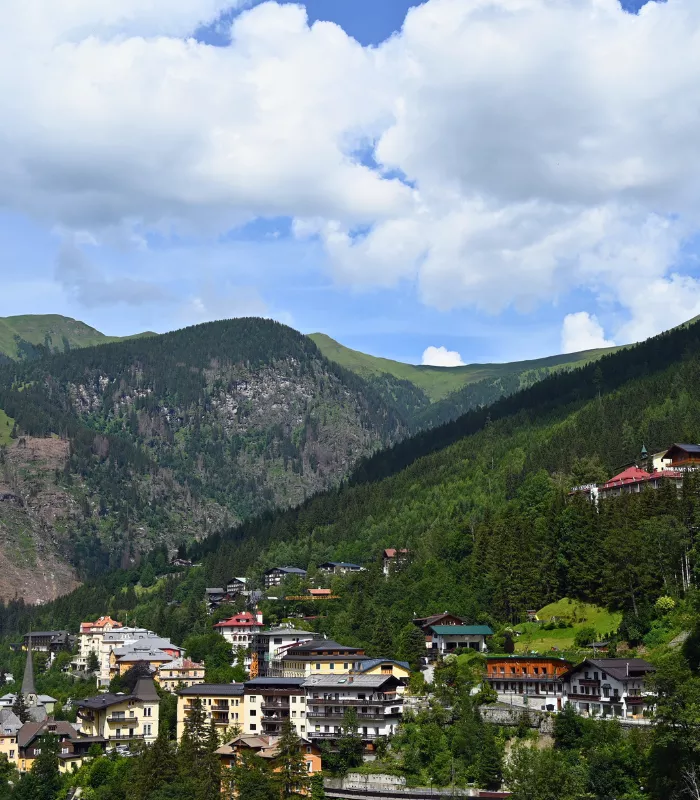
Bad Gastein is unlike any other mountain town in Austria. Grand Belle Epoque hotels cling to steep cliffs above a dramatic waterfall that roars right through the town center. It looks almost unreal.
The town was a favorite of European royalty and nobility in the 19th century. Its natural hot spring thermal baths are legendary. That’s why it has always attracted travelers looking for both adventure and restoration.
The surrounding Hohe Tauern mountains offer outstanding skiing and hiking. The town is currently undergoing a stylish revival. Old glamour and fresh energy make it one of Austria’s most exciting mountain destinations right now.
| Then and Now | Bad Gastein’s radon thermal tunnels have drawn visitors for over a century, and the town’s ongoing architectural revival is bringing its Belle Époque grandeur back to life. |
|---|---|
| The Waterfall | The Bad Gastein waterfall drops 85 meters through the center of town in three cascades – one of the only waterfalls in Europe that flows directly through a built-up resort area. |
15. Filzmoos, Quiet Dachstein Village Where Balloons Rise Above the Winter Peaks

Filzmoos sits quietly in the shadow of the dramatic Dachstein mountains. It is a small, unhurried village with a genuine family feel. You will not find big crowds or loud nightlife here.
Every winter, the village hosts a spectacular hot-air balloon festival. Dozens of colorful balloons rise above the snow-covered peaks. It is one of the most magical sights in the Austrian Alps.
In summer, gentle walking paths wind through forests and flower-filled meadows. The pace of life here is slow and restorative. Filzmoos is one of Austria’s most quietly rewarding alpine villages.
| What Sets It Apart | Known for exceptionally warm hospitality and family-run guesthouses, Filzmoos offers an authentic alpine experience that larger, more commercial resorts simply cannot match. |
|---|---|
| The Festival | The Filzmoos Balloon Festival, held each January, draws pilots and spectators from across Europe for flights above one of the most dramatic winter landscapes in the Salzburg region. |